Making great online video: Don’t imitate TV

David Hayward
is a video consultant. Twitter: @david_hbm
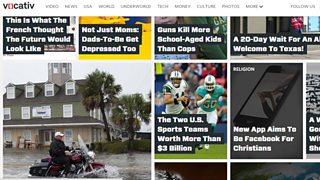
Vocativ - one of the new video news providers
Why do so many organisations still believe that what works on TV will work online?
To use the old analogy: you don’t film theatre and call it cinema. They are different media with very different storytelling techniques.
When it comes to online video, why did this take so long to be understood? And it’s not just the storytelling that’s different. So are the viewing habits of the audience and the means of distribution.
Newspaper groups and publishers have long known they need video to compete in a multimedia, multiplatform world, but they didn’t have the expertise to make it. As a result they have simply copied television, often very badly.
That’s why I was interested to hear that the Washington Post is revamping its online video strategy. The Post’s video director, Micah Gelman, has said that the Post will now concentrate on producing the “right stories for the right platform at the right time”.
In a subtle change of emphasis, video output will no longer be called Post TV; now it will be Washington Post Video. That signals a move away from the attempt to imitate TV.
It is a fascinating time in the evolution of online video. Nobody asks any more ‘do we need it?’ The question now is ‘how do we do it effectively?’
There are some excellent examples out there. Few better than The New York Times, the BBC Trending team, and the superb AJ+. They are all creating powerful, engaging and compelling films that fit beautifully into the multiplatform online world. And the first two demonstrate that traditional media can successfully make the transition.

The AJ+ video Drowned Syrian Boy Symbolizes Refugee Crisis Sweeping Europe (above) has been shared almost 20 million times on Facebook. It’s less than two minutes long, with music, graphics, text on screen and just a little conventional video footage.
There is now a new generation of news providers, including Vice News, Vocativ, and Nowthis News. These organisations have nailed the storytelling techniques for online video. Their films are emotionally compelling, powerful, and relevant. They seize you from the beginning. Their makers know they have a limited time to grab people: it is essential to use those first few seconds to pull viewers into the story.
As well as powerful images, text is an online feature that recognises the way people view and first engage with video – from social media feeds.
I recently did some work with Mukul Devichand, the editor of BBC Trending. He had two pieces of advice for anyone thinking about making online videos.
Firstly, you only have seven seconds to engage people: if you don’t, they will go elsewhere. The second is that, contrary to what many people believe, a film can be any length, as long as it’s compelling the whole way through.
There is a real skill to making online video. But no matter how good the technology and the platforms, content is king. That’s what drives people to the story and makes them want to engage. In that way at least, nothing has changed.
A version of this post was first published by Innovate8now Media, for which David Hayward is a consultant.
