TUC conference briefing: big disputes ahead - and not just with Miliband

Nicholas Jones
was a BBC industrial and political correspondent for 30 years. His most recent book, The Lost Tribe, is about Fleet Street's industrial correspondents
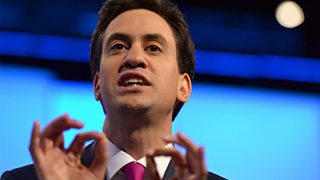
Ed Miliband’s first set-piece speech since the worsening disagreement over trade union financing of the Labour Party is likely to dominate news coverage of the annual TUC conference in Bournemouth.
Coverage will portray the trade unionists’ get together (8-11 September) and Miliband’s speech (11.30am, 10 September) as a dress rehearsal for what some commentators are predicting will be an even sterner test of his leadership at the Labour Party conference in Brighton later in the month.
But while the prospect of Miliband fraternising with union leaders like Len McCluskey (Unite) and Paul Kenny (GMB) will command the attention of the media, journalists with an interest in business and union affairs should not lose sight of looming industrial confrontation in two key public services.
While a focus on party politics rather than employment issues will disappoint officials at Congress House, the conference will also be an important rallying point for the Fire Brigades Union (FBU) and the Communication Workers Union (CWU), both gearing up for disputes which will be fought out via a propaganda blitz in the news media and not just on the industrial frontline.
For both delegates and journalists, the conference will be a sounding board and an opportunity to assess potential support from within the union movement for these two imminent disputes.
Possible strike action by the FBU is always headlines news, and confrontation over the proposal to increase the retirement age of fire fighters to 60 has already been backed by a four-to-one majority.
Meanwhile, a ballot of 125,000 Royal Mail workers is to be held later in September. If industrial action is approved, strikes could disrupt postal services in the run up to Christmas. Stoppages are being considered by the CWU over pay and changes to the postal workers’ pension scheme, but the underlying issue is the union’s opposition to government plans to privatise Royal Mail.
Both unions have demonstrated considerable expertise in the past in rallying public opinion through astute use of the news media. In the 1980s, Margaret Thatcher pulled back from privatising the Post Office after a slick campaign which warned that the Queen’s head might longer appear on UK postage stamps.
The FBU knows about compelling images
A strike by the FBU would be the first nationwide walkout by fire fighters in a decade. The prospect of industrial action has already prompted contingency planning by fire authorities across the country. In some areas volunteers have been undergoing training in limited fire fighting duties; and 27 fire engines have been assembled at a Territorial Army headquarters for possible deployment across London, in place of the army’s so-called Green Goddesses which were sold off some years ago.
The FBU believes it will win popular support for its argument that the public could be at risk if the retirement age for fire fighters was increased to 60. Older workers might also lose their jobs if they failed fitness tests.
The FBU is seeking further talks with employers and government ministers but if there is no agreement walkouts could start before the end of September.
In previous disputes, the union has always done all it can to co-operate with the news media. Burning braziers outside fire stations, around which striking fire fighters stand holding placards, make compelling images for television and the press and provide the ideal background for a piece to camera. The FBU has learned that a picture can reinforce its message and often achieve far more than a picket line in winning over public opinion.
Postal workers and ‘vital lifelines’
Similarly with the CWU and its opposition to the privatisation of Royal Mail, postal workers will be deployed to warn of the danger a sell-off might pose to universal next-day delivery.
Union activists will identify remote rural areas which depend heavily on postal deliveries that are sometimes made by post buses which can also take local parcels and passengers. We can expect to hear more of threats to vital lifelines and the need to a find way to subsidise loss-making services.
So far the government has not gone on the offensive, either on its insistence that despite proposed changes the fire fighters’ pension scheme remains one of the most generous in the public sector, or over its case that privatising Royal Mail and attracting commercial investment is the only long-term route to preserving postal services.
If privatisation of Royal Mail goes ahead - and the government could dispose of a majority of its shares through a flotation on the London Stock Exchange - there might be free shares for postmen and women. Royal Mail has suggested up to 10% of the shares might be given to eligible employees, the largest free share distribution in any major UK privatisation.
Union issues or Miliband’s body language?
Other critical conference debates in Bournemouth will focus on the mounting protests against zero-hours contracts and the widening campaign for a living wage, or at least a significant increase in the national minimum wage.
The TUC estimates that 250,000 workers are not being paid the minimum wage and it hopes new rules which taken effect in October will result in the naming and shaming of employers who break the laws.
One possible pledge in a future Conservative Party manifesto is that the government would give a tax break to companies which pay more than the minimum rate (currently £6.19 an hour).
The Chartered Institute of Personnel and Development estimates that a million people are employed on contracts which guarantee no set hours. For the TUC, it’s a problem to recruit casual workers without full-time employment who cannot afford union subscriptions and perhaps see little value in union representation.
It is a failing which the Unite general secretary Len McCluskey hopes his union can address. If the UK’s largest union could present itself to the public in similar way to super-brands such as Tesco or Asda, he thinks young people might be attracted to sign up.
“I want to say: ‘Do you know what Unite is?’ ‘They’re a trade union. They fight for working people.’”
McCluskey’s message is one the TUC general secretary Frances O’Grady must be hoping will attract the news media’s attention.
But the likelihood is that Ed Miliband’s body language with union 'barons' will present a far more appealing story line.