Where did you say you were? The perils of place name pronunciation

Marieke Martin
is a pronunciation linguist in the BBC Pronunciation Unit
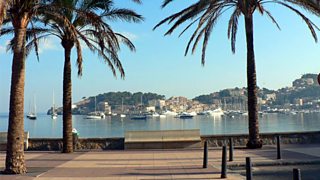
You say muh-JOR-kuh and I say muh-YOR-kuh
We follow certain procedures in deciding how to advise on pronunciation of place names:
- For place names in English-speaking countries, we recommend a standardised version of the local pronunciation
- In non-English-speaking countries, if there is an English form of a place name (eg Florence, Munich, Basle) then we recommend this rather than the form in the native language (Firenze, München, Basel)
- We recommend established anglicisations where they exist (eg the way the British pronounce Paris or Berlin); otherwise we base our advice on the local pronunciation (you can read about our research on Kyrgyz place names).
However, this is not the end of the story. What I have learnt in my three years at the Pronunciation Unit is never to trust the spelling of place names. If you'd never heard them, how would you pronounce Worcester and Leicester? Then there's Alnwick (AN-ick), Belvoir Castle (BEE-vuhr) and Milngavie (mil-GIGH or mul-GIGH).
The pronunciation of place names can also change over time.
Take the traditional English form and pronunciation of the French places Lyon and Marseilles, or the Spanish island of Majorca. Where once they were pronounced LIGH-uhnz, mar-SAYLZ and muh-JOR-kuh in English, today most people pronounce them LEE-o(ng), mar-SAY and muh-YOR-kuh. In making recommendations we are careful not to drive linguistic change; our aim is to reflect accepted usage.
We are often asked about Welsh and Scottish place names. Welsh and Scottish Gaelic differ significantly from English in their spelling conventions and therefore pronunciations are often unpredictable for English speakers unfamiliar with these languages. For some place names, established English pronunciations exist; for others we recommend a pronunciation closest to the local pronunciation, but one in accordance with the sound distribution system of English.
Some places have an English and a local name; so the Welsh place name Aberdyfi is spelt Aberdovey in English, a spelling which seems to be based on the Welsh pronunciation ab-uhr-DUV-i. The established anglicisation for Creigiau is KRIGH-guh, but the Welsh pronunciation is closer to KRAYG-yigh.
In contrast to English, Welsh orthography is actually very regular and there is mostly a one-to-one correspondence between letter and sound. But the sounds the letters represent differ from their English equivalents - most notably the ‘u’, which represents the sound ‘ee’ in ‘street’ and the letter ‘w’, which can represent the short vowel sound in ‘book’ (or the long vowel in ‘boot’).
There can be difficult choices when one place name has an established English pronunciation but a very similar place in the same country isn’t well known enough to have an accepted English version. Most people will know Islamabad as iz-LAM-uh-bad, a pronunciation which is quite different from the local Urdu pronunciation iss-LAAM-aa-BAAD.
So how would you say Rahimabad? We recommend a pronunciation closer to the original Urdu: raa-HEE-muh-baad. While it is possible to pronounce a long name such as this with four full vowels, it is just more natural to replace one of the long vowels with a schwa (the vowel represented by ‘a’ in sofa, commonly respelt as ‘uh’).
Almost all languages feature some sort of vowel reduction, but the sounds that get reduced may vary quite widely from one language to the other. In English, long words usually have at least one syllable featuring a schwa (eg Kensington (KEN-zing-tuhn) or Rotherham (RODH-uh-ruhm).
What do we do when a sound that exists in another language does not have an equivalent in English? We have to consider the sound system in each of the languages and formulate an approximation - thus an anglicised form of the native pronunciation. We also take into consideration what sounds rhythmically natural in English. Every language has fascinating constraints and we do our best to anglicise names in a way that reflects the native language as closely as possible, taking into consideration anglicisation tendencies.
I am a native German speaker and in German we have similar constraints, as the sound system of German is very different from that of English. Our pronunciation of London is LON-don, with both syllables rhyming with ‘Ron’: as we don’t have the vowel ‘u’ (as in ‘cup’). For Worcestershire we say VUUSS-taa-sheer, as we don’t have a -w sound, and even though we have a schwa in German we can’t use it in the second syllable here.
In German the ‘e’ in unstressed syllables becomes a schwa, but the ‘a’ keeps its ‘a’ value. So the German place name Flöha - which is commonly anglicised to FLOE-uh sounds like the German word for ticks (Flöhe) to a German speaker. I’d rather anglicise it as FLOE-aa in English, but that’s not a common anglicisation pattern for German. So I will just have to accept it, even if it makes me chuckle inwardly whenever I hear about the place called ‘fleas’.
It is a devilish task to do justice to the wonderfully diverse sound systems of the world’s languages. Just as we Germans find it difficult to distinguish between the English -e as in ‘get’, -a as in ‘hat’ and -u as in ‘cup’, we don’t expect native English speakers to pronounce the ‘ü’ as in ‘über’ (long) and the ‘ü’ as in ‘fünf’ (short) perfectly, even though to German ears these sound quite different from each other and from the vowel ‘u’ in German.
So it’s not just in English that we face these issues. Broadcasters all over the world have to grapple with these kinds of challenges every day.
The BBC Pronunciation Unit’s service is part of Information and Archives and is available exclusively to BBC broadcasters and programme-makers. The pronunciations discussed are represented using BBC text spelling.
In a previous post, the Pronunciation Unit's Martha Figueroa-Clark wrote about the 'Top five alternative pronunciation bugbears'.
