How should digital journalists mark the centenary of World War One in compelling new ways?

John Crowley
is digital editor of WSJ.com, EMEA. Twitter: @mrjohncrowley
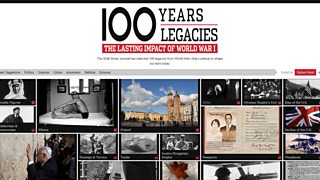
WSJ website commemorating the anniversary of WWI
These were the thorny issues facing half a dozen editors and designers from the Wall Street Journal who gathered in a meeting room in London last December to discuss how to commemorate the 100th anniversary of WWI. How could one do justice to such an epochal event when so much historical knowledge was already available both online and in print?
We threw lots of ideas around for more than an hour. One idea from digital producer George Downs seemed to stick. Why not do a 10 x 10 of 'things' from the conflict? We could cover 10 armaments, 10 medical breakthroughs, 10 innovations, and so forth.
After some research we felt that 10 items in fixed categories might mean some worthy items being left out and other subjects shoehorned in. We honed the idea to include any item on merit and divided the total into categories of different sizes. We also didn't want to concentrate solely on life in the trenches, but its cultural, political and medical impact too.
Somewhere in the background, not fully acknowledged, was the fact that we would have to come up with 100 topics.
A breakthrough came when we agreed that each item must have a recognisable legacy today in its impact on our lives. From the blue scrubs we see on Grey's Anatomy to daylight saving time, we've been pleasantly surprised by what we've discovered.
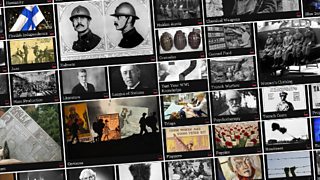
The WSJ's 100 ideas that came from WWI
Each item can be shared individually on social media, and you can vote on whether you believe it was a significant legacy. Mindful that we may have omitted some items, we've asked readers to submit their own suggestions.
How does one cover a legacy like Hitler in 350 words? Not easily. But video editor Mark Kelly approached Sir Ian Kershaw, an authority on the subject. Kershaw describing World War One’s impact on Hitler is bone-chilling, and I defy anyone not to be moved by its opening segments.
Foremost in our minds was the idea that we could harness the talents and knowledge of 1,900 editors and journalists we have around the world.
We definitely didn't want it to be seen through a British prism. That is why you can read wonderful items about how German cake became big in Japan, why millions of Australians and New Zealanders still play a coin game popularised by Anzac soldiers 100 years ago, and how secular Turkey was born from the ruins of the conflict.
In January we presented the idea to senior editors in London and New York. They gave us the green light and a few core editors started planning straight away. We wanted this to go out shortly before the centenary of the assassination of the heir to the Austro-Hungarian throne, Archduke Franz Ferdinand, on June 28 - agreed by many as the spark which set off WWI.
Copy was edited and double- and triple-checked by editors in New York, Hong Kong and London. The content was viewed on a shared Google doc and we created a huge spreadsheet so everyone knew how far we were along in the sub-editing process. Editing it through three hubs presented difficulties, but it meant a fresh pair of eyes went on each item.
We didn't quite realise where we were going at the beginning, but we've ended up with an interactive work some 44,000 words long. We've created more than 50 pieces of multimedia (video, audio, graphics and slideshows) that we're hugely proud of.
World War One has given us Dada, triage, chemical weapons, plastic surgery, Irish independence, fascism and, of course, another war. It invented new forms of mechanised killing and unearthed miraculous ways to save lives.
The conflict is still writ large on our lives 100 years on. We hope we've done it justice.
This blog post is the second in an occasional series about innovation:
A licence to innovate: How the BBC’s e-books team works under the radar
