Media scholars - tell us something we don’t know

Matthew Eltringham
is editor of the BBC College of Journalism website. Twitter: @mattsays
In part two of this blog, Matthew Eltringham calls for innovation in the classroom and smarter collaboration between journalism and academia to meet the demands of the new media landscape:
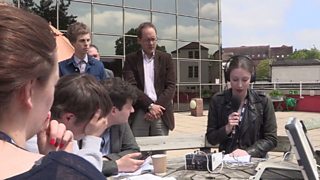
Look at the work of Jeff Jarvis, for example. He’s a bit of a Marmite character - you either love him or loathe him. A former journalist turned academic, he is associate professor at the City University of New York, and he certainly makes a lot of noise.

Jeff Jarvis: a 'Marmite' character
Or what about Paul Bradshaw, a visiting professor at City University London who also teaches at Birmingham City University? He has done a lot of thinking on the organisation of 21st Century newsrooms. His 2007 theory of the news diamond, for example, engaged the interest of many at the BBC. His background is more academic than practitioner, and he approaches his research from that perspective.
His work on data journalism, social media and investigative journalism, all brought together on two websites - Helpmeinvestigate and Online Journalism Blog - put some of his theories to the practical test, and again has driven change.
Paul and Jeff have two further things in common that are central to realising a new partnership between journalists and academics - and indeed explain why it is necessary.
Firstly, they teach as well as write and research, and, secondly, they both operate in and fully understand the digital world we all now live in.
Three years ago the then head of the BBC newsroom in London, Peter Horrocks, made it pretty clear he thought a thorough mastering of digital and social skills was essential for 21st Century journalists. “This isn't just a kind of fad from someone who's an enthusiast of technology,” he said “I'm afraid you're not doing your job if you can't do those things. It's not discretionary.”
If it was true then it is even truer now. Most programme editors at the BBC say that, if you don’t understand the social and digital world, don’t bother applying to them for a job. You won’t get one.
For a lot of journalists who have found a comfortable niche behind the castle walls and bedded down for what they thought was the duration that’s pretty scary - and I’m sure that’s the same for many academics too.
But once you’ve been given the new tools and been taught how to use them you realise pretty quickly that in fact it makes our jobs far more interesting and creative.
You also realise that it doesn’t fundamentally change what we do - although it machange what it looks like and where it appears.
Journalism remains about narrative, context and analysis; it demands independence, accuracy and impartiality. Sound familiar?
The BBC - and my colleagues at the College of Journalism in particular - have invested substantial resources in training our editorial staff in these core skills of understanding how to use social media and the web.
With encouragement from senior editorial figures like Peter Horrocks, rather than support an identified need from the business, we led from the front and enabled a huge cultural change across BBC News in the understanding and use of social media in particular.
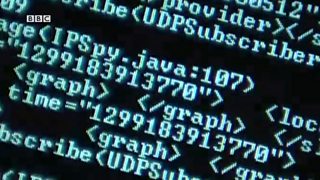
Computer coding - required skill?
That’s what we as an industry need from our journalism schools: to teach those skills and more to those coming into journalism; not just to provide journalists who are willing and ready to meet the future head on but those who are able to shape it too.
And we need to talk to schools more about that because even as the need for practical, relevant and useful courses becomes sharper so do the financial pressures.
In the UK most mainstream media organisations - including the BBC - are shedding jobs, not adding to their staff roster. And most courses that offer a realistic chance of gainful employment in your chosen career are postgraduate MAs.
Students carrying debts of £50,000 or more will be faced with a very clear choice: is this course going to get me the job I want or am I wasting my money?
The industry needs journalism schools to turn out the right graduates, and the schools need media organisations to recruit their graduates and justify their fees.
The industry also badly needs them to innovate and explore the new worlds of digital, data, coding and social. Between them they need to work out a way forward.
Most media organisations have limited resources or time to invest in significant training for their own staff, let alone graduates. What postgraduate training they do is often highly focused on their specific business needs rather than anything with a broader ambition.
At the last count there were however more than 30 centres in the UK offering more than 50 different postgraduate courses in journalism. There are many more BA courses in journalism studies.
And then there are the digital challenges to those courses: e-learning, online courses, part-time, short-term modules, MOOCS.
If the digital world now allows you to be a journalist without working for a media organisation, you can certainly acquire the skills to be a journalist without ever going to university. Will training overtake education? If it does, what impact will that have on the quality of our journalism?
I might be prepared to spend a few hundred pounds on a course that teaches me how to use my iPhone as a camera, but would I spend the same amount of time and money on a short course on journalism ethics, or even the law? I doubt it.
That - needless to say - is a huge threat to journalism standards everywhere.
A survey this year of US journalism schools by the Poynter Institute suggests a number of worrying findings, including that just 53% of educators think a journalism degree is ‘very to extremely important’ to getting a job. Only 41% of professionals share that view.
If journalism academics don’t think their courses are important, what is anyone else going to think - be they students or employers?
In a post-Leveson world, where standards of journalism and journalistic activity are being challenged more than ever before, journalism educators should be leading journalism into the digital age.
The Poynter Institute’s Howard Finberg has written that he worries more about the future of journalism degrees than he does about the future of journalism: “Those who don’t innovate in the classroom will be left behind, just like those who chose not to innovate in the newsroom.”
I share a lot of his worries - but there is also a great opportunity to work together at a time of huge disruption and find a way to forge a new and genuine partnership that will benefit us all.
Tell us something we don’t know; tell us something that matters to us; and tell us something that will make a difference to what we do.
This is an edited version of a speech that Matthew Eltringham gave at the recent Jonkoping University conference in Sweden, ‘Towards a Practice-Based Media and Journalism Research’.
Part one of this blog: Journalists and academics: Trade your ‘fortresses’ for practical partnership.
Why journalism education faces a worrisome future
Journalism schools need to adapt or risk becoming irrelevant
