Safety pack for Syrian journalists includes rare trauma support

Sarah Giaziri
MENA programme officer, Rory Peck Trust
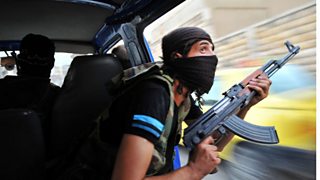
Most of us now know that Syria is the most dangerous country in the world to be a journalist. Since the beginning of the conflict in 2011, at least 84 journalists have been killed, nearly half of them freelance. And more than 90 have been abducted - that's the highest number of kidnappings in any conflict zone since documentation began, says the Committee to Protect Journalists (CPJ).
Since the high profile kidnapping and then the execution of US freelance journalists James Foley and Steven Sotloff 12 months ago, international news and media companies have begun to look seriously at how they can better ensure the safety of international freelancers who report from conflict zones like Syria - it’s a very welcome move. But we must remember that it’s the Syrian journalists who are supplying the bulk of the news and images coming out of their country who suffer the greatest risks. They need access to safety information, training and support mechanisms too.
At the Rory Peck Trust we have been supporting Syrian freelance journalists since the beginning of the uprising in 2011. We hear about their experiences every day: torture, abduction, threats and violence are commonplace.
The vast majority of the journalists who have been killed or kidnapped in Syria are Syrian, yet most of them haven’t had any sort of training or access to safety information. Many have developed their own methods to reduce the risk and survey a dangerous environment. But most Syrian journalists overlook the more basic methods of staying safe and can disappear into thin air if something goes wrong.
Significantly, digital safety is also neglected. Local journalists are regularly tracked and threatened by the regime or militant groups via their online communications and social media profiles.
This is why we, together with the CPJ and a coalition of journalist assistance organisations, have launched the Syria Media Safety Resource. It’s a one-stop-shop of information on physical safety, digital security and trauma support in Arabic - tailored specifically to the needs and situation of Syrian journalists. And it’s the only one of its kind.
At the core of this resource are practical physical and digital safety tools such as a communications plan,risk assessment, digital threat modelling, encryption and proof-of-life documents. It encourages proactive safety measures and offers concrete options to help Syrian journalists operate more safely and avoid potential threats. All of these have been produced as PDF downloads for those working in areas where the internet and electricity are not reliable.
There is also information on where Syrian journalists can find trauma support in the region - something usually dismissed as pointless in a country traumatised by conflict, and therefore brushed under the carpet. But the psychological toll of reporting on a conflict in one’s own country, including high levels of depression and anxiety, is not only distressing - it can impair judgement and put journalists at additional risk. This is an important initial move to acknowledge that issue and provide access to local help.
And finally the resource provides a safe, streamlined mechanism that puts Syrian journalists requiring emergency assistance in direct contact with organisations which can help, including the Rory Peck Trust. We have already seen a big response.
Just three weeks after launch, the Syria Media Safety Resource has been widely read and shared by those for whom it is intended. Our aim - and hope - is that it will adapt, change and grow along with the needs of Syrian journalists. Their feedback and comments are vital to its development.
This resource won't solve the problems facing Syrian journalists but it is an important first step in helping them to take control of their safety and situation.
TheRory Peck Trustis dedicated to the support, safety and welfare of freelance newsgatherers and their families around the world.
Our section on journalism safety advice
Foreign assignments: Andrew Harding
Unprepared, inexperienced and in a war zone
Is reporting Syria now an impossible assignment?
Safety for freelance journalists: Two tribes come together
Our blogs on international journalism safety by William Horsley
