WDBJ shootings and social media: Time for a new ‘code of conduct’?

Mark Frankel
is BBC News social media editor. Twitter: @markfrankel29
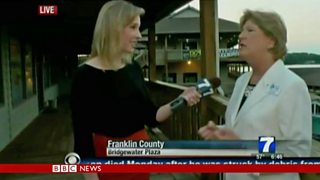
Yesterday’s shocking murders of WDBJ7 reporter Alison Parker and cameraman Adam Ward - filmed by their killer Vester Flanagan and posted on social media - raise pressing questions about the use and misuse of social media, as well as the relationship between social networks and news organisations. Mark Frankel considers what’s up for discussion:
The shootings in Virginia have given the news industry plenty to think about: in the way events played out and how the story was handled by news providers.
For a start, in a case that some have described as “social media murder”, can we justify being eyewitnesses to a crime and reporters simultaneously?
Yesterday, the speed with which the story went from rumour to widely available video evidence was remarkable. It seems it was part of the gunman’s project to tell the story in a particular way - in a ‘snuff video’ kind of way.
There’s normally a line between news organisations and individuals. This story was presented very loudly and graphically on social media without the intervention of news filters.
Then it was (largely) shown through the prism of news organisations in a carefully contextualised way. As journalists, we naturally wanted to use the best available video material. Not for the first time, we were inevitably conflicted.
But there’s a question about how much we can filter things in a responsible way, if people are going to find this stuff anyway. (In this case, Twitter quite quickly suspended the killer’s account and Facebook took down graphic video.)
I think there are a number of issues that deserve our attention:
- There is undisputed interest in a story like this. It generated more referrals to the BBC News site yesterday from social media than any other - mostly from Facebook. The questions are about the ethics
- We need to think about how we present events like the Virginia shootings and contextualise them at speed, for audiences hungry for the story
- We can’t stop people seeing disturbing material because we’d need social media networks to do a lot more proactively
- So how can we ensure audiences are not accidentally disturbed by what they see, at different times of day? There is certainly an issue over autoplay of videos in feeds.
The questions raised by the Paris shootings, for instance, were different, because there the perpetrators weren’t filming it themselves. This was pre-planned: Flanagan approached his victims with a camera and a gun, and took to social media before and after the killings.
As a consequence, in the BBC newsroom we had to make a judgement faster - based on taste and decency, but using video evidence from a crime scene. We cut our broadcast at the sound of the first gunshot. (Above, the moment the first gunshot rings out and the video posted online by BBC News ends.)
But here’s a major problem. Lots of news companies post social media to their own channels and much of it will appear as looping video. You can adjust your settings, of course, to avoid repetition, but the first time you may stumble upon it.
So should the default option be non-autoplay? There could be repercussions for ad revenues and social media networks might resist such a change.
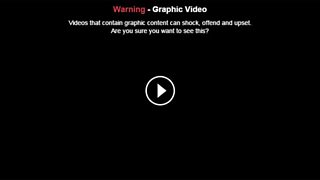
What was interesting yesterday was that Facebook was very proactive in moving from a position of being conscious of autoplay to slapping warnings on all videos relating to the story - including the one posted by BBC News, which had already been edited:
It’s worth saying that, from the BBC point of view, we take trust with our audiences very seriously. So we are more conservative about what we’re prepared to show, and we don’t rush to put it out just because it’s widely available.
What we show on the Six O’Clock News and at Ten is different because of the watershed. At 10pm last night there was a glimpse of the gun. At 6pm there wasn’t.
This conflict between presenting what we know to be the facts and what we can reasonably show can’t be resolved by any one broadcaster, any one organisation.
Is it time for legacy media companies - be they newspapers or broadcasters - to sit down with social networks to discuss a code of ethics around the use of amateur footage shown through media organisations? Could we aim for a more systematic approach to preventing dissemination of disturbing imagery on news outlets?
Vester Flanagan chose to use social media as a tool for his disturbing message. No media organisation could have prevented him arming himself with a camera and a gun.
What we in the media can do is to have more of a conversation about responsibility and the ethics of contextualising video like this. We can’t stop individuals from putting material up there, but we can then sign up to a common approach on how this material is shown to audiences across news output.
There’s clearly a conversation to be had.
Virginia shooting: How thousands watched murder video by mistake - BBC News
#CharlieHebdo: Minute-by-minute decisions over UGC
Our other blogs by Mark Frankel
Eyewitness media: Newsrooms must handle it better or risk losing out
