Snapchat Discover: Mobile-native, snackable, sadly not shareable

Frederica De Caria
is an international journalism student at Brunel University
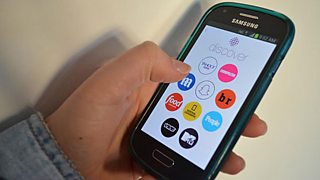
I’m a twentysomething Snapchat native and news junkie, and I spent some of the last week sampling Snapchat Discover, the eagerly awaited software update released on 27 January.
In case you missed the flurry of ‘how to’ user guides, the social network with around 100 million monthly users, almost all under 30, has started to deliver news. It’s partnering some big media players like Vice, Yahoo News, CNN, People, the Daily Mail, Cosmopolitan, MTV, National Geographic, the Food Network and Bleacher Report. There’s also a Snapchat channel with posts from other content creators.
It works like this. Each organisation feeds the platform with five pieces or more of news a day. And predictably they disappear within 24 hours. So far, so Snapchat - a service packaged to hook its target audience of young 'millennials'.
Did they hook me? Oh yes. On Tuesday night, as I was trying to send a snap of my Cinderella teddy (yes, staple Snapchat fare, probably paired with the caption ‘sweet dreams’), I realised that something had changed. A whole new screen of icons to tap and discover. I spent at least half an hour swiping from one news item to another, before going on Twitter to check out other users’ reactions.
Apart from the fact that half of users felt cheated about the loss of the long-running ‘best friends’ feature, as part of the same update, I struggled to find a single negative comment. Personally, after the first flush of novelty had worn off, I did start to find a few things to pick holes in. So I decided to wait and see what my response would be after a week’s diet of Snapchat news.
I toyed with the idea of experimenting with an exclusive diet, but decided I had a bigger appetite so added Snapchat Discover to my normal consumption.
In a nutshell, here’s what I liked:
The content is exclusively for smartphone. I’m one of those irritating people who’s always texting, taking pictures or 'googling' something while doing something else entirely. We know that more and more news is being consumed on mobile devices, but until Discover we’d been used to content that was available on smartphone, not produced for it.
This does make a difference. As Joshua Benton observed in his review for NiemanLab: “It’s completely mobile native.” Content is shaped for the small screen. Each page contains a preview of a bigger piece that could be a video or a piece of writing filled with photos. It’s the main image that draws you in.
It’s catchy. The combination of headline picture and often animated meme is a winner for the audience of existing Snapchat users. The channels each look different, but they all intrigue. The first time I tapped on Vice, I got a story about a Japanese man living alone on a paradise island. The headline invited me to meet him. I swiped up and watched the video until the end.
Whenever, wherever, as long as you want. Discover is made up of bites of news. It’s designed to be swiped occasionally, in a free moment, and it lets users jump from one topic to another, snacking as they go or savouring something more meaty. There are videos of three minutes or even less, and features that don’t require more time to read. And there are also longer reads - up to about 20 minutes.
But here’s what gave me indigestion:
The selection of news. Not enough variety, nor roughage, and definitely a bit too entertainment-heavy. Even for a millennial.
You can’t share. In a world where everything is gradually becoming shareable and likeable and the power is in networking, Snapchat has counter-intuitively decided to take a different direction with Discover. There is no sharing button that allows you to link the content to another platform. For me, a miss.
The app’s on US time. If a piece of news is going to disappear after 24 hours and you’re in Europe, you’re not going to find fresh news in the morning, because Discover works to the US clock. That might not bother everybody, but I like to wake up to something fresh.
I’d like to think that I’ll carry on swiping news on the little ghost. Some fragments are terribly interesting and it takes just a second to flip to the next one. It’s a new-born, so it has some growing up to do.
Discover might not be a revolution, but it’s a significant step. And I’ll bet that in the not-too-distant future every news organisation will have a smartphone channel. So get a move on. We millennials are in the market for news about elections, as well the latest apologies from Justin Bieber.
WhatsApp, WeChat or Snapchat? A dummies’ guide to the new messaging apps
The new BBC News app: Love it or hate it, this time it’s personal
How BBC News covered the Indian elections on WhatsApp and WeChat
Investigative apps are useful tools for journalists, if rough around the edges
What is responsive design - and what does it mean for journalists?
