Overview of The Morrow-bird by Kathleen Jamie
- The Morrow-bird was written for the opening of the Scottish Parliament in 2021. Kathleen Jamie, as Scotland’s fourth Makar, delivered a reading for the occasion.
- The morrow-bird itself Stands for a much larger idea. looking to the future and bearing the responsibility to “tell what must be told” regarding both challenges and opportunities. The poem transitions to the rise of human history, culminating in the present chamber where the poem is being recited.
The poem explores themes of:
- time and history
- the wonder of nature
- the need for good governance
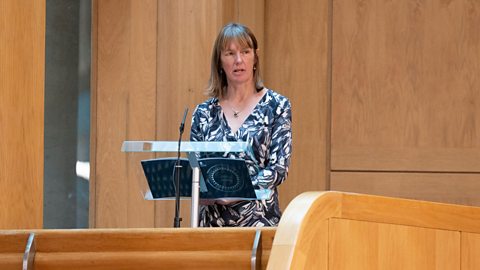 Image source, PA Images / Alamy
Looking for some quick revision? Try one of the interactive Kathleen Jamie quizzes for Higher English.
You can read The Morrow-bird by Kathleen Jamie, and listen to her reading of it at the opening of the Scottish Parliament, on the Scottish Poetry Library website.
Form and structure of The Morrow-bird
The Morrow-bird is divided into four stanzas with an alternating rhyme that deviates at points.
The irregular rhyme scheme can at times create a sense of surprise, enhance emotional expression and reflect the complexity of the subject matter.
- The first stanza is the longest, with twenty-eight lines
- The second stanza has twenty lines
- The third stanza has eight lines
- The final stanza consists of five lines
Stanza one
The longest stanza of the poem begins with a speaker describing a glacier which leaves behind a massive stone as the world warms, then a bird from the future, which brings a hazelnut that grows into a forest. The poem transitions to the rise of human history, cculminating in the present day, and in the chamber of the Scottish Parliament where the poem is being recited. The bird has returned, in a distressed state, to warn of potential disaster.
Stanza two
The speaker tells us the bird has returned with a message, which forms the rest of this section and stanza three. After acknowledging that change happens, the bird advises that it has seen a "stark vision" of the future which needs attention.
Stanza three
The bird expresses frustration that ancient injustices remain. It makes clear that human actions affect the wildlife of the planet, before pointing out that humans also rely on the diversity of nature.
Stanza four
The speaker from the opening stanza returns in the last few lines to express the earnest wish that the bird’s urgent message be heeded and that the future needs to be addressed with wisdom, music and song, ultimately calling for good governance and strong, kind action from the parliament.
Stanza one
 Image source, Yadid Levy / Alamy
The Morrow-bird by Kathleen Jamie opens with an invitation to consider a hypothetical situation or course of action:
Suppose we begin
It implies a willingness, on the part of speaker and audience, to explore together a situation that requires their thoughts and action. Given that this is written for the opening of Parliament, it appears Jamie starts from the premise that the assembled members will take this responsibility on.
From the start we are walked through the formation of the Earth and evolution of the ecosystem. The powerful image of a glacier Stands for a much larger idea. a long slow process of change:
with a glacier / bearing a massive stone
As the world warms (global warming in action), the stone is abandoned, representing the ice melting, but also the past being left behind. The use of perfect rhyme in “stone” and “alone” creates a sense of surprise and reinforces the vastness of overwhelming despair in the phrase “aeons of desolation”. This image of complete emptiness can also be seen as a warning of a future the world could be heading towards.
Image source, Yadid Levy / AlamyEventually the crumbs of earth give way to treeless expanse of “tundra”, and then “reindeer” are joined by a bird from an unknown future:
then one day, a bird / from an unkent airt (the future)
The bird “drops a hazel nut / which sends forth the tree”, suggesting the beginning of a new era. This “gift” creates a more colourful world of “pine green and berry bright” which is in control (“holds sway a thousand years”) until this very long sentence comes to a crashing end with the “first axe bite”. Although "bite" rhymes with the earlier "bright", the hard sound, like the act of cutting down trees, seems shocking and very final.
With the new sentence, the speaker touches on the history of mankind:
The rest, we cry ‘history’-
The word “cry” means ‘call’ in Scots but it clearly suggests the idea of tears and sadness at the destructive force of human history. The use of Scots dialect throughout the poem roots us in a Scottish setting.
The list moves from the agricultural “kye” (cattle) through centuries of empires, takeover of nations to the Industrial Revolution of “mine and mill”:
kye and castle, empire, mine and mill
We arrive at democracy which brings the poet to the setting for the poem’s recitation – the Scottish Parliament:
Which brings us to this chamber
The use of occasional rhymes speeds up the pace of the poem and adds to the story-telling force of the narrative.
- “bright” and “bite”
- “mill” and “will”
- “behest” and “request”
- “dismayed” and “afraid”
The return of the morrow-bird (“Thon bird’s back”) heralds the relaying of the core message of the poem:
she soared to sight the horizon, / but returned afraid.
Stanza two
The first line of the second stanza repeats the end of the first:
She soared to sight the horizon
This repetition emphasises the bird’s ability to see into the future but also gives the sense of a story or fable being told, with a refrain.
The Adding extra information using brackets (), commas , or dashes - -.“(her wings flashed gold)” evokes an image of something beautiful, powerful and perhaps even divine. The flash of gold suggests a sudden burst of light or brilliance or spiritual enlightenment.
There is an urgency in the need to deliver the message as highlighted by the word choice “must”:
to tell what must be told
There is a reminder of the past and the first image of the poem when she perches on a:
certain boulder / (her life-long friend)
Jamie Personification is when a writer gives human characteristics to something that isn’t human. the boulder as a “life-long friend” creates a sense of ongoing familiarity. The bird has been here before and is a friendly presence.
The importance of what is to follow is captured vividly in the playful When a word sounds like the word it is describing. For example, ‘buzz’ or ‘hiss’.A play on words, relying on similar sounding words or two meanings of one word. of:
she caw’s you to attend.
“Caw's” has two meanings. It is the Scots word for “calls”, which roots the poem in Scotland again and suggests that the bird is calling out for the reader's attention. It is also onomatopoeia, mimicking the sound of a bird's loud, harsh cry. Birds often use a "caw" sound to signal danger, which is appropriate given the themes addressed in the poem and the bird's intention.
At this point in the poem, Jamie switches to italics to reflect that it is now the bird speaking. The morrow-bird recognises that there has always been change using a good Scots A series of words together or phrase that convey a certain meaning that does not reflect the meanings of the words separately. An example is "kicked the bucket".:
that’s aye been the way
The word “aye” is Scots for “always”. The bird has witnessed history unfolding and knows that humanity and nature is “always” changing, like the “kye and castle, empire, mine and mill” listed in the first stanza.
The bird then stresses:
the stark vision I saw up there / must be allayed
Here, “the stark vision” refers back to the “sight” that the bird witnessed on “the horizon” that made them “afraid”. The bird is concerned about what the future holds for humanity and urges us to “allay” their fears.
The use of alternating rhymes helps to make the message more palatable that every person will need to be involved in a variety of ways.
- “way” and “allayed ” (A rhyme in which the stressed syllables of ending consonants match. Also known as a half rhyme or imperfect rhyme.)
- “enough” and “tough”
- “say ‘nay’” and “every day”
The word “multifariousness” (being made up of many different parts) is To place two or more ideas/images close together to create further meaning for an audience. to the plain language used in “when it all gets tough”. Perhaps this suggests the contrast between the formal, official setting and language of politics, and the stark nature of the issues that must be addressed.
Recalling the stones and trees from the first stanza of the poem, the use of Personification is when a writer gives human characteristics to something that isn’t human. enforces the need to leave apathy behind.
- “Stones, it won’t be sufficient”
- “Trees, don’t be waving your arms about”
The Ordinary, everyday language and dialect.“sit on your dowps” lightens the mood in capturing the image of stones having buttocks (“dowps”). With these two images, Jamie seems to be suggesting the potential of the politicians being addressed to achieve nothing. The stones could suggest people refusing to budge or take an active part in shaping the future. The waving trees could be seen as people making empty gesture, or their actions achieving nothing.
Video - What is parenthesis?
Jamie uses parenthesis throughout the poem to give the reader additional information:
- "from an unkent airt (the future)"
- "(her wings flashed gold)"
- "(her life-long friend)"
Revise how and why writers use parenthesis with this short Higher English revision video.
Parenthesis
Adding extra information to a sentence (or paragraph) using brackets, dashes or commas.
If you take it out again, the passage should still make grammatical sense.
"The case was worn - and very full - and its straps struggled to keep in its contents.”
Most of the time, parenthesis is tucked into a sentence, but a parenthesis can also be its own sentence as part of a paragraph.
She opened the envelope, carefully sliding the paper out.
(She hadn’t received a handwritten letter in years).
You don’t need to read the parenthesis for this to make sense, but it does give you more detail.
Parenthesis can help us better understand things like setting, or aspects of a character, like their emotions, motivations or background.
It can almost feel like the writer is whispering a secret in your ear.
Liz Lochhead’s poem 'The Bargain' uses parenthesis to describe a character at the Barras market in Glasgow:
“nothing to sell, but three bent forks a torn, calendar (last year’s) and a broken plastic sandal.”
The person has nothing of value to offer, and the parenthesis reinforces this idea.
It’s bad enough that the calendar is torn, but the parenthesis makes it clear just how pitiful and worthless it is, by telling us it’s out of date too.
If your writing makes sense, but you want to add more info, try sticking in a parenthesis.
(You can really build on your ideas!)
Stanza three
As the bird continues her message, she stresses that the world has not yet managed to remove all injustice.She wishes to remind the listeners of the interconnectedness of humanity and the natural world, and the impact that human activity has on “wild domains”: The word "invades" clearly signals that humanity has intruded on natural spaces, and suggest the use of force and destruction.
Creatures, large and small, on land, in the air and in the sea, are all brought together, representing all life and habitats:
the puddock’s leap / the hare’s breath, the drone of summer bees, / the whale’s dive in the ocean
The bird sums up with “and you need them”. It is clear that whatever impact humans have on the world around them will ultimately impact on us too.
Stanza four
The final four lines are prefaced by a heartfelt plea from the nameless speaker of the poem:
So please
We have the poem’s central message which is a call for responsible and ethical leadership:
We seek good governance, Parliament.
The morrow-bird’s new undertaking, or “handsel” (gift), is bestowed with the uplifting features of “music and song”.
The poem ends on a resounding rhyme (“song” and “strong”). Parliament is reminded in three brief instructions, a three parallel words, phrases or clauses used in succession with equal length and/or rhythm. An example of the rule of three. , for the future actions to be taken:
Act bold. Be kind. Stay strong.
What are the themes in The Morrow-bird?
Humans and the natural world
Kathleen Jamie emphasises the interconnectedness of humans and nature, noting that human actions impact even the smallest creatures and the environment:
the puddock’s leap / the hare’s breath, the drone of summer bees, / the whale’s dive in the ocean
The speaker highlights the need for a variety of different approaches (“multifariousness”) to create a diverse and inclusive ecosystem and society which is crucial to address the complex challenges facing us. There is an acknowledgement of the impact of human actions on the environment from the “first axe bite” on the forest, to the pervasive influence of humans on the natural world in the name of 'progress'.
Time and history
The poem starts with the powerful image of a glacier and takes us through a long, slow process of change. After millennia, we reach the rise of empires, then mines and mills, leading to the present moment. This culminates in the present chamber of the Scottish Parliament, where the poem is being read. The poem emphasises that all things pass and change, but the bird's stark vision of the future needs to be addressed with action.
Call for action
The bird in the title is used as the spokesperson for the urgent need for responsible and ethical leadership in the present moment.
The bird urges the audience in the Scottish Parliament to listen, emphasising that change is inevitable, but the needs of the future cannot be ignored. It calls for “good governance” in three short but strong Language that commands or instructs the reader.:
Act bold. Be kind. Stay strong.
Comparing The Morrow-bird to other Kathleen Jamie poems
The Morrow-bird and What the Clyde said, after COP26 are both concerned with human responsibility for what has happened to nature. Just as the morrow-bird warns of the potential damage caused by humans in the future, so the Clyde laments human pollution of the river’s water and fears what may happen if humans do not become actively involved in preserving the natural world, including the Clyde.
While The Morrow-bird covers a wider sweep of human history, What the Clyde said, after COP26 looks back on a very personal connection between the river’s history and human activity. The glory shipbuilding days of the past are recalled, when the Clyde prided itself on its progress being unstoppable.
In both poems there is a build-up to a very clear call for action in order to preserve the world as we know it. In The Morrow-bird, the bird looks to the future and insists that humans must act with wisdom and determination in the best interests of our world. Similarly, the Clyde has listened to all the promises made at COP26 and threatens to rise if the promises are not kept.
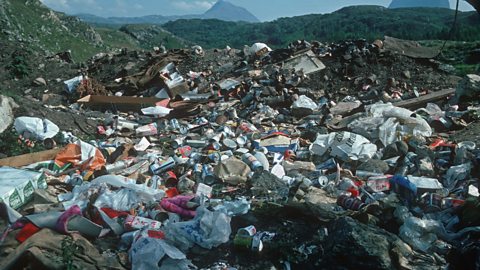
Mr and Mrs Scotland are Dead also explores environmental harm. The setting (a landfill) is central to the poem’s environmental message. It is, by definition, a place of decay, excess, and neglect, where even cherished belongings are reduced to waste. There is a concern in all three of these poems with what the future may hold, if we do not act responsibly and think about the best interests of the planet.
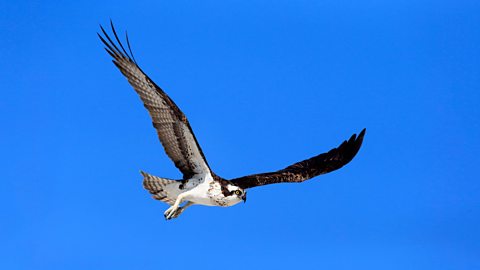
Ospreys of course also deals with birds, in this case migration paths and the ospreys, eagerly awaited in Scotland after their flight from Senegal. Although these birds are not metaphorical, as in The Morrow-bird, there are similarities here as the importance of the natural world takes prominence. These birds have not travelled from the future but they bring hope and pleasure to those who see them every year. People pay attention to them, in a way that the morrow-bird demands that we heed its message.
Crossing the Loch has some connection to The Morrow-bird through its focus on the environment and nature. There is a similar sense of awe and wonder at the scale and variety of life. Both poems share a sense of danger, one through how our actions might shape the future, the other through a recognition of how small and exposed people are compared to the world around them.
Like The Morrow-bird, Song of Sunday suggests a need for change. While the call to action is less definite, the description of a polite and loveless routine of the past, is contrasted with an "alien" and lovely" kiss could be seen as a plea to move on from how life was, and embrace a more open, emotional life.
Revise The Morrow-bird by Kathleen Jamie
Revise The Morrow-bird and other poems by Kathleen Jamie with interactive quizzes for Higher English.
Quizzes - Kathleen Jamie. quiz
Test your understanding of set texts by Kathleen Jamie with a series of interactive quizzes for National 5 English.

More on Kathleen Jamie
Find out more by working through a topic
- count3 of 7
- count4 of 7
- count5 of 7

- count6 of 7