Overview of What the Clyde said, after COP26 by Kathleen Jamie
- What the Clyde said, after COP26 by Kathleen Jamie is a When a character speaks for an extended period of time, revealing thoughts, feelings, and motivations to another character or the audience..
- It was written in response to the COP26 climate conference held in Glasgow.
- The poem uses the River Clyde as a Describing something by saying it is something else. While a simile compares things using 'like' or 'as', a metaphor creates a direct comparison voice, reflecting on the conference and its outcomes.
- The Clyde, once a busy industrial waterway, now observes the proceedings with a mix of weariness and hope.
You can read What the Clyde said, after COP26 by Kathleen Jamie on the Scottish Poetry Library website.
Context
River Clyde
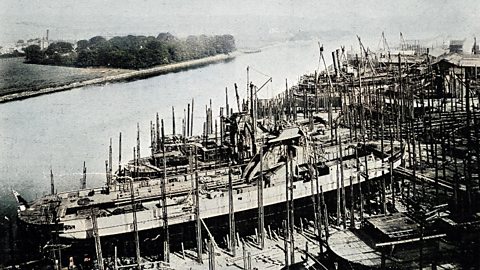 Image source, Chronicle
- The River Clyde is one of Scotland's most famous rivers.
- It is located in the west of Scotland and runs through the city of Glasgow.
- It was once a major centre for industry. In the late 19th and early 20th Centuries, Glasgow became the biggest shipbuilding centre in the world.
- However, from the period after World War One, there was a decline of major industries in Scotland, including shipbuilding.
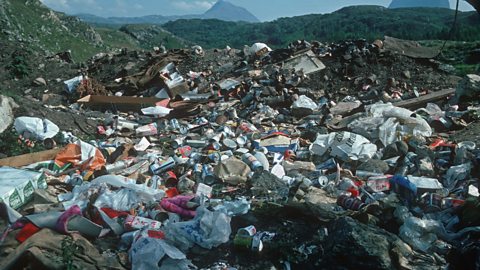
- Today, the Clyde is also contaminated by materials that have been passed into the river from industry and other human activity.
Image source, ChronicleWhat is COP26?
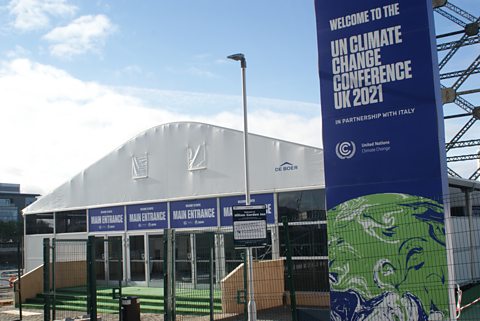 Image source, Getty Images
- COP26 was a climate change summit held in Glasgow in 2021.
- COP stands for 'Conference of the Parties'. It is held every year and it is attended by countries that signed the United Nations Framework Convention on Climate Change (UNFCCC).
- After the 2019 COP25 conference in Madrid, each nation agreed to devise a plan to cut their The release of carbon into the Earth’s atmosphere. This contributes to climate change. by the next conference in Glasgow.
- A new global agreement, the Glasgow Climate Pact, was reached at the COP26 summit. Its aims included reducing emissions, increase money to help poorer countries, and stopping The removal of forests, often to make space for farming, industry, settlements, roads and use of wood as fuel..
Image source, Getty ImagesForm and structure of What the Clyde said, after COP26
What the Clyde said, after COP26 is a When a character speaks for an extended period of time, revealing thoughts, feelings, and motivations to another character or the audience. with the River Clyde as the speaker.
It is divided into five seven-line stanzas with a final strong message in the last two lines set on their own.
The poem is written in Poetry that doesn't have an intentional rhythm or rhyme, but instead can sound more like speech.
Section one
The Clyde presents itself as an impartial channel which treats all of its tributaries, ravines and both banks exactly the same way.
Section two
The Clyde remembers the glory days of the past, when it was a very important part of Glasgow’s shipbuilding industry. It seemed as though such wonderful progress could not be stopped.
Section three
The mood changes completely, as the Clyde expresses unease with the “storm rains” and the reality of being a “poisoned chalice” for the waste of humanity. This highlights the environmental impact of climate change and the river’s role as a recipient of pollution.
Section four
The Clyde presents itself as a listener to the world’s words and promises made at COP26.
Section five
Despite the concerns, the Clyde also expresses a sense of hope and a resolve to take a side. It aligns itself with the hopes of the young folks, who protested at its banks.
Section six
The poem concludes with a sense of urgency and a call for action, suggesting that the Clyde will not passively accept the consequences of inaction.
Section one
This When a character speaks for an extended period of time, revealing thoughts, feelings, and motivations to another character or the audience. opens with the Clyde’s confident assertion, using a Scottish expression, that the river can maintain a sense of control and composure, even when facing adversity:
I keep the heid. I’m cool.
The second line humorously gives the very human response to a belief that others should anticipate the speaker’s needs:
If asked – but you never ask
In response to the question that is “never ask[ed]”, the Clyde says:
I’d answer in tongues
Speaking in tongues refers to the Christian belief that a person can be given the ability by the Holy Spirit to speak in a language unknown to them. To “answer in tongues” suggests perhaps a divine or spiritual language, or an insight beyond mere human understanding. The many tongues or languages compares to the international nature of the COP conference, attended by people from countries all around the world. It also suggests that communication between nature and humans is difficult; they are not speaking a common language.
The list which follows conveys the vast extent of the Clyde’s reach (the Clyde has four waterfalls, “linns”, and thirty-eight tributaries). The choice of four rivers from the many other possibilities hints at the importance of the Clyde. The Clyde wishes to make clear that it remains “neutral”, and this is highlighted by the The repetition of the same sounds or consonants in two more words nearby each other. final lines:
balancing / both banks equally as I flow
This first stanza is all about balance in nature and there is a confident tone in the way the Clyde speaks: something that shifts as the poem continues.
Section two
The opening question of question two suggests that the Clyde looks back regretfully at the past, when the river was at the centre of a thriving industrial success.
Do I judge?
The Clyde’s memory encompasses the intense physical labour of:
the hammer-swing / the welders’ flash, the heavy / steel-built hulls
All of this conveys the exceptional strength, durability and resistance of Glasgow’s shipbuilding trade, in which the Clydem looking back, takes such pride. There is a clear sense of ownership in “my city”.
The Clyde admits to having boasted during the heyday of the shipbuilding trade in Glasgow:
maybe / I was a blether-skite then
The word “blether-skite” is Scots for a person who talks a lot of nonsense. This suggests there was a naivety in the river's confidence in the first stanza.
It was a time when anything seemed possible, and the Clyde recognises its conceited view of itself (“a wee bit full of myself”), because to all appearances the success would continue:
we seemed gey near unstoppable…
The word “gey” is a Scots word for “very” and emphasises the Clyde's arrogance at this time. The word choice of “unstoppable” also highlights this sense of Excessive pride or self-confidence.. Finally, the use of The omission of a word or words usually indicated by three dots. at the end signals a pause before a turning point in the poem. The Clyde seems to recognise its pride in Glasgow's industrial past was ill-judged, and in the next section it goes on to explain why.
Section three
The mood from the outset of this section completely changes in stanza three with a A question that doesn't need an answer and is asked for dramatic effect or to make a point.:
But how can I stomach any more / of these storm rains?
The Clyde is now questioning the difficulties of the present. The repetition of “How can I” at the start of each question emphasises the scale of the problem facing the Clyde. The verb “stomach” is used both literally and figuratively to convey the force of physical and mental unease as a result of the volume of water swelling the Clyde’s course. There is a sense of the river itself having become ill.
There is deep resentment in the romantic image of the Clyde and its lover, “the wide-armed Ocean”, having to cope with the waste of humanity polluting their affair.
knowing / I’m a poisoned chalice
The “poisoned chalice” metaphor conveys the deceptive nature of appearances. This phrase is an A quick reference - often to an image, character or place - from a work of literature or music or mythology. to Shakespeare's play Macbeth and describes how Macbeth's ambition lead to his downfall. Like a chalice, the river is a container for liquid. It sees its waters, and the ships and other goods made on its banks and spread throughout the world, as things that seemed desirable but have terrible consequences.
The severity of the problem is reflected with the force of “must” in “she must drain”. The ocean has no say in what flows into it, despite the negative impact.
There is a deliberate rebuke to human carelessness in the use of “chuck” which conveys the thoughtlessness of human actions.
drinking / everything you chuck away…
Section four
The Clyde is keen to stress the move from activity to listening. This reflects that the river is no longer a centre for industry, it has taken on a passive role.
So these days, I’m a listener, aye
The emphatic “aye” at the end of the first line carries a double meaning; it can mean 'yes' the river is confirming what it has said; it can also mean 'always', suggesting the river is always listening, it hears all that is said along its bands.
“Think of me” suggests that the Clyde wants us to be aware that it is still playing an important part in any new developments.
The image in the Marked by alliteration - the repetition of a sound at the beginning of consecutive words, such as ‘the big, bold, blue sea'“long level / liquid ear” suggests a softer, more melodic listener who misses none of the words spoken at COP26. The deliberate continued use of alliteration enforces the importance of the speeches made:
- “the world’s words”
- “the pleas of peoples”
- “ships once sailed”
We are left in no doubt about the stress placed on sincerity and not just lip service in “the beautiful promises”. This section too ends with an Three dots (...) used to indicate a pause or missing words.. This time it indicates that the Clyde is going to examine carefully any outcomes.
I heard the beautiful promises…
Section five
The opening line is a reminder of the Clyde as the narrator, conceding its place in the scheme of things, but also acknowledging that the time has come to no longer be impartial:
and, sure, I’m a river, / but I can take a side.
This is despite its nature as a neutral flowing river, and its earlier reference to "balancing / both banks equally” at the end of the first section.
There is a resolute quality to “From this day” which suggests that the river no longer looks back, and no longer considers different sides or arguments. Its mind is made up and there is no longer a choice in the course of action to come.
The playful image of “keep afloat”, combined with the A simile is a word or phrase used to make a comparison for dramatic effect, using 'like' or 'as'.“like wee folded paper boats”, brings together the innocence of children’s play with the earnest desires of young people, whose “chanting” and “fear in their spring-bright eyes” cannot be ignored. The paper boats could suggest the documents signed at COP-26, suggesting that they are perhaps flimsy and easily damaged. By comparing the boats to "the hopes of the young folks / chanting at my bank" the speaker suggests these hopes too are fragile and in need of support. Rather than the officials at the conference, the speaker is taking the side of the protestors who came to COP-26 to press for action and change.
Section six
There are only nine words in this concluding section, but they carry great force in their simplicity. The Clyde refuses to be ignored:
So hear this:
The final line conveys a warning and a determination to fight for a better future:
Fail them, and I will rise.
The word “rise” has two meanings here. It evokes the literal rising water levels caused by global warming but also suggests an act of rebellion, like an uprising.
Video - Commands and statements
The final section uses a command ("So hear this:") followed by a strong statement ("Fail them, and I will rise."). The Clyde demands to be heard and its final statement is a warning to the reader and wider society.
Revise the use of commands and statements with this short Higher English revision video.
What are statements and commands? Find out more about these sentence types and why they're used.
Statements and commands
A statement tells someone a fact or an idea about a topic.
The dog wants a treat.
A command tells someone to do something.
Sit!
“Your room is a mess” is a statement.
“Go clean your room!” is a command.
Statements are very common in writing.
A statement must give you information and finish with punctuation, like a full stop.
The soldiers were scattered across the field.
The general might command them to stand.
“Stand in a line!”
In real life, you would find commands as instructions, like in a recipe book.
A command must start with a verb telling someone to do something.
Chop, stir, pour, mix
These are called imperative verbs.
Commands in writing, particularly prose fiction, tend to be part of the dialogue.
In Anne Donovan’s short story, ‘All That Glisters’, she uses a statement, followed by a command, when she describes a tender moment between the speaker and her dying father.
A statement describes the girl showing her dad the glitter pen she’d used at school:
“Ah took his haun in mines and turnt it roon so his palm faced upward. Look, daddy”
Donovan shows that a command doesn’t have to be bossy. It can be gentle or even loving.
Her dad is very ill, and weak, and his daughter is gently guiding him with her hands and her voice.Now you know how to make a statement with your writing.
Take command!
What are the themes in What the Clyde said, after COP26?
Environmental damage
In this When a character speaks for an extended period of time, revealing thoughts, feelings, and motivations to another character or the audience., the River Clyde considers the damage caused by the “storm rains”. The river looks to its proud industrial past with a sense of regret. It bitterly laments how human carelessness has allowing all manner of detritus to enter and pollute its water. It makes the determination of the ending to ensure that “the world’s words” are heeded all the more urgent. The image of the Clyde, unable to "stomach any more", shows the river has become sick, and literally can no longer contain itself as its water level rises.
Memory and reflection
The Clyde looks back fondly on the successful days of the past, when it was the site of a world-leading shipbuilding industry. The river speaks humorously of the pride it felt in its achievements, which it felt “seemed gey near unstoppable”. This gives a sense of completion to the opening impressive detailing of its scope and tributaries.
But there is also a tinge of regret in these reflections; the river is now aware of the damage its industrial past has caused.
Call to action
Having listened carefully to all the promises made by speakers at COP26, the Clyde can no longer remain impartial. In particular, looking to the future, the Clyde vows to fulfil “the hopes of the young folk” in ensuring that promises are kept. The final nine words set apart are clear in their threat to exact revenge if the pleas are ignored:
so hear this: fail them, and I will rise.
Comparing What the Clyde said, after COP26 to other Jamie poems
This poem and The Morrow-bird share the theme of environmental damage. Just as the Clyde deplores how humans have polluted its waters, so the morrow-bird warns the Scottish Parliament that “your human influence/ invades the wild domains” affecting puddocks, hares, summer bees and whales among other things. There is a similarity in how the poems show how damage caused by human activity will ultimately reflect back on humanity itself - the Clyde "will rise", the morrow-bird points reminds us of our reliance on all forms of life with "and you need them."
The Clyde remembers Glasgow’s fame as a centre for shipbuilding in the past. Similarly, the morrow-bird recounts the various stages of the earth’s evolution from the initial glacier, through tundra, forests, “kye and castle, empire, mine and mill” and recognises that while change is inevitable, the historical importance of each stage must not be cast aside.
Both poems end with a very clear call to action and both were first delivered in the chamber of the Scottish Parliament. Just as the Clyde demands that the promises made at COP26 should be honoured, so the morrow-bird seeks “good governance”. The final message of both poems is that everything possible must be done to ensure the welfare of the earth in all its manifestations for the benefit of the future.
The reflection on potential environmental harm caused by people can also be seen in Mr and Mrs Scotland Are Dead, where the speaker expresses concern about the dumping of unwanted items in landfill. The poems also share a similarity in their use of rhetorical questions to encourage the reader to think about their part in environmental damage. There is a concern in all three of these poems about what the future might hold, if we do not act responsibly and think about the best interests of the planet.
These poems consider the human ability to destroy nature. In contrast, Ospreys explores the resilience of nature through the journey of the ospreys. The ospreys endure many dangers to return to their nesting site in Scotland. They overcome challenges presented by harsh weather and human intervention (busy motorways). However, the Clyde in this poem suggests nature's resilience has its limits.
how can I stomach any more / of these storm rains?
In Crossing the Loch, nature is personified, like the Clyde in this poem. There is a sense in both poems, to varying degrees, that nature is trying to communicate with people. The loch in Crossing the Loch“lipped the sides” and “mouthed ‘boat’”. Despite its attempt at friendly communication with the boat passengers, they are “scared” of nature and the dangers it presents. Similarly, there is a threat from the Clyde that it will “rise” if its warnings are not taken seriously.
What the Clyde said, after COP26 can be linked to Song of Sunday and Mr and Mrs Scotland Are Dead through its exploration of the past. All three poems present aspects of Scotland's past without romanticising them. In their own way, each criticises past behaviour, traditions and opinions, and suggests that change should be made for the better.
Revise What the Clyde said, after COP26 by Kathleen Jamie
Revise What the Clyde said, after COP26 and other poems by Kathleen Jamie with interactive quizzes for Higher English.
Quizzes - Kathleen Jamie. quiz
Test your understanding of set texts by Kathleen Jamie with a series of interactive quizzes for National 5 English.

More on Kathleen Jamie
Find out more by working through a topic
- count7 of 7
- count1 of 7
- count2 of 7
- count3 of 7