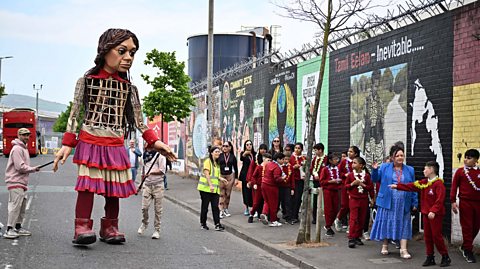
Video: What is diversity and inclusion?
Watch this video explaining the impact of diversity and inclusion in Northern Ireland.
NARRATOR:
Today in Northern Ireland, the population is changing due to immigration.
Our communities are made-up of people from a variety of countries, including Poland, China, the Philippines and India, as well as different nationalities and races.
Our society includes people of all ages, men and women with different religious beliefs, political beliefs and sexual orientation - this is what we call diversity.
Here are 5 reasons why a diverse society is a good thing.
One - it creates tolerance and understanding of different cultures.
Two – it unites our community through shared experiences with different people.
Three - it brings more money into the economy through the growth of different businesses.
Four - it increases tax contributions, which pays for improving education, healthcare and our environment.
And five - it eases a skill shortage in Northern Ireland - around 4% of the workforce is made-up of migrants.
Diversity can lead to division and conflict due to misunderstanding or fear of people who don't share your own cultural identity.
This can take the form of prejudice, which is mistreating a person based on their gender, race, religion, sexuality, disability or political beliefs.
Stereotyping - which is making an assumption about a person based on their cultural identity.
Sectarianism - which is unfair treatment of a person based on their religion.
And racism, which is mistreating someone based on their race.
Any of these conflicts can lead to people feeling isolated or excluded from society or being denied a job. It can even lead to violence.
Northern Ireland has a history of violence as a result of sectarianism between Catholics and Protestants.
Many people have been mistreated, hurt or killed because of their religion.
The key to a successful and peaceful diverse society is inclusion, which means bringing people together.
There are a variety of ways this is being done in our society. Schools work hard to ensure their environments are welcoming to children from all backgrounds and race.
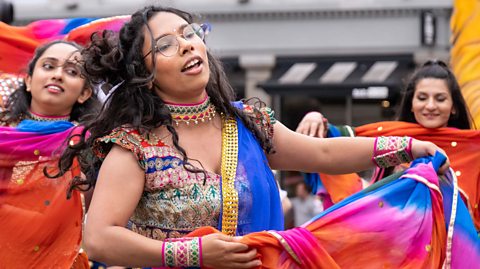
Local councils put on a variety of festivals to celebrate all types of culture and bring people together.
Community groups offer support to victims of sectarianism, racism or prejudice and cross community groups promote inclusion between Catholics and Protestants - so that we don't return to the violence experienced here in Northern Ireland.
Cultural identity
What is culture?
Everyone belongs to a culture. This is a feeling of belonging to a group in society. Culture is drawn from a number of different influences, including:
- religious beliefs
- age
- gender
- sexuality
- race
- language or dialect
- history
- food
- music
- dress
- festivals and celebrations
What is cultural identity?
Cultural identity is the things shared with other people. Everyone has more than one cultural identity.
A young person from Northern Ireland may have grandparents who are also from Northern Ireland, but their life experiences will be different due to their age. As a result, while they share some aspects of cultural identity—such as family traditions, nationality and food - they may also identify with different cultural groups based on their generation and personal experiences
What factors influence cultural identity?
Location
Where a person lives has a big impact on their cultural identity because people first learn from their immediate surroundings.
The way someone speaks is a good example. Most people in Northern Ireland speak English, but someone from Omagh sounds different to someone from Ballymena. These accents reinforce a sense of belonging to a particular place.
Family values
An individual's cultural identity is often shaped by the beliefs and attitudes of their parents.
Parents may take their child to a church of a particular denomination, or celebrate particular festivals, such as St Patrick’s Day, or the Twelfth of July.
Taking part in these activities can shape an individual's personal beliefs and identity.
How do people express cultural identity in Northern Ireland?
A person's cultural identity is about being part of a social group and sharing traditions and practises with that group’s other members.
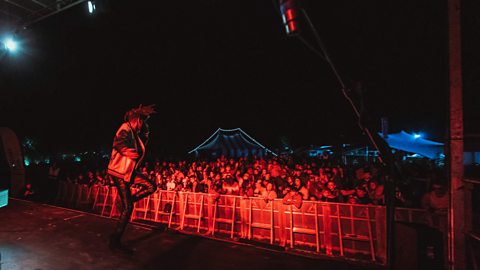
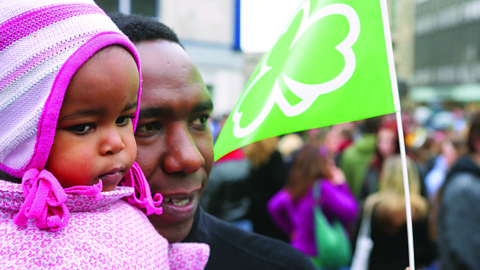
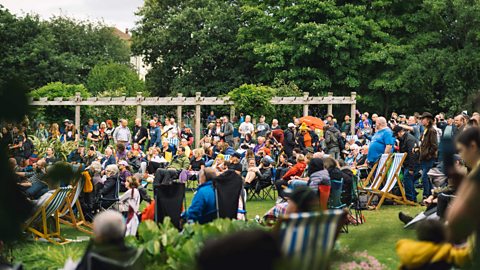
Here are some ways people in Northern Ireland express their cultural identity.
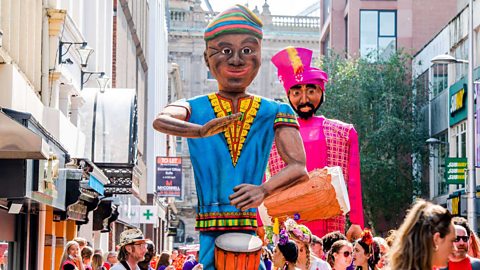
Image caption, Two processional giants playing drums whilst walking alongside participants in Belfast's multicultural Mela Carnival.
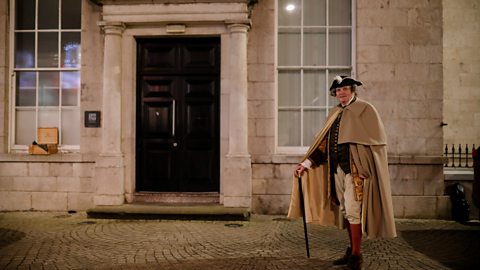
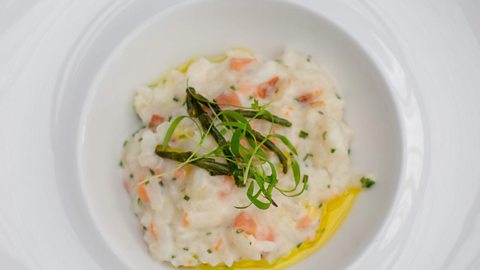
1 of 6
What are the benefits and challenges of expressing cultural identity?
Encountering different cultures
Immigration has led to the population of Northern Ireland being very diverse. Northern Ireland is now home to people from other countries including:
- Poland
- Lithuania
- Romania
- China
- Philippines
- India
What are some of the benefits of expressing cultural identity?
Expressing cultural identity can bring many benefits to both individuals and Northern Irish society.
Individuals
- Helps people better understand who they are and develop a sense of self.
- It helps people connect with their culture.
- Builds friendships — it makes it easier to make friends and fit in with others who share the same culture.
- Sharing traditions, values and beliefs with others helps people feel a sense of belonging to a group.
- Sharing the positive aspects of a culture can help people feel proud of where they come from.
Northern Ireland
- It promotes tolerance and understanding between different cultures
- The enrichment of the community through shared experiences with different people from other countries and cultural groups.
- Expressions of cultural identity whether through festivals, parades or other events can boost the economy and create tourism
- When people express their cultural identity it introduces people in Northern Ireland to other ideas, music, food and helps create a truly multicultural society.
What are the challenges of expressing cultural identity?
Sometimes people with different cultural identities fail to understand each other. Misunderstanding can lead to fear. Fear can cause:
- Prejudice — intolerance and mistreatment of a person because of their race, religion, sexuality, disability or political beliefs.
- Stereotyping — making an unfair assumption or generalisation about a person based on an aspect of their cultural identity. Examples include the belief that ‘women can’t drive’, or describing people as ‘smicks’ or 'culchies'.
- Sectarianism — treating a person unfairly because of their religion. In Northern Ireland, this most commonly occurs between Catholics and Protestants.
- Racism — mistreating someone based on their race or ethnicity.
- Homophobia — disliking someone because of their sexual orientation.
These challenges can lead to conflict in a community if they are not properly addressed. If people from different communities do not, or cannot, integrate with one another they may feel excluded and isolated.
More on Cultural identity, diversity and inclusion
Find out more by working through a topic
- count2 of 6
- count3 of 6
- count4 of 6
- count5 of 6