What are the reasons for immigration?
Migration is when a person or people move to a new region or country, usually seeking employment and with the idea of living there temporarily or permanently. Below are some of the push factors reasons why someone leaves an area and pull factors the reasons why someone moves to a particular area.
| Push factors | Pull factors |
|---|---|
| Unemployment | Employment |
| Lack of services and amenities | Better health provisions |
| Political insecurity and lack of safety | More safety and stability |
| High crime rate | Lower crime rates |
| Poverty | Wealth |
| Crop failure | Fertile land |
| Drought | Steady food supplies |
| War | Political stability |
| Flooding | Less risk of natural hazards |
| A better standard of living | |
| A better quality of life | |
| A better climate |
How can the government help migrants?
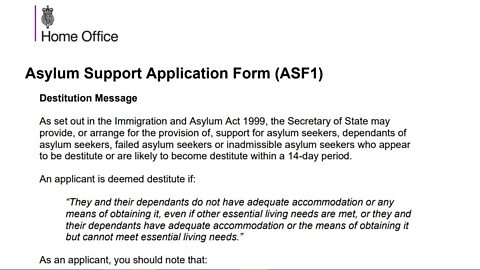
The government in Northern Ireland can help migrants, refugees and asylum seekers in a number of ways.
- They can provide shelter, food and basic essential items.
- Countries should both shorten the time it takes to assess asylum applications and provide early support to those most likely to stay.
- Assist people in language learning, providing funded opportunities such as night classes.
- When choosing where to send migrants, it is important to consider where appropriate jobs can be found that match an individual's skills.
- Different refugees require different levels of support, governments should consider this and treat each refugee accordingly, taking into account their individual backgrounds.
- Provide protection from discrimination through laws ie Part of the Northern Ireland Act 1998 that requires public bodies to promote equality and good relations among different groups of people. This ensures fair access to services and opportunities, preventing discrimination. of the NI Act.
- Help accessing services such as health and education. For example government funded agencies can provide migrants with information about the education system open to them in Northern Ireland.
- If an immigrant has the right to reside they should be made aware of how to claim any benefits that are available to them.
- By providing the PSNI with funding to combat hate crime.
- Government funded initiatives, such as the Refugee Employability Programme (REP) in Northern Ireland, provide various types of support, including help with finding a job, improving job skills and accessing resources for training.
What are the benefits of immigration to Northern Ireland?

As a result of immigration the population in Northern Ireland is ever changing. The local community now, consists of immigrants from Poland, China, Philippines, Lithuania, Ukraine, India, Romania and Hungary amongst other countries. This enriches the local community and provides opportunities to become a multicultural, tolerant society. Here are some of the ways immigration benefits the local community.
- Promotes tolerance and understanding with communities from different cultures.
- Contributes to Northern Ireland's cultural diversity.
- Enriches the community by sharing experiences with different people.
- Generates more money into the economy through businesses.
- Increases tax contributions which can pay for education, healthcare and improvements in Northern Ireland.
- Eases skills shortages – doctors and nurses come to work in Northern Ireland's hospitals.
What are some of the challenges of immigration?
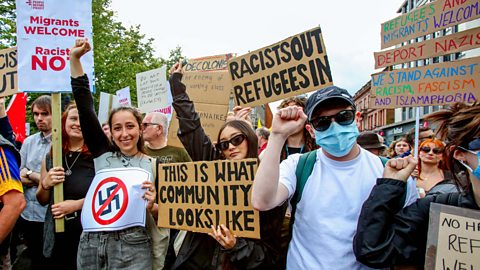
- An increase in racism and racist attacks.
- A rise in community tensions.
- The existence of prejudice and stereotyping.
- An increase in discrimination.
- Pressure on resources and services like housing, schools and hospital waiting lists.
More on Cultural identity, diversity and inclusion
Find out more by working through a topic
- count4 of 6

- count5 of 6
- count1 of 6