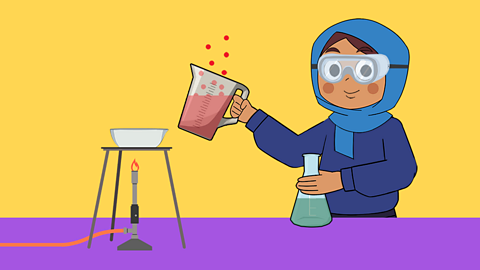
Experiments need to be accurate and precise
It is important that the results from scientific experiments are both accurate and precise.
This means that the data collection needs to be accurate and precise as well.
This way, we can be more confident that our results are correct.
When results aren't accurate or precise they are called inaccurate or imprecise.
Watch: Accuracy and precision
Learn about variables.
A variable is any one of the things in a test we can change.
Let's measure the time it takes for paper helicopters to fall.
There are lots of variables we could change.
We could change the length of the wings, the number of paperclips or the type of paper.
To make it a fair test we're only going to change one variable at a time.
Okay, let's test the length of their wings and keep everything else the same.
One has short wings, one has medium length wings and one has long wings.
We'll drop them all at the same time.
The helicopter with the longest wings took the longest time to fall.
Fascinating facts
Accurate measurements are those which are closest to what they should be.
Precise measurements are those which have been repeated and are similar.
Inaccurate or imprecise measurements are those that are neither accurate nor precise.
Scientists at The Lawrence Berkeley National Laboratory in California are able to use an electron microscope which can observe objects using a resolution of just one ten-millionth of a millimetre. That’s narrower than a single hydrogen atom.
Spacecraft have to be accurate and precise over very long distances. NASA's New Horizons probe journeyed successfully from Earth to Pluto via Jupiter, a journey of over 5.3 billion kilometres.
Scientists in America have built an atomic clock which is so precise. it loses just one second every 300 billion years!
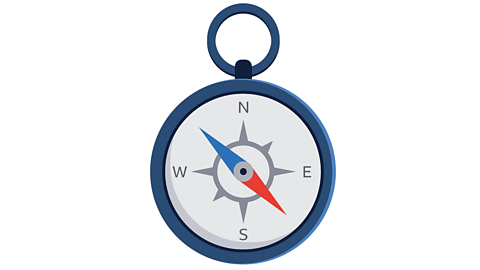
Although magnetic compasses are usually accurate and always point north, the Earth's actual north magnetic pole is constantly moving over time due to changes in the Earth's outer core.
Accuracy
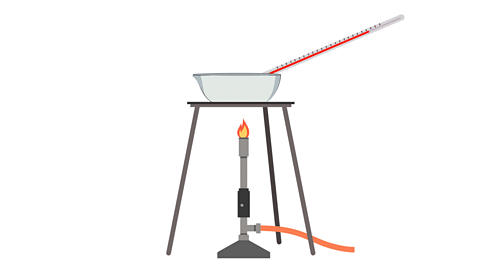
Accurate measurements are those which are close to what they should be. We know that the temperature of water's boiling point is 100°C. An accuratethermometer will give us this value.
Taking repeat readings or measurements when needed will increase the accuracy and reliability to help you to spot any anomalies.
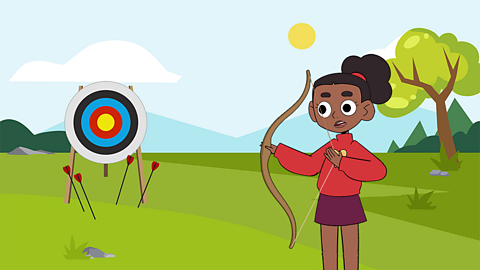
Think of accuracy like an archery game, with a bow and arrow. If you aim for the centre of the target and hit it, that's accurate.
If you keep hitting the same spot every time but that spot is far from the centre of the target, you are precise, but not accurate!
An example of accuracy
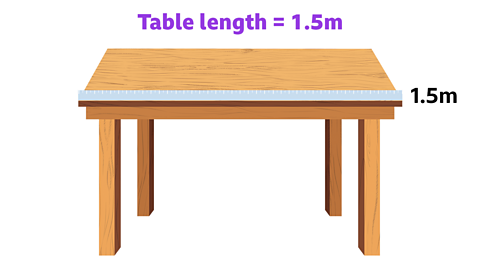
Imagine you're measuring the length of a table using a ruler.
If the actual length of the table is 1.5 metres (m) and your measurement is 1.5m, you are accurate.
However if you measure it as 1m then that would not be accurate.
Precision
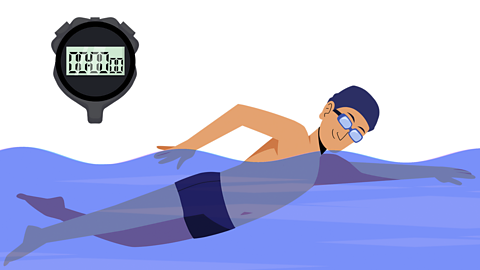
Science experiments are often repeated several times.
Precisemeasurements are those that have been repeated and are similar.
If you timed yourself swimming a length in a pool several times and you recorded similar results, they would be precise.
An example of precision
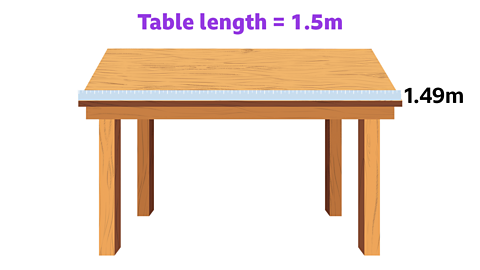
If you measure the length of a table three times and record1.49 metres (m) each time, then you are precise because your measurements are very close to each other.
However, if the true length of the table is 1.5m, then your measurements aren'taccurate.
Important words

Accuracy – Measurements that are close to what they should be.
Anomalies – Something that is not expected or different from previous results.
Data collection – The process of collecting and evaluating data.
Experiments – Scientific procedures that produce results.
Inaccurate – Lacking accuracy or precision.
Imprecise – Lacking precision or accuracy
Measurements – Scientific procedures that produce results.
Precise – Measurements that have been repeated and are similar.
Reliability – Whether something can be trusted or not.
Thermometer – A piece of scientific equipment that measures temperature.
Activities
Activity 1 – Target practice tap and find
Activity 2 – Accuracy and precision quiz
Activity 3 – Make a target
Ask a responsible adult to help you with this activity.
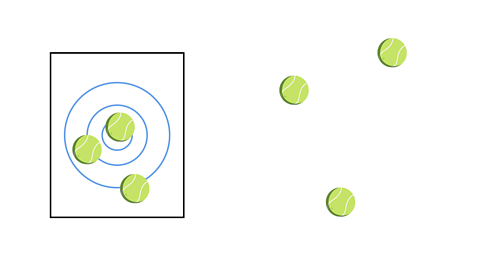
You will need a large piece of paper and some small balls.
- Draw a giant target onto the large paper.
- Throw the balls at the paper and try to make different patterns.
- Explain why each one is accurate or not, and why it is precise or not.
True or false: If all the balls are close together then they are accurate.
Do you agree or disagree with this statement? Explain why.
The answer is false! Balls which are close together would be precise, but not accurate.
What other scientific investigations could you complete using the same equipment?
Activity 4 – Picture quiz

New game! Horrible Science: Stinky Space. game
Join Pipette on her epic mission and learn some revolting facts about space along the way.
More on Working scientifically
Find out more by working through a topic
- count1 of 10

- count2 of 10
- count3 of 10
- count4 of 10