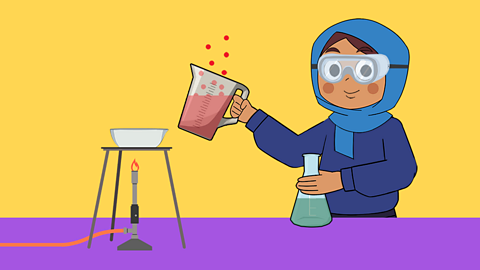
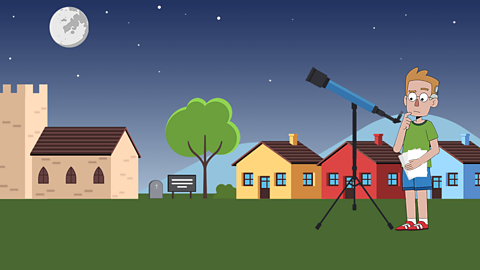
How to ask questions
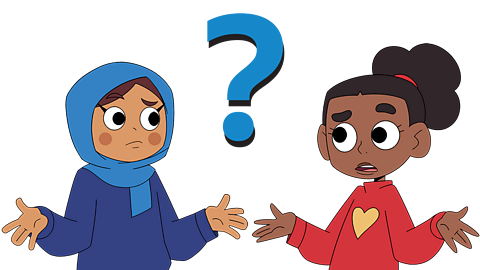
Asking questions is a very important part of thinking like a scientist.
Many scientific investigations begin with a question. These questions can start with:
- Why?
- How?
- When?
- What?
- Which?
- Can you explain?
It is important to think carefully about your question to make sure it is relevant. If it isn’t, then its answer is not likely to help you.
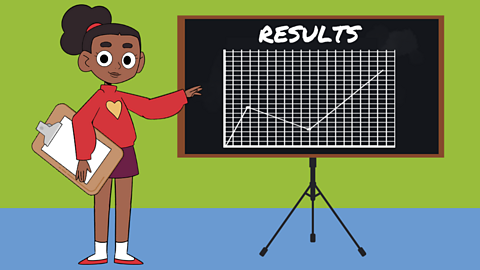
Scientists then make a prediction of what they think will happen. Then, they collect and record the data. Finally, they present their results in a table, chart or graph.
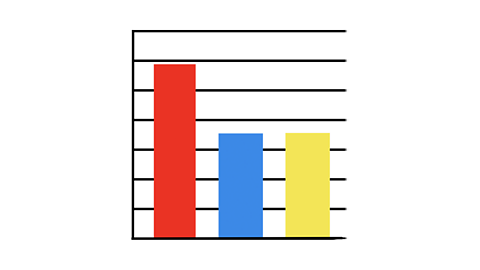
Asking questions step by step:
- Think of a question that you would like to find the answer to.
- Make sure your question is relevant. If it isn’t, then its answer is not likely to help you.
- Scientists then make a prediction of what they think the answer to the question might be and what they will find out.
- They plan how they will answer their question; this might be by carrying out an investigation or doing some research.
- Scientistsrecord what they have found. They might have collected data or information.
- They then present their results. They might write down what they found, or they might tell someone.
- Finally, they link it back to their question – did what they found out help them to answer it?
Watch: Asking relevant questions
Fran: Why is the sky blue?
What makes the grass grow?
And how do we know what makes the world turn?
Asking questions is what science is all about.
Our questions are what make us look for answers to explain the world around us.
So, forming the right question is really important.
And the words we use guide our investigations.
For example, 'When do the birds sing?' is different to 'Why do the birds sing?'
And 'Where does the sun shine?' is different to 'How does the sun shine?'
So, what makes a good scientific question?
How and why are great words for scientific questions.
They're what every scientist wants to know - how things happen and why they happen.
So, over to one of my investigators to learn more.
Child: These glasses make a sound when I hit them.
This one sounds different to this one.
I think it's the water.
Time for an experiment but first, I need a question.
Where?
Mmm… I don't think so.
What?
Could be what. What levels of water… no that's not working.
How? How does the level of water affect the sound?
That's it! It's a how question.
Fran: That was a great question for a pattern seeking enquiry.
The questions we ask will help us to decide which type of enquiry we're making.
'How long do the bubbles in my washing up bowl last?' might mean we need to observe the bubbles.
'What makes an ice lolly melt the quickest?' might involve a comparative test, so leaving one ice lolly alone and then using my hairdryer on theother.
Remember, science is all about asking questions.
Ask the right question and you might discover something that no one else has before.
Different ways of answering questions
Observing over time – how does something change?
You could watch or measure how something changes over a short or long amount of time and record what you find in a table, a diary or by drawing diagrams.
You could try and answer the following questions:
- What happens to a bean plant over time as it grows?
- What happens to a block of ice when it is left on a heater?
- What happens to my shadow during the course of the day?
Classifying and grouping – how are things the same or different?
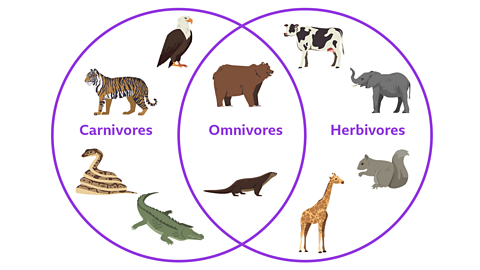
You could look at plants, animals, rocks or materials and identify what things make them similar or different. You could sort them into groups usingVenn diagrams or identify what something is by using a classification key.
You could answer the following questions:
- Which tree does this leaf belong to?
- What type of fish is this?
- What material do we collect the most of to recycle?
Pattern seeking – is there a pattern in the observations I make?
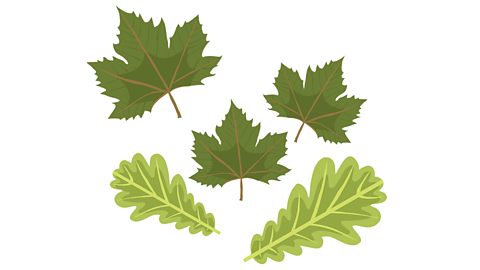
Or if you could choose twovariables and see if they are linked or of you can spot any relationship between them. It might be good to use a survey to collect this type of information.
You could answer the questions:
- Do taller people have bigger feet?
- Is there a pattern between leaf size and the height of a tree?
- Does heavier chocolate take longer to melt?
Research using secondary sources – what is already known about this?
You could do research to find out the answers to your questions as the answer may have already been found out by someone else! You could use the internet, find a book in a library, or ask an expert – just make sure that the source you are using is reliable or trustworthy.
You could investigate the following questions:
- What is renewable energy?
- How far away is the Moon?
- How do we hear sounds?
Fair and comparative testing – what is the effect on something else?
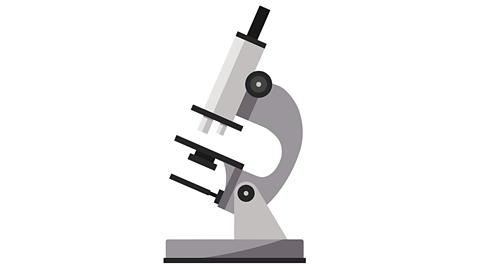
It is important to make sure that you only change one thing in your investigation and keep everything else the same. This is called a fair test. This allows you to see what effect changing that one thing has.
You could answer the questions:
- Which material will help you slide down a slide the fastest?
- Which instrument makes the loudest sound?
- Which exercise makes our heart beat the fastest?
Watch: Terrific Scientific investigates
We are learning how to ask relevant questions to help us with our Science learning. Let’s meet Dr Maggie and Hacker T Dog who have some friends who are doing this too!
Learn how to plan an investigation with this Terrific Scientific clip.
Dr Margaret:
Terrific Scientific, what a journey it's been. Thousands of schools involved in investigating science on a national scale!
We've discovered how exercise and even the clock's going forwards or backwards affects your brain and we've investigated which of those amongst us are super tasters.
You've got up close and scientific with the forces all around us. And for the first time ever, taking large scale national surveys of tree types and water hardness, all accomplished by schools just like yours.
Scientists across the UK are already using the data you collected in their work. And you can see all that data too, from schools across the country, by logging on to the Terrific Scientific interactive map.
Hacker:
Whoa! Hang on a minute Doctor Margaret. You're forgetting the most important investigation of all, the one where I investigated how light and temperature affect how plants grow.
Alright, I didn't have the greatest success. But luckily I had an army of investigators, you lot out there! Who are much better at doing the science stuff.
Dr Margaret:
But these investigations are just the start. The great thing about science is for every answer you get, it opens up a range of exciting questions. So we're gonna show you how you can take your investigations in any direction you want.
Hacker:
Yes! Doctor Maggie will be bringing the scientific and I, Hacker T Dog will be bringing you the… er… What's the word for really really good?
Dr Margaret:
Terrific?
Hacker:
Yes! I will bring the terrific.
Dr Margaret:
Up until now, it's been the scientists asking the questions. But how Terrific Scientific continues from now is entirely up to you. And this two-part film is going to show you how.
So if the tree investigation got you excited to check out trees in your local park, you can do it.
Hacker:
Or if the feet investigation has made you wonder if people who have the most flexible feet also have the cheesiest feet, do it!
Dr Margaret:
I think I'll leave that one to you, Hacker! The world of science is your oyster. You can take your investigations in any direction and we've come to this school here today, to see where their investigations will take them.
These may look like ordinary school children, but now they are Terrific Scientists who have completed Terrific Scientific investigations.
Hacker:
Where will their quest to explain the universe take them next?
Alright cockers! What you up to?
Boy:
Talking about our experiments.
Dr Margaret:
Can you think of another experiment, another investigation you could do, looking at forces?
Girl 1:
Maybe a rocket?
Dr Margaret:
A rocket? Ah see, you're talking about my sort of thing now.
Boy 1:
If you had two blocks of ice…
Hacker:
Yeah.
Boy 2:
…And you melted both of them…
Hacker:
Yeah.
Boy 2:
If you'd ended up with the same amount of water.
Hacker:
I'd love to know that!
Girl 2:
You can put mints in cola and see how high it goes.
Hacker:
That's science innit!
Girl 3:
You could see different… how you could hear in different depths of water.
Dr Margaret:
How would you set it up? What would you do?
Girl 4:
You could have two buckets of water and fill them to different levels and then put your head in…
All: [LAUGH]
Boy 3:
And see whether super tasters taste more things than, tasters who aren't super tasters, like pickles, cabbage…
Dr Margaret:
After lots of nattering, we've helped our scientists come up with a question that they want to investigate and answer using science.
Children:
Can…
Super…
Tasters…
Identify…
Flavours…
Better…
Than…
People…
With…
Fewer…
Taste…
Hacker:
Buds!
Dr Margaret:
To make sure the data we gather is accurate and reliable, a smaller team of Terrific Scientists have to work out exactly how the investigation will work.
We've got our question, but how do we investigate it scientifically?
Boy:So, you could blindfold somebody and you could put the food under a coating and then you can get somebody to taste it and see what is the food.
Dr Margaret:
So we need to set up a control as well, don't we?
Boy:
Yes.
Dr Margaret:
So we want to see if the super tasters can identify more flavours. We need the non-super tasters, so we can make a comparison. So we could blindfold them, or perhaps we could do something else with the food.
Hacker:
Nosefold them!
All [LAUGH]
Dr Margaret:
Let's say if we had pickles and bananas. If you pick them up or when you put them in your mouth, you might be able to tell that feels more like a pickle.
Hacker:
I know, mash em up.
Dr Margaret:
Mash them up, OK. What sort of food should we go for?
Boy:
Ice cream.
Dr Margaret:
Ice cream?
Hacker:
Good idea, cocker! Haha!
Boy:We're gonna make all of the ice creams white and in between each flavour, we're gonna have a sip of water so the flavours don't get mixed up.
Dr Margaret:
So what crazy flavours would you want to make the ice cream out of?
Girl:
We could have a cheese flavoured.
Dr Margaret:
What have you got?
Girl:
Erm…cabbage.
Dr Margaret:
Cabbage can be quite strong, bet that'll be really weird in ice cream!
Boy:
We could have a few usual flavours in there.
Dr Margaret:
And vanilla. Things like that? I was thinking of cucumber, because cucumber isn't that strong a flavour is it?
Hacker:
No, boring.
All [LAUGH]
Dr Margaret:
That might be a real challenge for the tasters. I suppose the problem is with all these things, and it's when you're setting up a scientific investigation, how do you make it fair, so there aren't any clues. If you have chocolate ice cream and vanilla ice cream, just by looking at it you can tell they're different. What we could is make all the ice creams look the same?
Children:
Yes.
Dr Margaret:
What we are coming up with now is our prediction.
We believe that people with more taste buds can identify more flavours.
So here's the plan.
We have forty test subjects, From the previous taste investigation, we know which of them are super tasters. We won't let on though, that this is related to our test. All they have to know is they're going to be eating ice cream.
Hacker:
Which is my specialist area. The ice creams will range from familiar flavours like orange and pear, joined by unusual ones like cucumber, sprout and meat paste… Yummy!
Dr Margaret:
To make it a fair test, all the ice creams will be white. Test subjects will have to identify the numbered flavours from taste alone.
Will the super tasters be better at identifying the mystery flavours than those with an average amount of taste buds? Our theory is that they will do better. So that's our prediction.
So our Terrific Scientists have a plan for their investigation. All they need now is a whole lot of ice cream.
Hacker:
My kind of science. Roll up, roll up! Get your ice cream cones! We've got some lovely flavours for you today. Some unusual flavours, some strange old flavours! Get your gums round our lovely ice creams!
Dr Margaret:
Will the super tasters identify more mystery flavours than the rest of the class?
Hacker:
Will the data we collect answer our super scientific question?
Dr Margaret:
Will Hacker eat all the ice cream before we finish the investigation?
Hacker:
AAAaaaal All will be revealed in part two.
Dr Margaret:
But first, why don't you devise your own experiment based on any of the Terrific Scientific investigations we've done so far? Who knows what you'll discover.
Hacker:Wait! I think I know the flavour! It's autumn leaves with a hint of Tom Hardy! He'll like that.
Now watch part two to see what happens when they carry out an investigation to try and answer their question.
Watch: Part two of the investigation
Learn what happens when they carry out their Terrific Scientific experiment in part two.
Hacker:
In part one of our final Terrific Scientific film, we looked at how you can come up with a brand new investigation all of your very own.
Doctor Margaret:
In our case we decided to follow up on the taste investigation and our big question is?
Female 1:
Can…
Male 1:
Super…
Male 2:
Tasters…
Female 2:
Identify…
Female 3:
Flavours…
Male 3:
Better…
Female 4:
Than…
Male 4:
People…
Female 5:
With…
Male 5:
Fewer…
Female 6:
Taste…
Hacker:
Buds?
Doctor Margaret:
We've got a method to make it a fairer test.
Male 3:
We're gonna make all the ice-creams white and in between each flavour we're gonna have a sip of water so the flavours don't get mixed up.
Hacker:
And we've got an ice-cream van.
Hacker:
Roll up, cockers, get your ice-cream fresh, fresh as the day is long.
Hacker:
Now all we need to do is serve 40 children five different flavours of ice-cream. That's forty times five. Um, uh, short multiplication. That's five plus, carry the one–
Doctor Margaret:
Two hundred.
Hacker:
Carry, carry the one. Two, two hundred ice-creams. My calculations exactly, Doctor Margaret. Science and maths. [LAUGHS] My head hurts.
Doctor Margaret:
Ice-cream number one. There are no visual clues. The ice-cream like all the others that will be served in the test is white. It's identified only by a number. How many of our test subjects will be able to tell the Science Team the correct flavour…
Hacker:
Orange!
Doctor Margaret:
…from taste alone? And will the super-tasters do better?
Female, black coat:
Apple?
Male, blue coat:
This one's orange.
Doctor Margaret:
Onto the second flavour, which looks exactly like the first.
Hacker:
But tastes very different. Will any of our test subject be able to identify meat paste flavoured ice-cream.
Doctor Margaret:
What do you think it is?
Male, brown coat:
Uh, I think it is like beef.
Male, fur hooded coat:
Meat.
Doctor Margaret:
In total, a sample of forty children each taste five different flavours of ice-cream. Drinking water between different flavours cleanses the palate and is an important part of the investigation. While Hacker readies the next batch of mystery ice-cream I had a quick chat with our Science Team.
Doctor Margaret:
So what have you got so far? Are there any sort of trends or can you see any similarities?
Female 3:
Most people for the second round picked a roast dinner.
Doctor Margaret:
A roast dinner, okay. So we've got a few more to go.
Doctor Margaret:
So what flavour do you think number three is?
Male, black coat:
Uh, I think it's cucumber.
Male, navy blue coat:
I think it's honey.
Male, light blue coat:
I think it tastes like banana.
Doctor Margaret:
Is, is it nice?
Female, black coat, fur hood:
Mm, kind of.
Doctor Margaret:
[LAUGHS]
Female 3:
Go on.
Male, black coat:
A bit like cheese flavour.
Female 3:
[LAUGHS]
Female, black coat:
I thought lemon.
Male, green camo coat:
I think it's mango, yeah mango.
Doctor Margaret:
Mango?
Male, brown coat:
It tastes like tomato or something.
Doctor Margaret:
They seem to know it's a fruit but they're not too sure which one. Okay.
Boy, red coat:
Yeah.
Hacker:
Here we go, this is the last ice-cream. That's your lot, cocker. We're shutting up shot. Have a little lick of that in the name of science. I am out of stock. Good night.
Doctor Margaret:
Our terrific scientists have gathered their data in the field. Now they have to check their figures carefully to see if the data supports their theory or not.
Doctor Margaret:
Hacker, what was number one? Ice-cream number one?
Hacker:
Ice-cream number one was orange flavour.
Doctor Margaret:
Orange, okay. So see if you've got orange and put a tick and if not, put a cross. How well did people do? Um, did anyone get orange on yours?
Male 1:
No.
Hacker:
Aw.
Doctor Margaret:
What did they put instead?
Male 1:
Some people put caramel, coconuts and honeycombs.
Male 3:
Passion fruit and banana.
Hacker:
It's a game of curves, isn't it?
Doctor Margaret:
Basically I thought orange might be an easy one to go for. But everybody seemed to find it quite hard, didn't they? Okay, Hacker, what was ice-cream number two?
Hacker:
Ice-cream number two was my favourite one, it's meat paste flavoured. [LAUGHS] Imagine that.
Male 1:
Does roast count, as in like roast and chicken?
Doctor Margaret:
Mm, cause it's still meat isn't it?
Male 1:
Someone guessed sausages as well.
Hacker:
Are they made of meat though?
Doctor Margaret:
Yeah.
Hacker:
They're made of meat, they're meaty, meaty, meaty, meaty.
Male 1:
[LAUGHS]
Doctor Margaret:
Okay, Hacker, what was ice-cream number three?
Hacker:
Margaret, ice-cream number three was cucumber.
Doctor Margaret:
Ah, cucumber. Now you see I thought cucumber might be a bit subtle. But how did people do?
Female 3:
Four people got it as cucumber.
Doctor Margaret:
We've been through the five flavours, now we're ready to tot up each individuals total score out of five.
Male 3:
Lara got one, Rose got one, Summer got none.
Female 2:
Jason W got two. Dylan got two.
Male 1:
Lindsey got two.
Doctor Margaret:
In any investigation like this we expect a few of the test subjects to be very good at a task and a few to be not so good. Everyone else will be bunched somewhere in between. This is what we call a pattern seeking investigation.
Hacker:
The scientific results are in by jingo.
Male 1:
The whole class, on average, got one or two correct.
Doctor Margaret:
So how about the super-tasters?
Female 1:
Well the super-tasters also got one or two correct.
Doctor Margaret:
Well from that I don't think we can conclude anything because there was no difference between the super-tasters and the normal tasters.
Hacker:
So it's been a total waste of time. See you everyone.
Doctor Margaret:
Not at all, Hacker.
Hacker:
Huh?
Doctor Margaret:
I think the only thing to do is to do some more experiments and eat some more ice-cream.
Hacker:
Living the dream, cocker! [LAUGHS]
All:
[LAUGHS]
Doctor Margaret:
So our results might be inconclusive but data from a properly conducted investigation is never wasted.
Hacker:
Especially when it involves eating ice-cream. [LAUGHS]
Doctor Margaret:
So how do we let other scientists hear about our findings?
Hacker:
That's easy, Margaret. I'll probably just tweet our results. I'll tell my mate, blabby Dave, oh, he's got a right big mouth. He'll tell everyone.
Doctor Margaret:
That's not quite the scientific way. What we usually do is publish our results in scientific journals. That way people can hear about our findings, they can actually build on the work and also check that they're right or if you want to get our findings out quickly to lots of people, we make a poster.
Hacker:
Oh, like this one? Wigan Dog of the Year 2017. I ripped it off my bedroom wall this morning. La, la, la, la poster.
Doctor Margaret:
No, no Hacker. More like this one.
Doctor Margaret:
Posters are often displayed at science fairs so lots of people can get an idea of the findings very quickly. So our Terrific Scientists are making a scientific poster.
Hacker:
Write how you did the experiment and don't forget those all important results.
Doctor Margaret:
Often the best way to get this across is with graphs or pictures. After a lot of hard work, data collection, number crunching…
Hacker:
And ice-cream.
Doctor Margaret:
…our brand new scientific findings are published. Terrific"
All:
Yes!
Hacker:
Hey, hey you've missed out the most important bit of information here, a lovely picture of me with Susan Barker. Lovely handsome, Sue. Hey, hey. Aw!
Doctor Margaret:
This is not scientific.
Hacker:
Aw.
Doctor Margaret:
If you want to get involved in the last investigation you don't Hacker. In fact you might be better off without him.
Hacker:
You're probably right.
Doctor Margaret:
Show your final poster to the rest of your class or possibly a school assembly. Or even better other Terrific Scientific schools in your area.
Hacker:
Or simply turn your poster into a giant billboard and paste it up in the middle of a roundabout. That's what I'd do.
Doctor Margaret:
Think of your own follow-up questions from any of the Terrific Scientific investigations. If you've discovered new trees in your area and you'd like to find out more invent a new investigation around that. Or maybe the exercise investigation threw up more questions than answers. Have a go at answering one of those.
Hacker:
Any of the Terrific Scientific investigations in the past year is fair game. Take any ideas you like, cockers, and run with it. But don't bother with ice-cream though we've already done that.
Hacker:
Amazing! But do you know what, Margaret? I still think the giant billboard poster as a good idea.
Doctor Margaret:
Really?
Hacker:
Yeah. So I took the liberty of turning us into one, look! Look, we're a giant billboard. Hello down there.
Doctor Margaret:
Help! Help! I'm stuck in a giant poster with Hacker!
Hacker:
You did.
Doctor Margaret:
Let me out!
Hacker:
Some people pay good money for that.
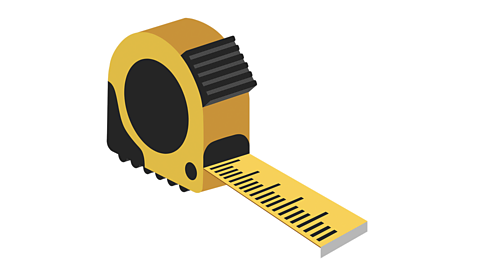
Did you know?
When you have thought of a question that you would like to find the answer to, it is important to think about the best way to find out the answer.
Is it a question that you would be able to investigate to find out the answer? Do you have access to all the things that you need? Or is it something that you can’t answer by carrying out an investigation?
Almost all questions are able to be answered, you just have to find the right way to do it!
Important words

Comparative test – When we test two different things and see how the results are the same or different.
Data – Another word for bits of information. When scientists want to answer a question, they gather all the data they can.
Fair test – Keeping the variables the same for each thing that is being tested.
Prediction – Using your understanding and knowledge to say what you think will happen in an experiment.
Relevant – This is the word we use to describe something that is appropriate and closely connected to the subject.
Results – The information or data that is produced at the end of your investigation.
Scientist – Someone who studies and becomes an expert in any area of science.
Variables – The part of an experiment that is changed, for example the material used.
Activities
Activity 1 – Order an investigation
Activity 2 – Quiz
Activity 3 – Cress seed experiment
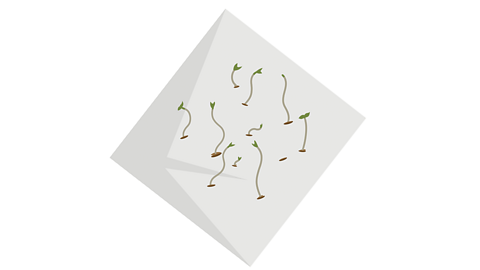
Imagine you are going to carry out an experiment to see which conditions cress seeds grow most effectively.
What equipment might you need here? What would be the questions you could ask? Try to think of at least five different ones.
If you decide to do this, don’t forget to ask a responsible adult to help you.
Remember to:
- Identify your key question.
- Make your experiment a fair test.
- Write a prediction.
- Collect and present your results.
New game! Horrible Science: Stinky Space. game
Join Pipette on her epic mission and learn some revolting facts about space along the way.
More on Working scientifically
Find out more by working through a topic
- count2 of 10
- count3 of 10
- count4 of 10