Watch: What is a fair test?
Fran: Scientists love to find things out and they love questions but not all questions lead to a fair test.
What do I mean by that?
Well, say I wanted to see how fast I can make my ball travel on different inclines.
Now, the incline is the height of my ramp here, which I can make bigger or smaller.
But if I roll my ball down the ramp starting at different positions each time, then that wouldn't be fair, would it?
Now, in this test, we could change the starting position of the ball, the incline of the ramp or even the type of ball.
And these are what we call variables.
To make it a fair test you only change one variable at a time, keeping all other variables the same.
So, if I'm changing the incline, so the height of my ramp - that's my change variable.
My ball and the starting position I'm keeping exactly the same.
And I'm going to be measuring the time it takes for my ball to get to the end of the track, that's my measuring variable.
So, let's give it a go.
And start… 2:05.
Start… stop.
Oh, 1:01!
Oh, quite a difference!
But while I continue with my tests, let's see how one of my investigators are making their test fair.
Child: I want to test what happens to the time the parachute takes to fall, if I change the size of the canopy, that's the bit at the top.
I can only change one variable which is the size of the canopy.
I'm going to use my stop clock to record how long it takes each one to fall.
Go!
1.29 seconds.
Go!
It was close but the bigger parachute was just a wee bit slower than our smaller parachute.
But at least I know my test was fair!
Different ways of testing
What is a comparative test?
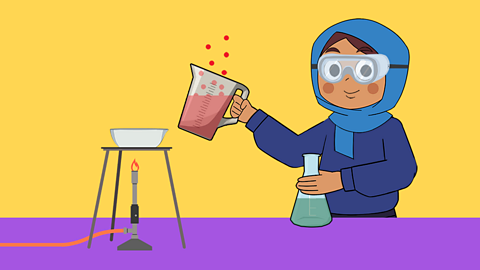
In science, when we talk about comparative tests, we are looking at comparing two or more things to see how they are similar or different.
It's like when you compare two different types of chocolate to see which one tastes the best.
What is a fair test?
A fair test is a scientific experiment where you make sure that only one thing is being tested at a time. This means keeping everything else the same. It's like having a race where all the runners start at the same point. This makes it fair.
Fran: What I'm going to do is compare two different balls to see which one will travel the fastest.
And we call this a comparative test because I'm comparing one ball with another.
And these balls, they're different weights, different sizes, and they're made from different materials.
So, these balls will be the change variable, while we're keeping the height of the ramp and the starting position the same.
So, let's see what happens.
Stop!
Oh, 2:16.
And now the wooden ball - 2:06.
Oh!
So, the smooth wooden ball travelled slightly faster, but I'm going to repeat the test to see if that's what always happens.
So now we know for sure that the smooth wooden ball is the fastest, it was fastest every time in our test.
Can you work out why that might be?
Qualitative and quantitative data
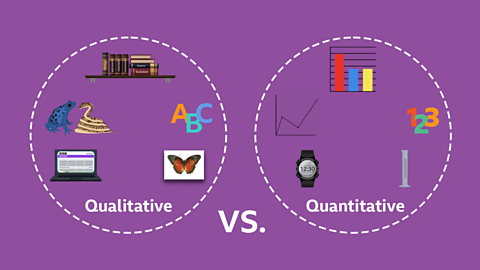
Things that aren't measured by number, like objects or animals, are classed as qualitative data.
Anything that is measured by number, like weight or height, is quantitative data.
This simple diagram shows the difference:
Testing and data
You will need to conduct different tests and collect different data depending on what you want to investigate.
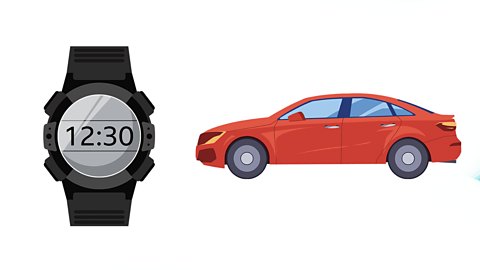
If you want to see how the material of the tires affects the cars speed, this would need a comparative test. Things like materials are qualitative data.
A fair test is not a different type of experiment - it refers to just changing one variable. You would change the amount of weight and record the changing speed. Anything that is measured in number, like weight or height, is quantitative data.
Watch: Comparative test
Comparing the melting times of ice cream.
Child: Ice cream!
What makes ice cream melt??
Narrator: This is a good opportunity for a test, Molly…
Don’t forget to make it fair. Everything needs to be the same, so we need the same type of ice cream, the same quantity and you both need to hold it for the same amount of time!
Now we just need one thing different so we can compare what difference it makes.
Good thinking, if it’s hotter, does ice cream melt faster?
This test compared the ice cream in two environments. They observed that one ice cream melted more quickly than the other so it was a comparative test. This is a little bit different to a fair test.
A fair test is where only one variable is changed. whilst all other variables are kept the same. It is not a different type of test. A comparative test can still be fair - in this example they may have a different environment but the ice cream and quantity etc would have had to have been kept the same.
Fair tests

When scientists do tests or experiments, they only change one thing and see what effect this has on what they measure. All other things are kept the same. This is a fair test.
If more than one thing changes in a test or experiment, this is not a fair test. We cannot know for certain what caused the changes.
You could carry out a fair test to see how room temperature affects the time it takes for the ice to melt. Keep everything about the ice exactly the same (amount, type of ice, surface area) and only change the temperature.
Record the time each takes to melt and this would be a fair test.
Important words
Comparative test – In science, when we talk about comparative tests, we are looking at comparing two or more things to see how they are similar or different.
Experiment – A scientific task to find out the answers to a specific problem.
Fair test – A fair test is a scientific experiment where you make sure that only one thing is being tested at a time.
Investigate – To examine data or facts around a particular subject.
Qualitative data – Data that describes qualities or characteristics, like species or colour.
Quantitative data – Data that is measured with numbers, like weight or height.
Variables - The part of an experiment that is changed.
Activities
Activity 1 – Quiz
Activity 2 – Making an investigation fair
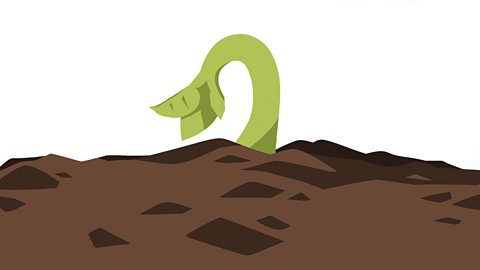
An investigation always starts with a question.
Write a fair test to answer this question: Do all plants grow better in soil?
Think about:
- What do you need to keep the same?
- What will you measure or observe?
Activity 3 – How high do balls bounce?
Ask a responsible adult to help you with this activity.
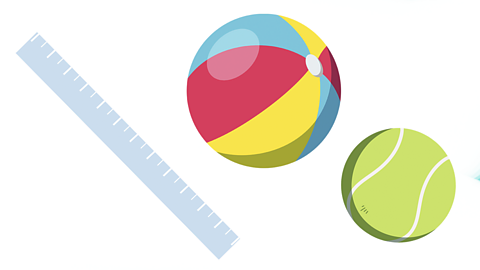
You will need a ruler and several different types of ball, such as a tennis ball, a beach ball and a golf ball.
Find a place where you can stand and drop a ball onto the same surface.
Ask the adult to use the ruler to measure how high the balls bounce.
How will you make sure this is a fair test?
All the balls must be dropped from the same height.
What other scientific investigations could you complete using the same balls?
Activity 4 – Conduct a fair test
Fair test planner
Use this fair test planning sheet to conduct your own fair test in the classroom or at home.

Results table
Use this sheet to record and display the results from your fair test.

New game! Horrible Science: Stinky Space. game
Join Pipette on her epic mission and learn some revolting facts about space along the way.

More on Working scientifically
Find out more by working through a topic
- count6 of 10

- count7 of 10
- count8 of 10