Key points
A line which cuts another line into two equal parts and meets it at a right angle is called a Perpendicular lines are at 90° (right angles) to each other. bisector.
A line which cuts an angle into two equal side angles is called an angle bisector.
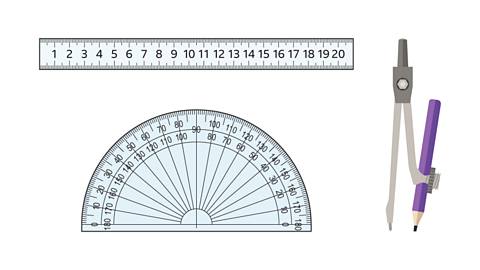
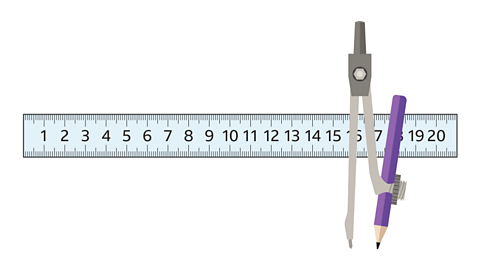
In geometry a construction is an accurate drawing. There are two main constructions which can be done using a ruler, a pair of compasses and a pencil.
After the construction is finished, it is important to leave the The lines which were drawn in the construction.. This is to show each stage of the process clearly.
How to construct a perpendicular bisector
A bisector is a line which cuts another line exactly in half.
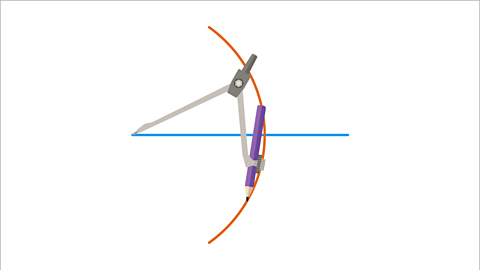
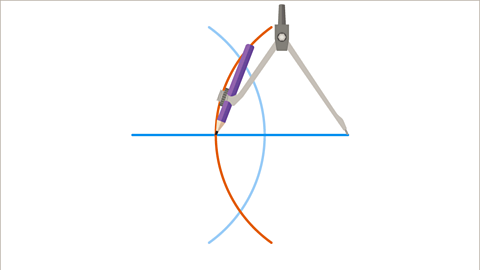
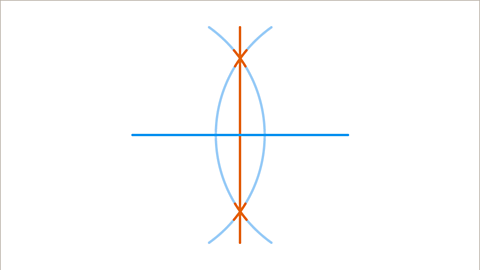
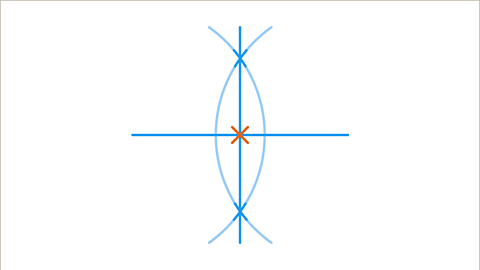
A perpendicular bisector cuts a line exactly in half and Where lines cross or overlap. it at a right angle. It can be constructed using a ruler and pair of compasses.
To construct a perpendicular bisector:
- Using a ruler, draw a straight line.
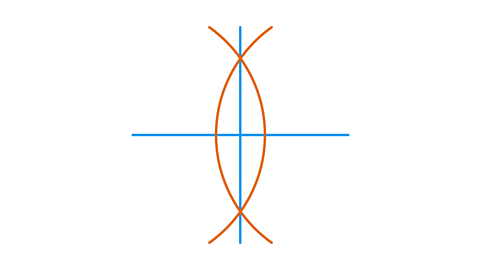
- Place the compasses on the left-hand The end of a line segment. of the line and set them to just over half way along the line. Draw an Part of the circumference. Named as major for over half of the circumference and minor for less than half of the circumference..
- Without changing the position of the compasses, repeat this with the right-hand endpoint of the line.
- Draw a line between each point of intersection of the arcs. The The location where two or more lines meet. of the perpendicular bisector and the original line is exactly halfway along the line.
Example
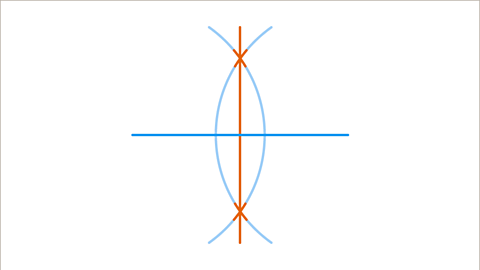
Image caption, How to construct a perpendicular bisector.

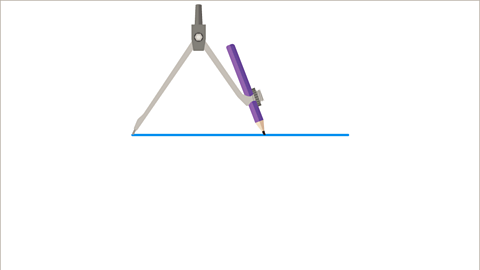
1 of 7
Question
When constructing a perpendicular bisector, how many arcs must be drawn?

Two arcs must be drawn when constructing a Perpendicular lines are at 90° (right angles) to each other. bisector, one from each endpoint of the original line.
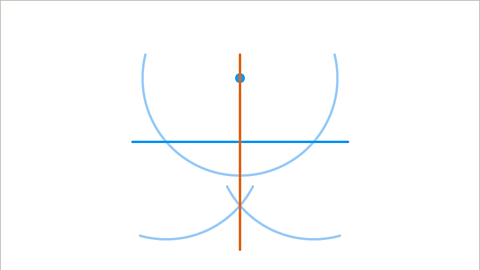
How to construct a perpendicular from a point to a line
To construct a Perpendicular lines are at 90° (right angles) to each other. from a point to a line:
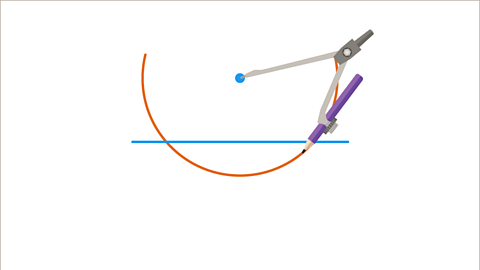
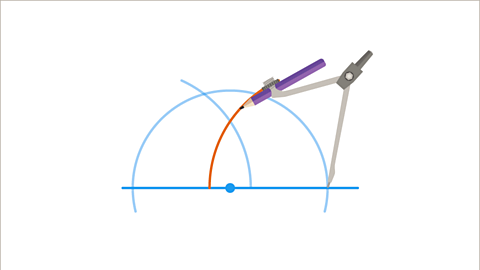
- Place the compasses on the point and set them to just below the line. Draw an Part of the circumference. Named as major for over half of the circumference and minor for less than half of the circumference. which crosses the line twice.
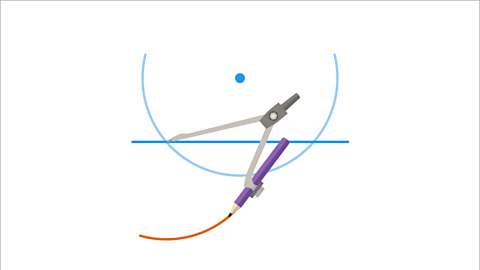
- Place the compasses on the left-hand The location where two or more lines meet. between the arc and the line, then draw another arc below the line.
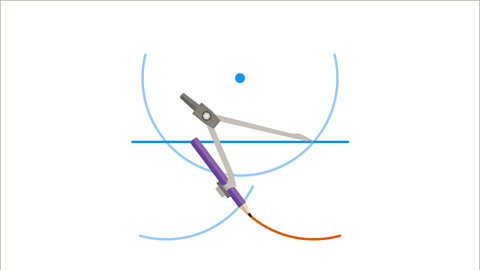
- Without changing the compasses, do the same on the right-hand side.
- Draw a line between the point of intersection of the new arcs and the point.
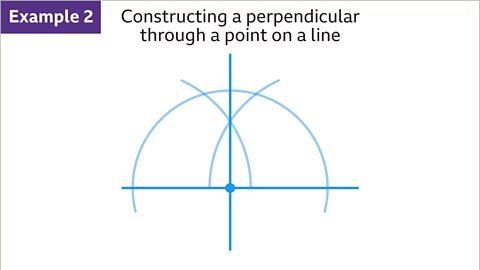
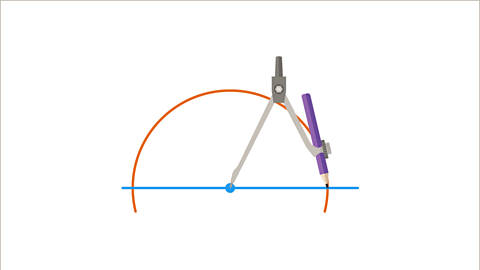
To construct a perpendicular through a point on a line:
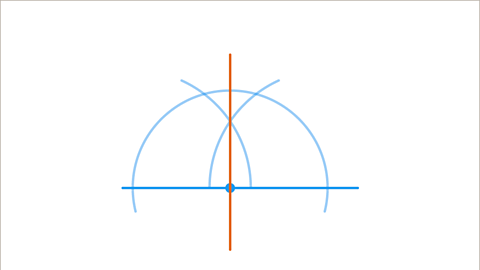
- Place the compasses on the point and draw an arc which crosses the line once on either side of the point.
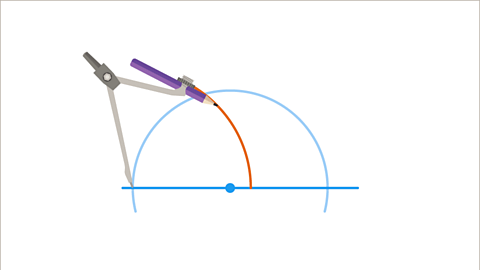
- Place the compasses on the left-hand point of intersection, set them to just over halfway along the line, and draw another arc which intersects the first arc.
- Without changing the compasses, do the same on the right-hand side.
- Draw a line between the point of intersection of the two new arcs and the point.Even the smallest inaccuracy at any point will create an error in the final angle. A sharp pencil is important to ensure accuracy.
Examples

Image caption, To construct a perpendicular from a point to a line, draw a line and add a point above it for the perpendicular to intersect.
1 of 10
How to construct an angle bisector
A bisector is a line which cuts another line exactly in half.
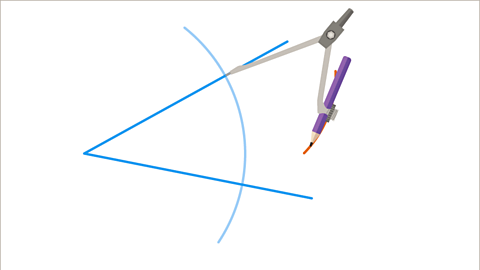
An angle bisector cuts an angle into two angles of equal size. It can be constructed using a ruler and a pair of compasses.
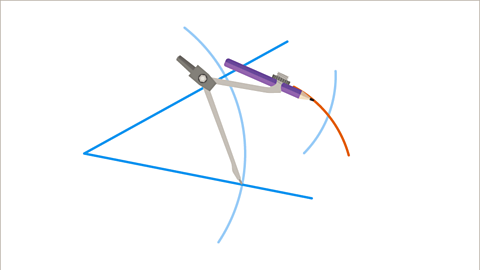
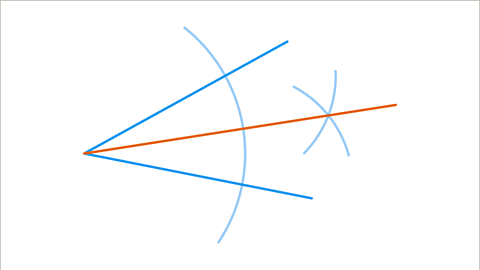
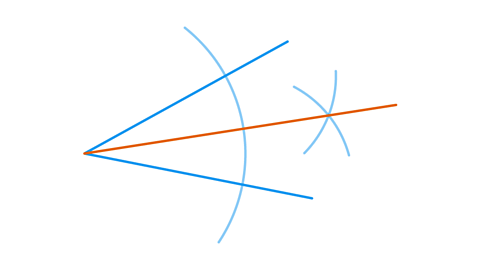
To construct an angle bisector:
- Using a ruler, draw two lines which meet at a point. This makes an angle.
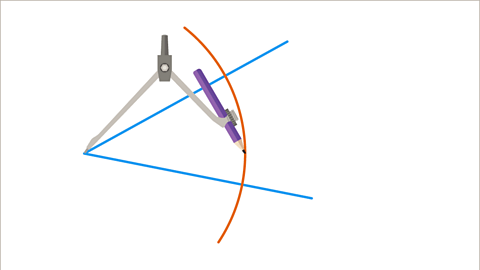
- Place the compasses at the point where the two lines meet and draw an Part of the circumference. Named as major for over half of the circumference and minor for less than half of the circumference. which crosses both lines.
- At each The location where two or more lines meet. of the lines and the arc, draw smaller arcs.
- Draw a line between the point of intersection of the new arcs and the point where both lines meet.
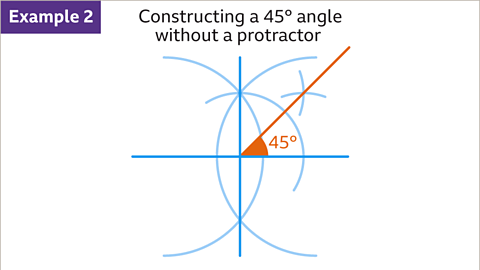
This method, combined with constructing a Perpendicular lines are at 90° (right angles) to each other. bisector, can be used to accurately construct a 45° angle.
Examples
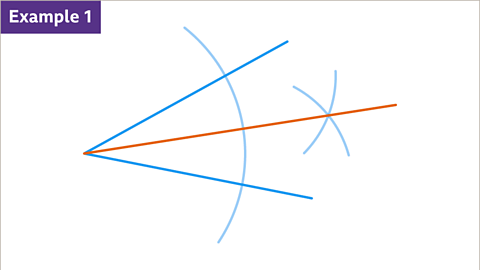
Image caption, How to construct an angle bisector.
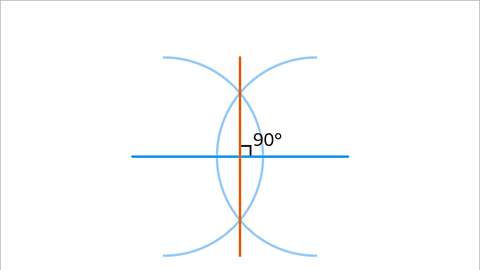
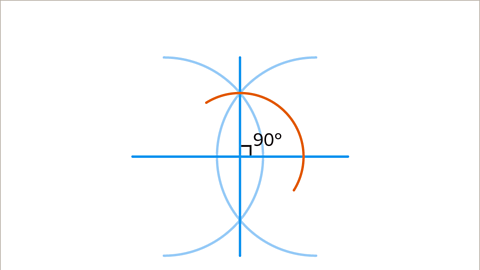
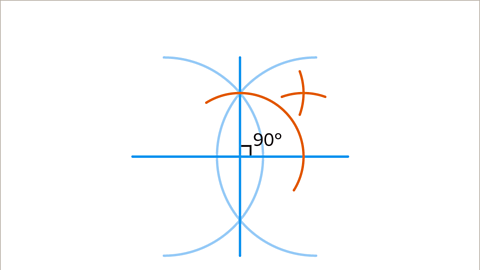
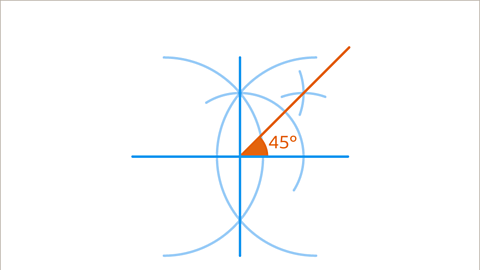
1 of 10
Question
How many arcs are needed to construct an angle bisector?
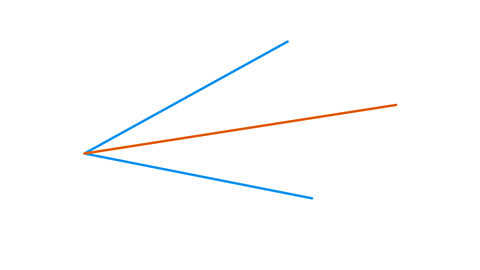
An angle bisector cuts an angle into two angles of equal size. To construct an angle bisector, three arcs must be drawn. One from the corner of the angle and two smaller arcs from the points of intersection between the angle and the larger arc.
Practise bisecting lines and angles
Quiz
Practise your knowledge of bisecting angles and lines with this quiz. You may need a pen and paper to help you with your answers.
Real-life maths
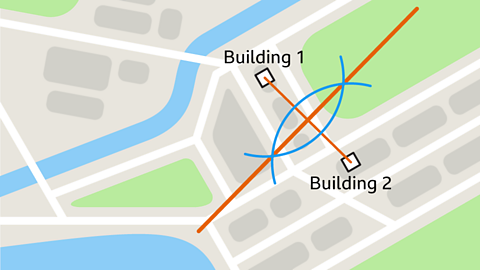
When deciding on the location of a new hospital, fire station or any other important building, town planners use perpendicular bisectors to find possible locations.
If the hospital must be the same distance from two different buildings, constructing a perpendicular bisector between them both will give all of the location options.
Play Sudoku with BBC Bitesize!
Every weekday we release brand new easy, medium and hard Sudoku puzzles. Perfect for testing your skill with numbers and logic.

More on Angles
Find out more by working through a topic
- count1 of 7
- count2 of 7
- count3 of 7
- count4 of 7