Key points
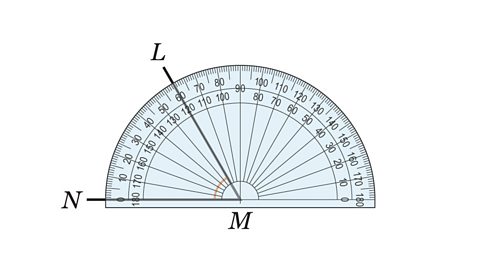
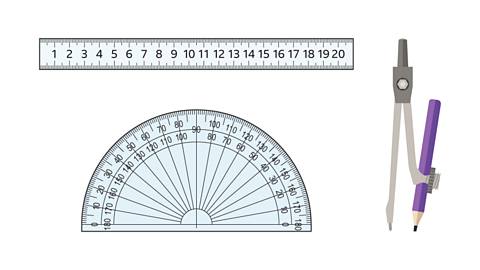
A ruler, a A semi-circular (or sometimes circular) tool used to measure angles. and a An tool use to accurately draw and arc. are required to To draw accurately using specific measurements. a triangle accurately.
- A triangle has three sides and three angles. To construct a triangle, one of three properties must also be known:
- Two sides and the angle between them (SAS)
- Two angles and the side between them (ASA)
- Three sides (SSS)
- After the triangle has been constructed, it is important to leave the The lines which were drawn in the construction.. This is to show each stage of the process clearly.
Using a protractor to construct a triangle
There are two ways to construct a triangle using a ruler and a protractor.
The first is a Side, Angle, Side (SAS) construction where two sides and the angle between them is known.
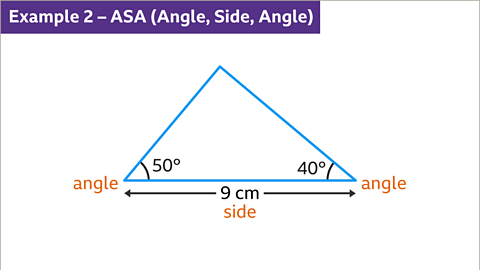
The second is an Angle, Side, Angle (ASA) construction where two angles and the side between them is known.
To construct an SAS triangle:
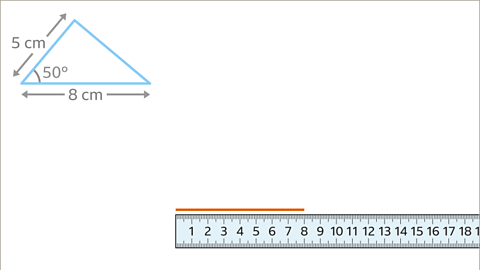
- Draw the longest given side of the triangle using a ruler.
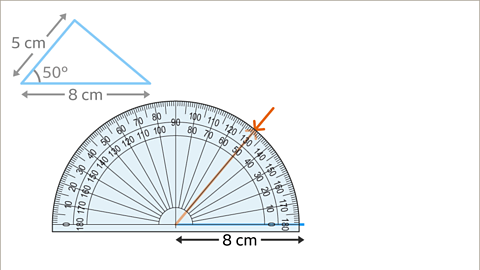
- Use a protractor to measure the given angle from the left-hand The end of a line segment. of the longest given side, mark it with a cross and draw a line from the endpoint through this cross.
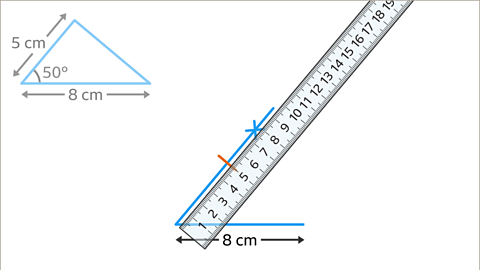
- Using a ruler, measure along the line drawn from the left hand endpoint to the cross and mark the length of the other given side on it.
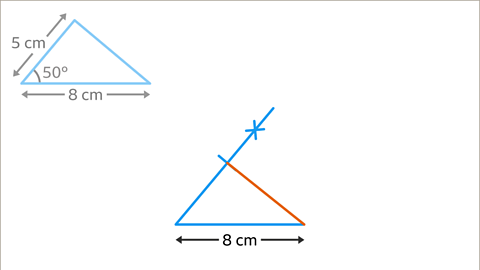
- Join the longest given side and the other given side together to produce a triangle.
- Label the sides and the angle, leaving the construction lines.
To construct an ASA triangle:
- Draw the given side of the triangle using a ruler.
- Use a protractor to measure the angle from the left-hand endpoint of the given side, mark it with a cross and draw a line from the endpoint through this mark.
- Use a protractor to measure the angle on the right-hand endpoint of the given side, mark it with a cross and draw a line from the endpoint through this mark.
- Label the angles and side, leaving the construction lines.
Examples
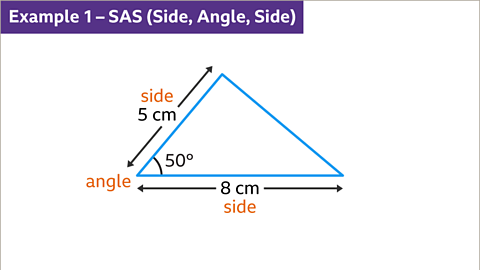
Image caption, In this triangle two sides, 5 cm and 8 cm, and the angle between them, 50⁰, are known. This is an SAS (Side, Angle, Side) construction, which can be constructed using a protractor and a ruler.
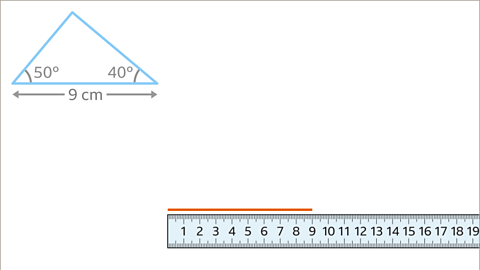
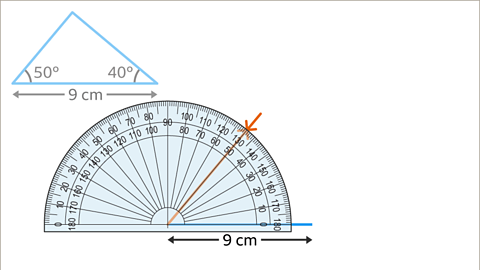
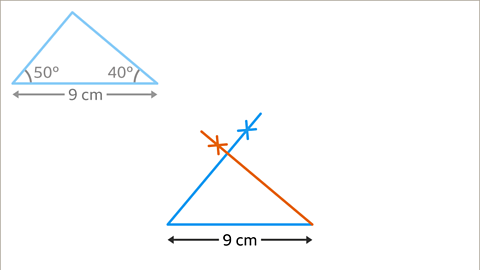
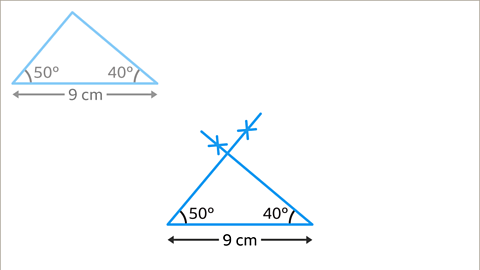
1 of 10
Question
Which triangles can be constructed using a protractor and a ruler?
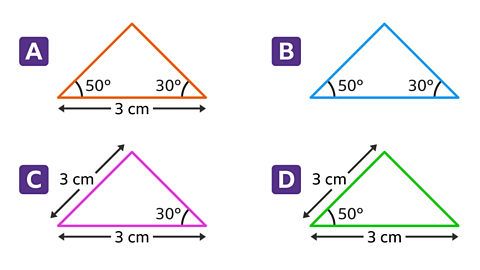
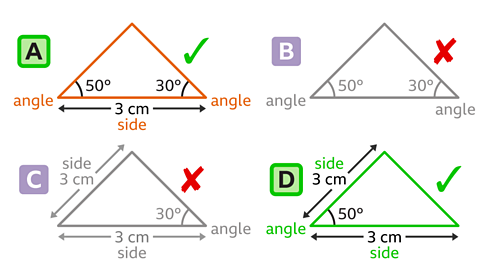
Triangles A and D can be constructed using a protractor and ruler.
Triangle A includes two angles and the side between them (ASA).
Triangle D includes two sides and the angle between them (SAS).
Triangle C cannot be constructed as the angle between the two sides is not given.
Triangle B cannot be constructed as the side between the two angles is not given.
Constructing a triangle using a compass
There is one way to To draw accurately using specific measurements. a triangle using a ruler and a An tool use to accurately draw and arc..
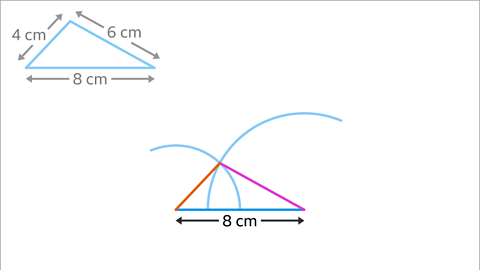
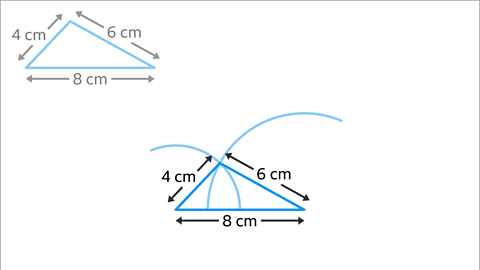
If all three sides are known, it can be constructed using a compass and a ruler. This is called an SSS (Side, Side, Side) construction.
To construct an SSS triangle:
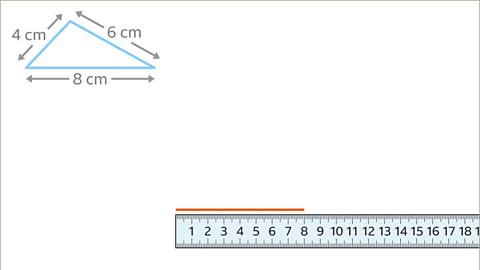
- Draw the longest side of the triangle using a ruler.
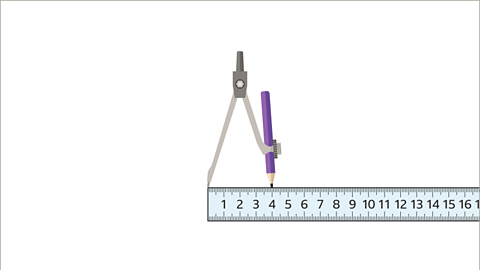
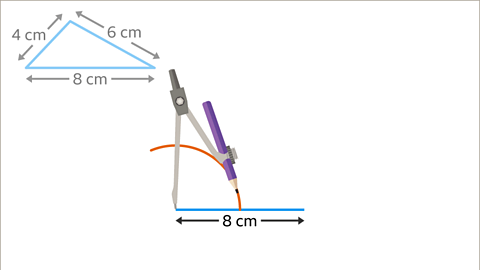
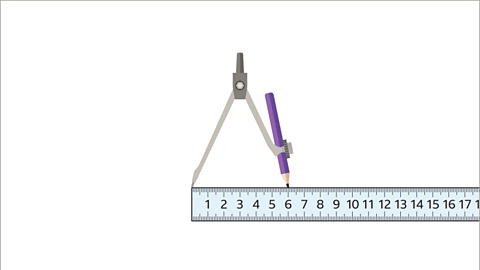
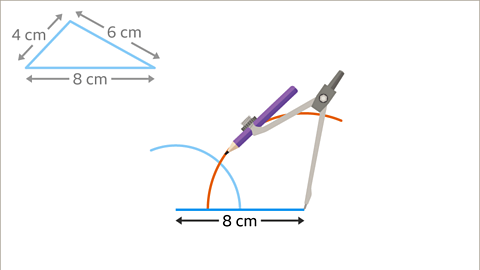
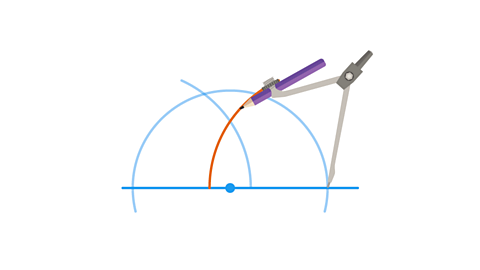
- Use a compass to draw an Curved marks inside the vertex of a shape. The same number of marks indicate angles are equal in size. from each The end of a line segment. of the line, measuring the length of the other two sides.
- Draw a line from the endpoint of each side of the base to the point where the arcs meet.
- Label the angles and side, leaving the The lines which were drawn in the construction..
Example
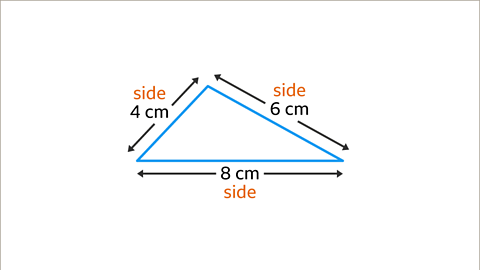
Image caption, In this triangle all three sides are known, 4 cm, 6 cm and 8cm. This is an SSS (Side, Side, Side) construction, and the triangle can be constructed using a compass and a ruler.
1 of 8
Question
What equipment is needed to construct a triangle of 7 cm, 8 cm and 10 cm?
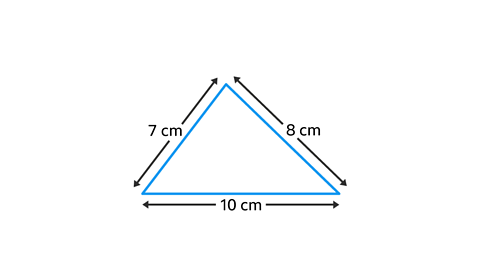
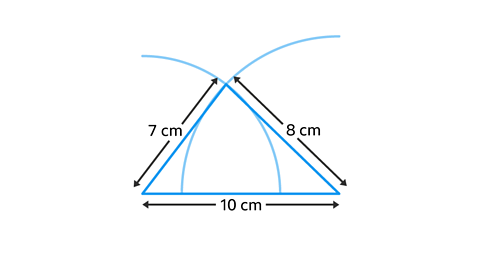
All three sides are known, making this an SSS (Side, Side, Side) construction.
This triangle can be constructed using a compass and a ruler.
Practise working out how to construct triangles
Practise working out how to construct triangles with this quiz. You will need a pencil, compass, protractor, ruler and paper to help you with some of your answers.
Quiz
Real-life maths
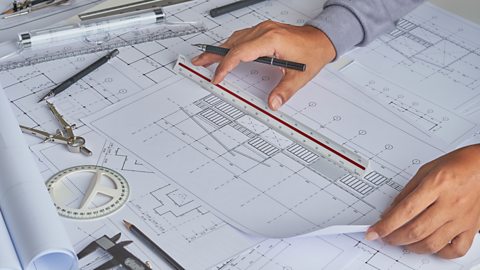
Being able to use mathematical equipment and techniques correctly to construct lines and angles in shapes is essential to the work of an architect.
When an architect produces construction designs for new homes and buildings, it is important that these designs are accurate and clear. Architects need to use the right equipment to ensure their designs are precise before the plans are moved onto the next stage of the process.
Play Sudoku with BBC Bitesize!
Every weekday we release brand new easy, medium and hard Sudoku puzzles. Perfect for testing your skill with numbers and logic.
More on Angles
Find out more by working through a topic
- count5 of 7

- count6 of 7
- count7 of 7
- count1 of 7