Key points
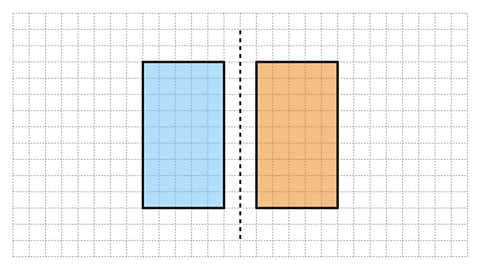
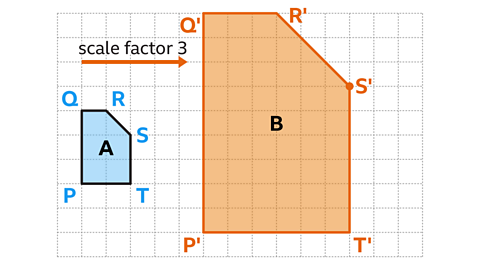
When transforming a shape, either through translation, reflection or rotation, a congruent shape is produced. Enlargements create shapes that are similar.
When two shapes are the same in shape and size, they are Two shapes that are identical. shapes. When two shapes are different in size but proportionally the same shape, they are One shape is an enlargement of another. The angles in each shape are the same, and the side lengths are in the same proportion. All squares are mathematically similar. All circles are mathematically similar. shapes.
To understand congruence and similarity, a good understanding of the properties of polygons, including triangles and quadrilaterals, can be helpful.
Congruent shapes
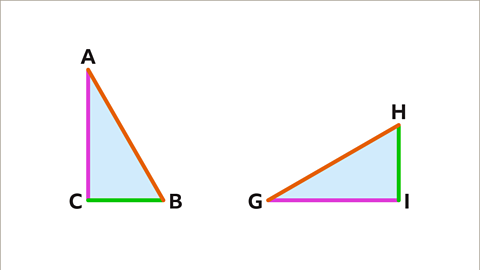
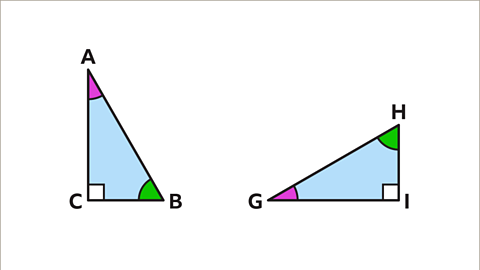
Two shapes are described as Two shapes that are identical. if they are identical.
- The lengths of sides (edges) and sizes of angles must be equal between the two shapes for them to be congruent.
- A reflection is a mirror image of the shape. An image will reflect through a line, known as the line of reflection. or A transformation of a shape which results in a turning effect on the shape. change the orientation of a shape but they are still congruent to the original shape.
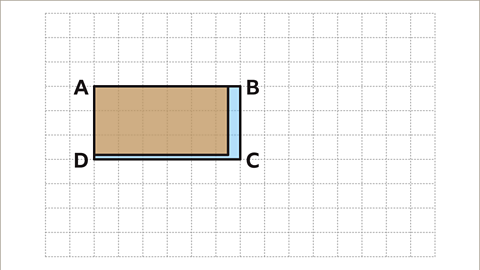
- A great way to check if two shapes are congruent is to place one on top of the other. If they match, with no overlaps, they are congruent.
Examples
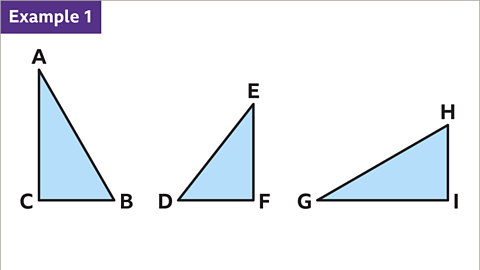
Image caption, Two of these triangles are congruent, which means they are identical in shape and size.
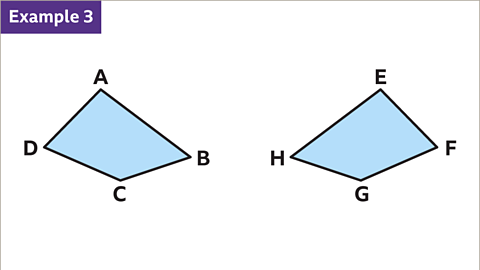
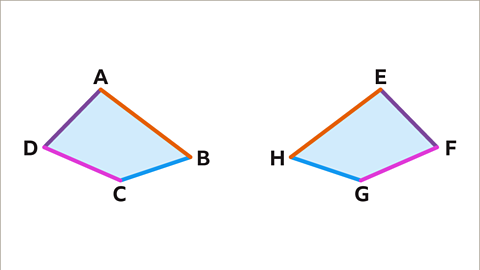
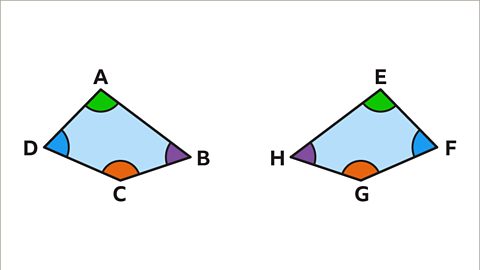
1 of 9
Question
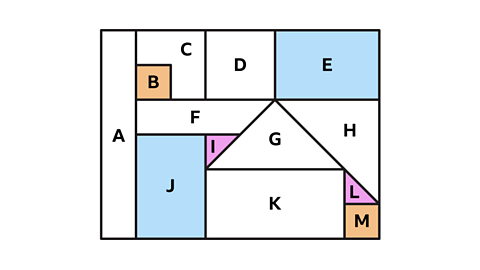
Look at the grid of shapes. How many congruent pairs can you find?
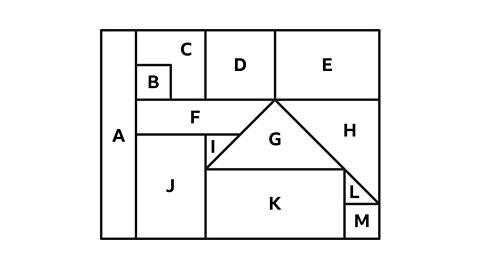
Two shapes are described as congruent if they are identical.
Shapes B and M are congruent squares.
Shapes E and J are congruent rectangles. When E is rotated 90° clockwise it has the same orientation as J.
Shapes I and L are congruent triangles. When I is rotated 90° anti-clockwise it has the same orientation as L.
Similar shapes
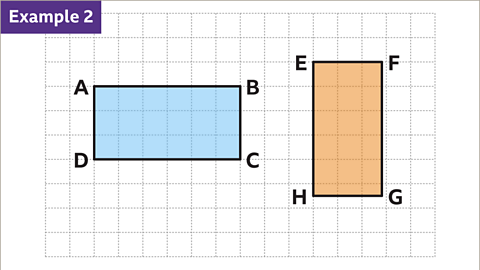
Two shapes are described as One shape is an enlargement of another. The angles in each shape are the same, and the side lengths are in the same proportion. All squares are mathematically similar. All circles are mathematically similar. if one is an A transformation of a shape which results in a shape increasing or decreasing in size. of the other. The shapes do not need to be The position of a shape in relation to a coordinate system. Orientation is the way an object is angled. the same way.
The sizes of angles must be equal between the two shapes.
The shapes must also be A relationship that is maintained between numbers. the same. If one side on the enlarged shape doubles in length, all sides must be double the original size shape. The increase in size from one shape to another is called a The ratio between corresponding sides in an enlargement..
The shapes may need to be A transformation of a shape which results in a turning effect on the shape. to find out if they are similar.
It is possible to calculate missing lengths on similar shapes when given either the scale factor or enough information to calculate it.
Examples
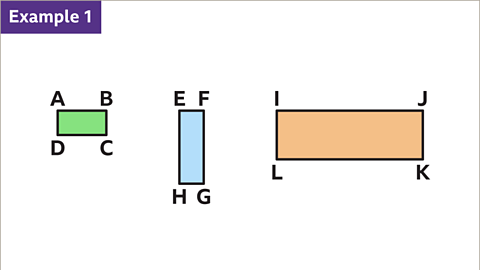
Image caption, All of these rectangles are different sizes, but two are proportionally the same and similar.
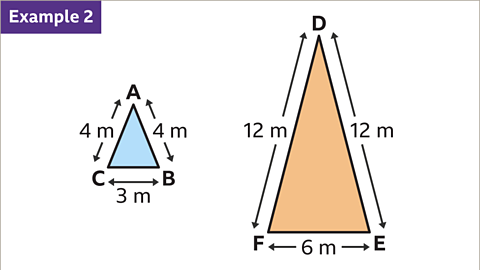
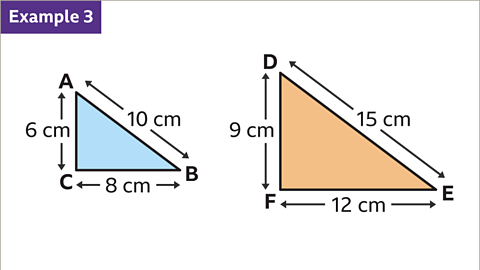
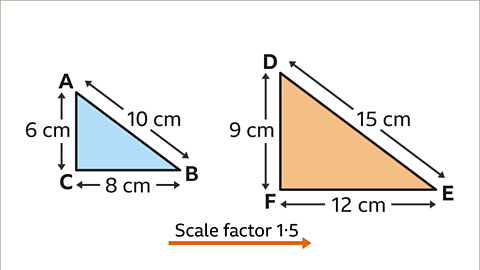
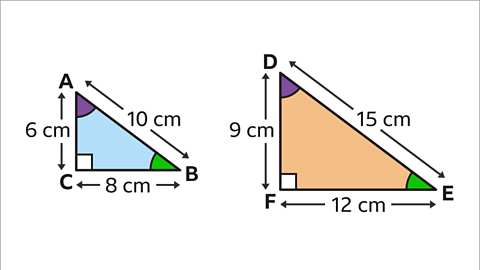
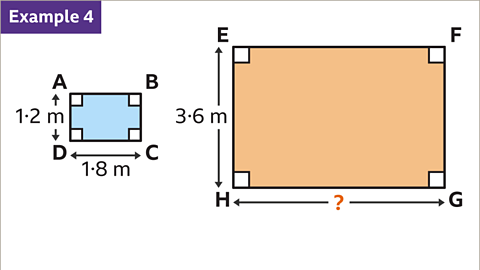
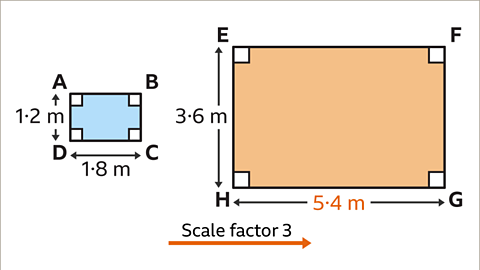
1 of 9
Question
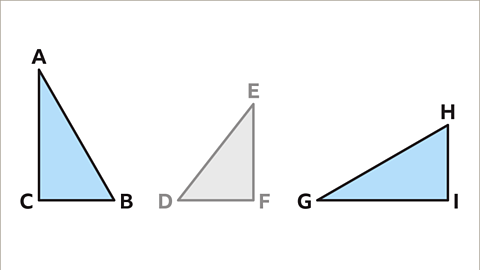
Which of these two triangles are similar?
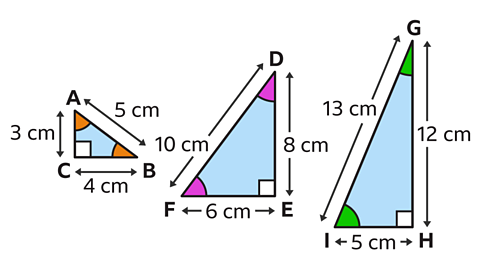
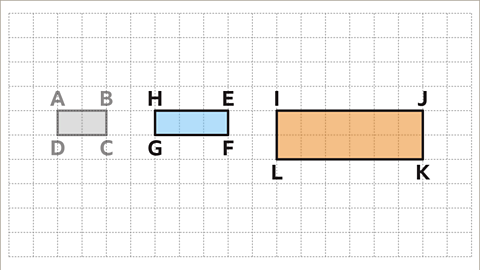
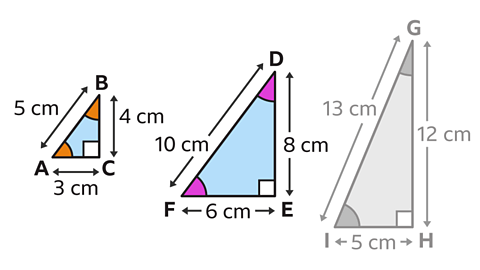
Rotating triangles into the same orientation, with the right-angle in the bottom right, makes it easier to visualise which two shapes are similar.
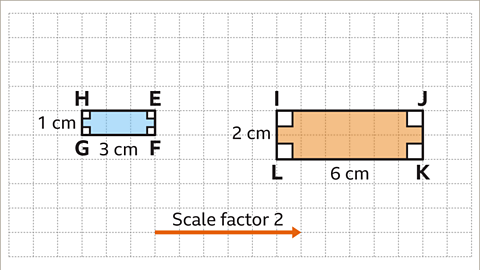
Triangles ABC and DEF are similar.
Triangle DEF is an enlargement scale factor 2.
Line segment EF corresponds to AC.
EF = AC × 2
EF = 3 × 2
EF = 6 cm.
Similarly, line segment DE corresponds to BC.
DE = BC × 2
DE = 4 × 2
DE = 8 cm.
Practise working with congruent and similar shapes
Quiz
Practise working with congruent and similar shapes with this quiz. You may need a pen and paper to help you with your answers.
Real-life maths
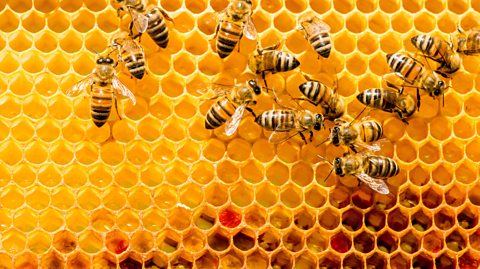
Some congruent shapes can fit together without gaps. If this is possible the shape is said to tessellate.
The construction of a beehive is a real-life example of a tessellation pattern.
The hexagon shapes fit together to form the structure. The bees use this pattern as it is an efficient use of the space which involves as little wax, the material which they use, as possible.
Similar tessellation patterns can be found in the way paths, driveways and brick walls are designed.
Play Sudoku with BBC Bitesize!
Every weekday we release brand new easy, medium and hard Sudoku puzzles. Perfect for testing your skill with numbers and logic.

More on Symmetry and transformations
Find out more by working through a topic
- count3 of 6
- count4 of 6
- count5 of 6
- count6 of 6