Key points
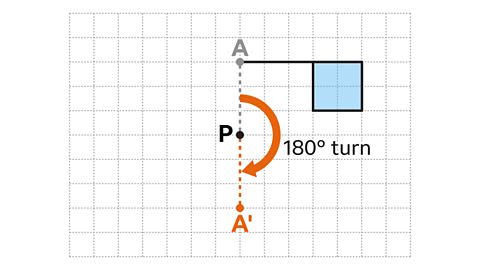
A A turning effect applied to a point or shape. is one of the four types of A change in position or size, transformations include translations, reflections, rotations and enlargements..
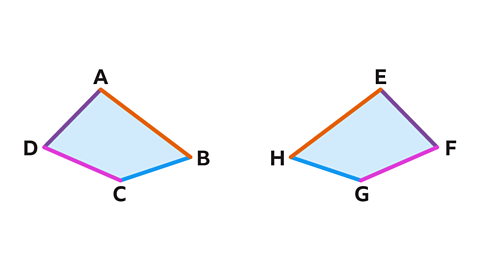
A rotation has a turning effect on a shape. The result is a Shapes that are the same shape and size, they are identical. shape.
Rotation turns a shape around a fixed point called the A fixed point about which a shape is rotated.. This point can be inside the shape, a The point at which two or more lines intersect (cross or overlap). The corner of a shape. The plural form is vertices. of the shape or outside the shape.
Rotations can be Travelling in the same direction as the hands on a clock. or Travelling in the opposite direction to the hands on a clock. and a multiple of 90° (90°, 180° or 270°) is used.
To understand rotations, a good understanding of angles and rotational symmetry can be helpful.
To fully describe a rotation, it is necessary to specify the angle of rotation, the direction, and the point it has been rotated about.
Rotating about the centre of a shape
When A turning effect applied to a point or shape. a shape about a central point the The starting shape prior to a transformation. and the The resultant position of a shape after a transformation. will always overlap.
A piece of tracing paper can be useful when plotting a rotation.
To work out the position of the new shape after a rotation:
- Place the tracing paper over the shape.
- Copy the shape on to the tracing paper.
- Rotate the tracing paper in the correct direction and the specified angle, keeping the centre of rotation fixed.
- The tracing paper now shows the position of the new shape.
- Remove the tracing paper and draw the shape in its new location.
Examples
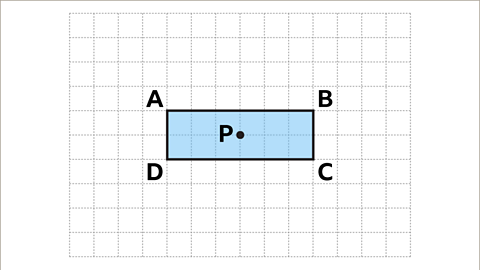
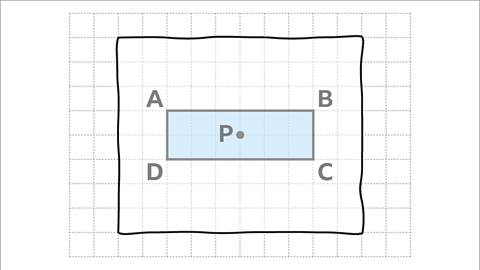
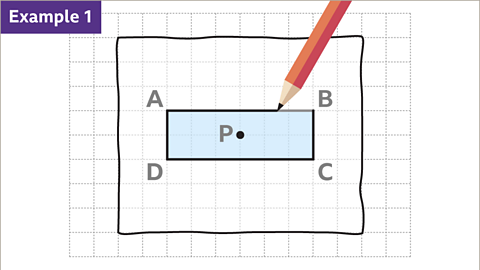
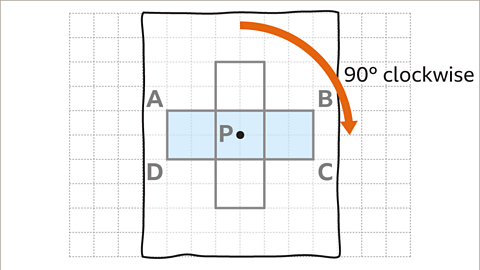
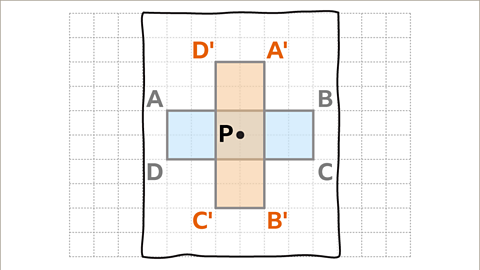
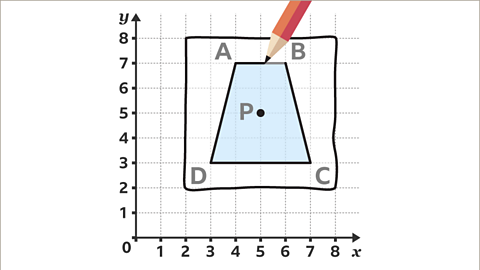
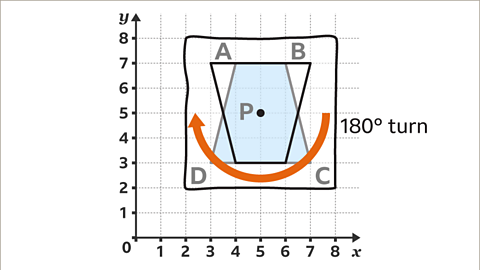
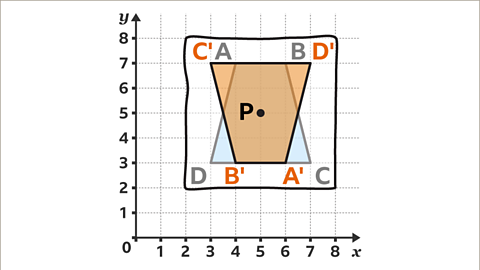
Image caption, Rectangle ABCD is to be rotated 90° clockwise about the centre of rotation, P.
1 of 10
Question
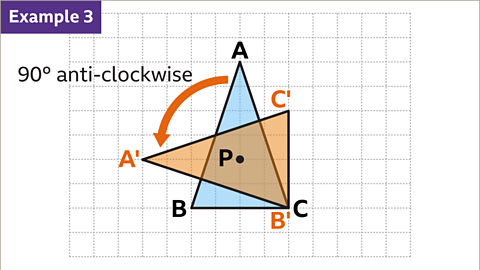
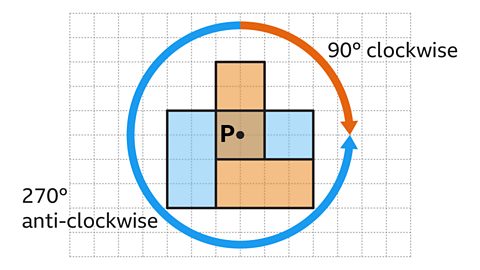
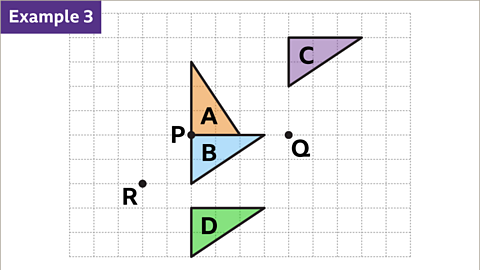
The orange L-shape has been rotated about point P. What angle and direction has it been rotated by?
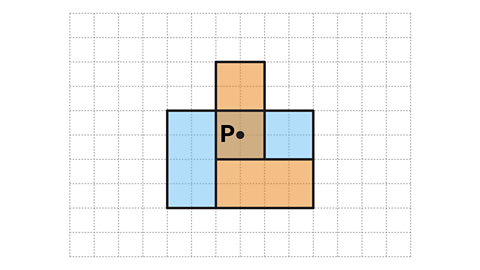
The L-shape has been rotated 90° clockwise (or 270° anti-clockwise) about P. This can be confirmed by using tracing paper, if required.
Rotating about other centre of rotations
The location of the centre of A turning effect applied to a point or shape. affects the final position of the image. If the centre of rotation is a The point at which two or more lines intersect (cross or overlap). The corner of a shape. The plural form is vertices. of the object, then that point will remain unchanged A vertex or line segment that does not change after a transformation. through the rotation.
It is possible to plot a rotation without tracing paper.
To work out the position of the new shape after a rotation:
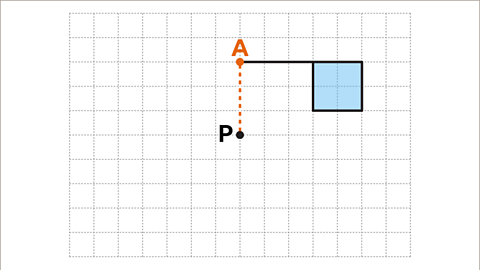
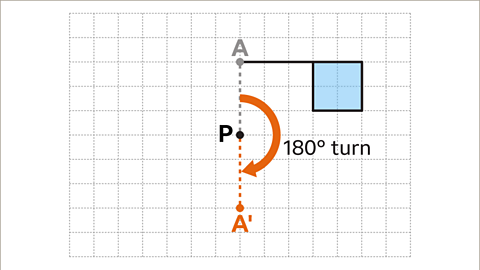
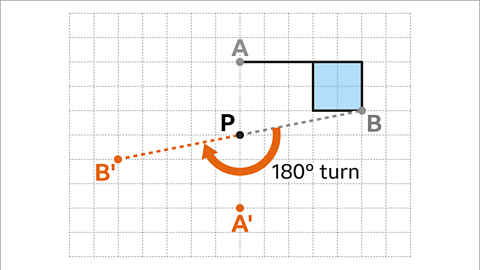
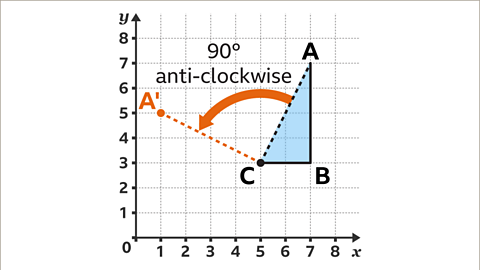
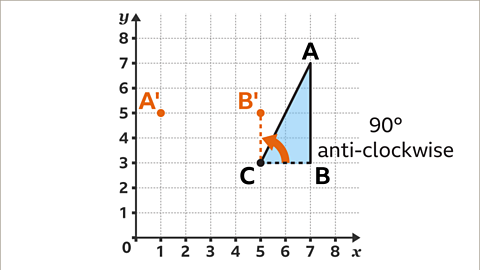
- Imagine a line from the centre of rotation to a vertex on the shape.
- Rotate this line in the correct direction and the specified angle. keeping the centre of rotation fixed.
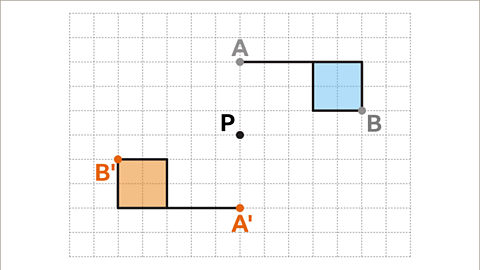
- The end of this line will Two vertices or line segments that match on similar or congruent shapes. to the new location of that vertex.
- Repeat the process for further vertices on the shape.
Examples
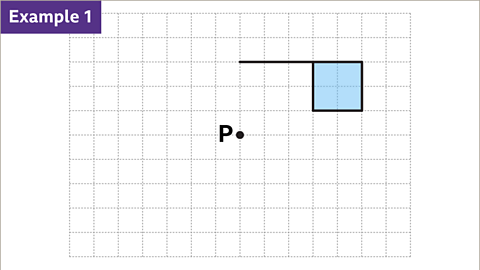
Image caption, Rotate the flag shape 180° about the centre of rotation, P.

1 of 10
Question
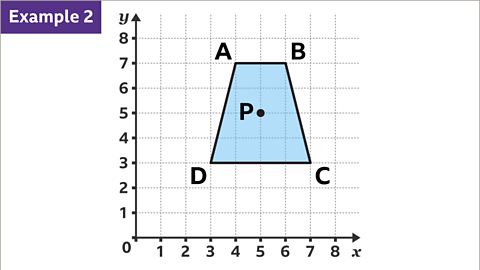
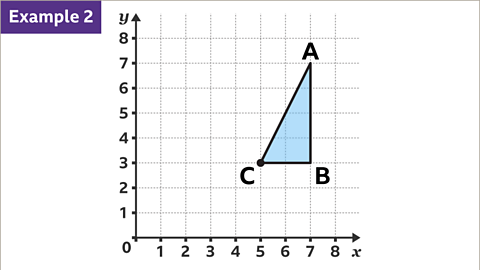
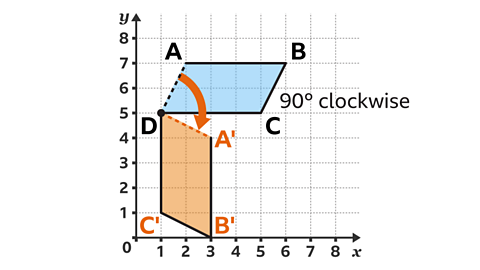
The A four-sided shape with two pairs of parallel sides. The opposites sides and angles are equal. ABCD is rotated 90 clockwise about point D. Which coordinate is point A rotated to?
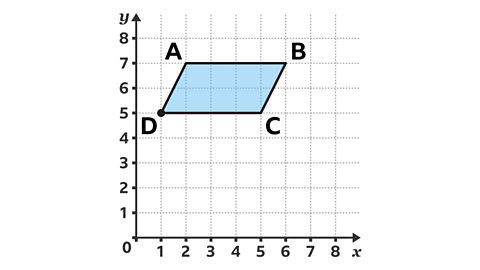
Imagine line segment AD rotated 90° clockwise, keeping the centre of rotation D fixed. The end of this line is the new position of point A. A has rotated to (3, 4).
Practise rotation and rotating a shape about a given point
Quiz
Practise rotation and how to rotate a shape about a given point in this quiz. You may need a pen, paper and tracing paper for this quiz.
Real-life maths
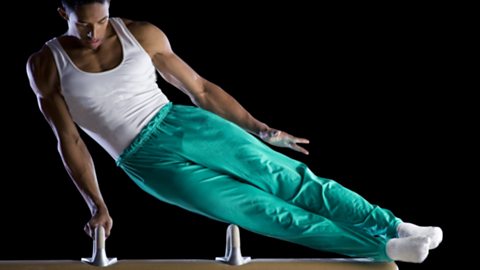
A gymnast is required to perform complicated tumbling when competing on a variety of apparatus or as a floor exercise. Many of these routines involve acrobatics where the competitor is rotating.
For example, on the pommel horse a gymnast can perform a move called circles. Circles requires the competitor to rotate or swing their legs around the apparatus whilst alternating their hand positions on the pommels (handles). Some events require an elaborate dismount. This could include a somersault where a person’s body rotates 360°.
Play Sudoku with BBC Bitesize!
Every weekday we release brand new easy, medium and hard Sudoku puzzles. Perfect for testing your skill with numbers and logic.

More on Symmetry and transformations
Find out more by working through a topic
- count5 of 6
- count6 of 6
- count1 of 6
- count2 of 6