Key points
To understand symmetry a good understanding of shapes, including regular polygons and triangles, can be helpful.
There are two types of symmetry: reflective and rotational.
If a shape does not have symmetry it is called asymmetrical.
Reflective symmetry
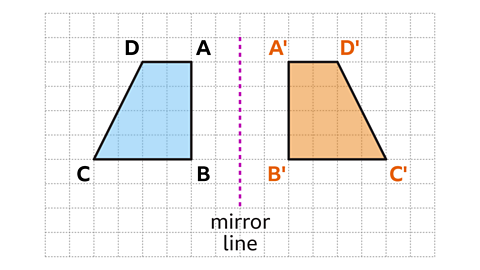
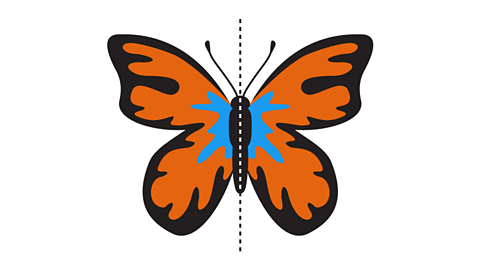
A An imaginary line which splits a shape equally in two, where both sides are a reflection of each other. is an imaginary line which splits a shape equally in two.
Each half must be a mirror image of the other.
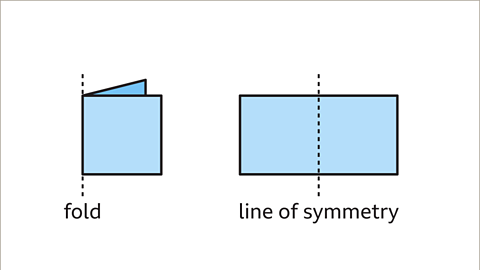
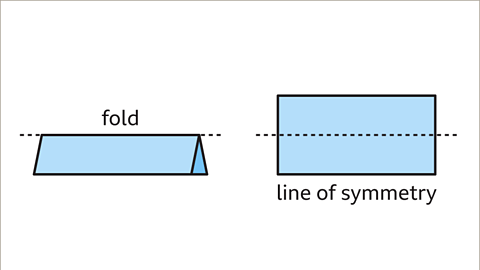
If a A flat shape. can be folded in half, with either side of the fold being a mirror image of the other, then it has a line of symmetry.
A mirror can be also used to help find lines of symmetry. When a mirror is placed in a position on a shape and the reflection matches the other half of the shape, then this is a line of symmetry.
Examples
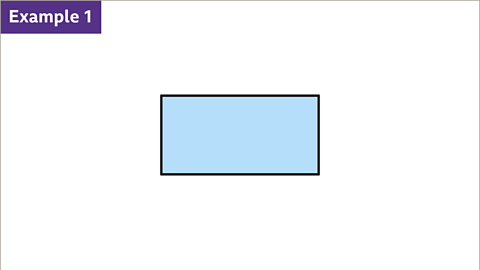
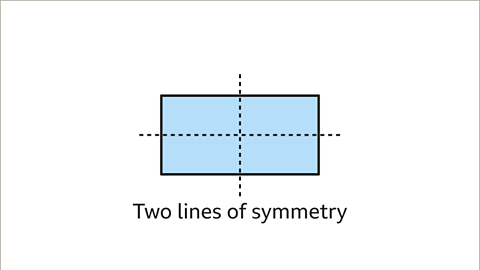
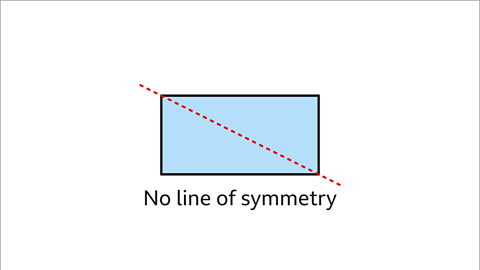
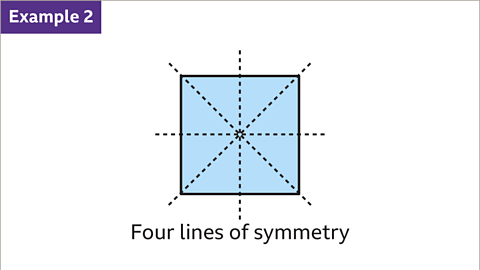
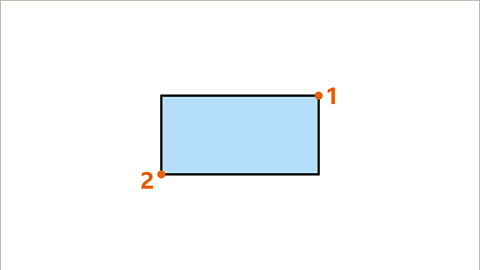
Image caption, By exploring the different ways of folding a rectangle, we can work out the number of lines of symmetry.

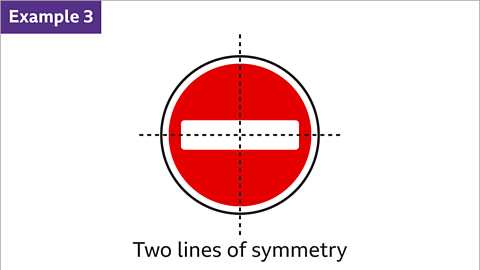
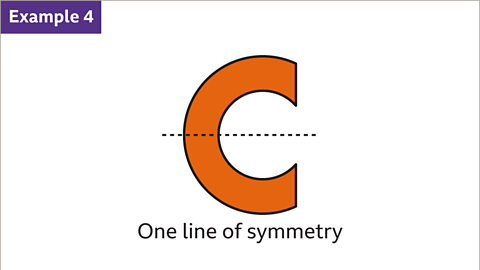
1 of 9
Question
How many lines of symmetry does an isosceles triangle have?
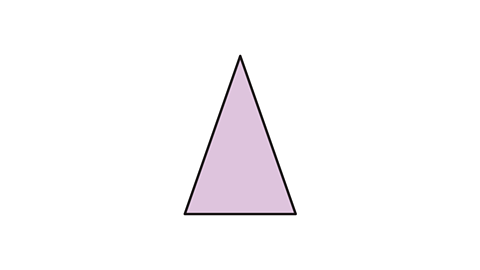
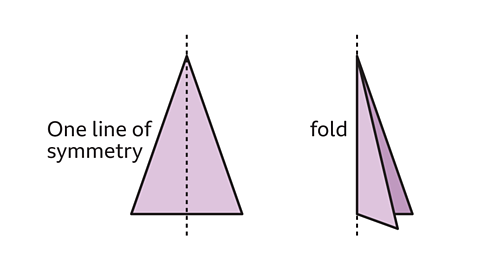
An isosceles triangle can only be folded vertically down the middle.
Both sides of the fold are the mirror image of each other. This fold is a line of symmetry.
Therefore, the isosceles triangle only has one line of symmetry.
Rotational symmetry
A shape has A 2D shape has rotational symmetry about a point if it looks the same after a rotation through an angle greater than 0° and less than 360° about that point. if it looks the same in more than one position when the shape is rotated about its centre.
The number of times it looks the same through a full turn (360°) is called the order of rotational symmetry. For example, a shape that looks the same five times through a full turn has a rotational symmetry of order five.
To find the order of rotational symmetry:
- Choose a A place on a shape used to determine symmetrical properties and transformations of the shape. This can be decided by tracking the motion of the point. on the shape, usually a The point at which two or more lines intersect (cross or overlap). The corner of a shape. The plural form is vertices. (corner).
- Rotate the shape about its centre until the shape looks the same compared to its original starting position.
- Continue to rotate the shape, counting how many times it looks identical to its starting position, until the shape has been rotated a full turn (360°).
Examples
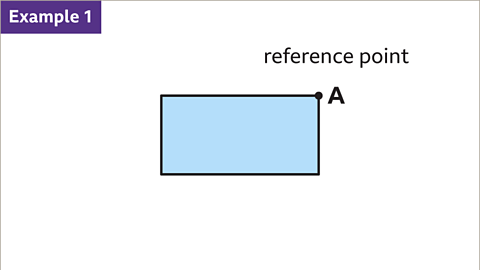
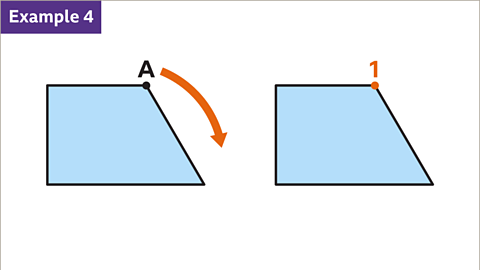
Image caption, To work out the order of rotational symmetry of a rectangle, pick a reference point and label it A.
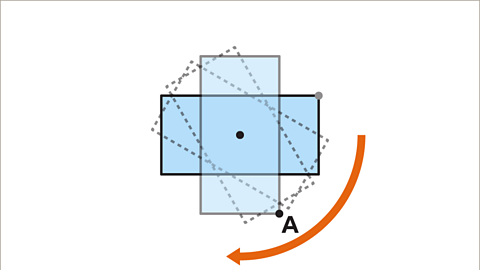
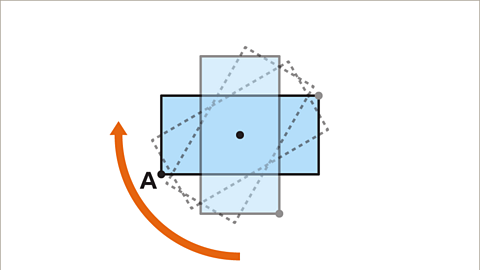
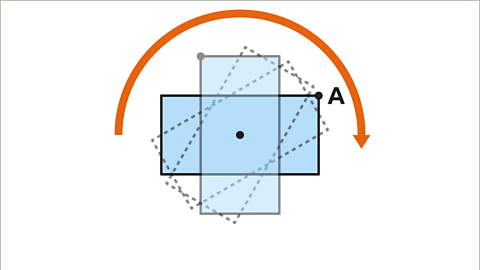
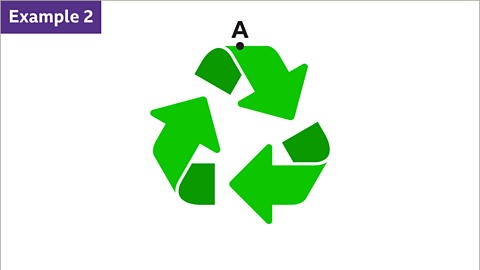
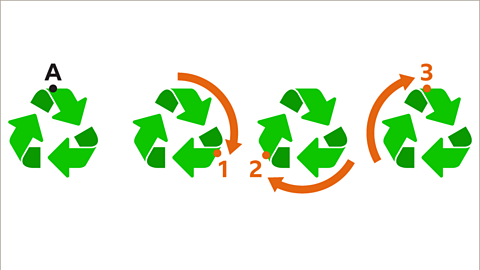
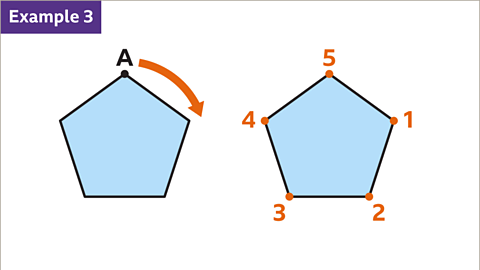
1 of 9
Question
What is the order of rotational symmetry for an equilateral triangle?
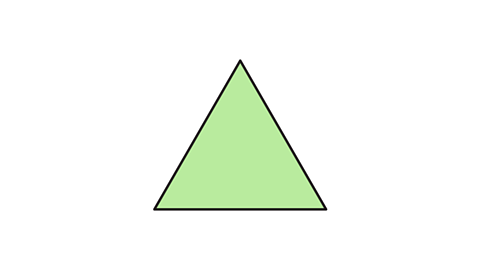

- Choose a reference point and label it A.
- Rotate the image around the centre.
- Through a full turn (360°) there are three positions where reference point A would make the shape look the same as the original.
- This means that the equilateral triangle has rotational symmetry of order three.
Symmetry in regular polygons
A regular polygon has sides which are all the same length and interior angles which are all equal size.
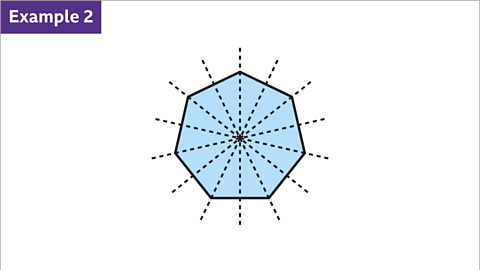
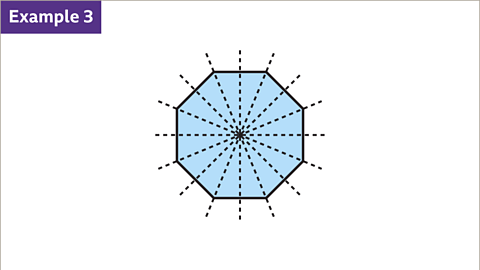
In a regular polygon, the number of lines of symmetry is the same as the number of sides.
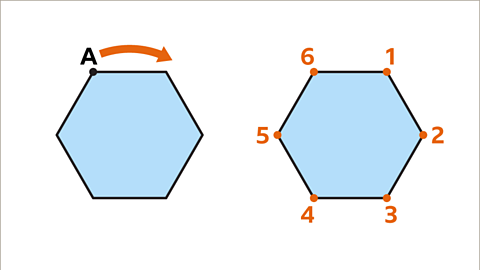
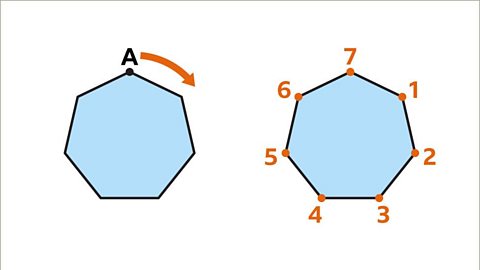
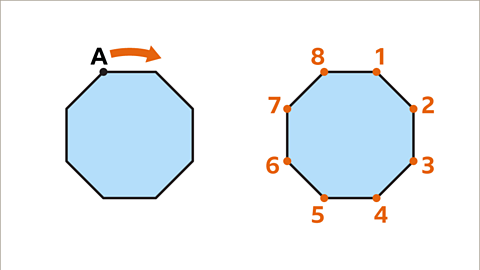
The order of rotational symmetry is same as the number of sides.
Examples
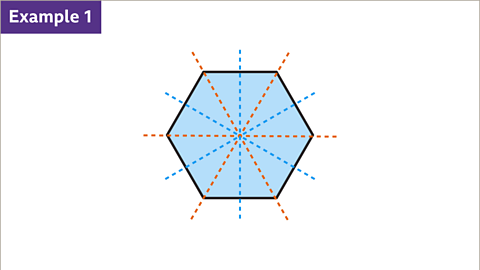
Image caption, A regular hexagon has six sides. A regular polygon has the same number of lines of symmetry as the number of sides. Therefore, a regular hexagon has six lines of symmetry. Three lines of symmetry pass through opposite vertices and three lines of symmetry pass through the mid-points of opposite sides.
1 of 6
Question
How many lines of symmetry would a regular decagon, a 10-sided polygon, have?
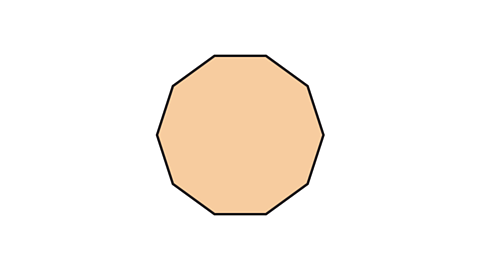
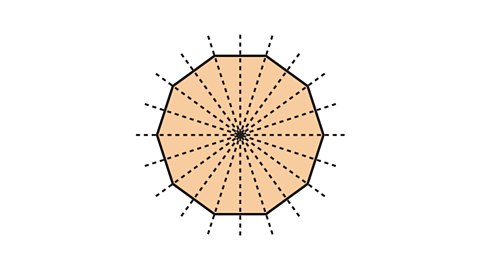
A regular decagon is a polygon with ten sides. Therefore, it has ten lines of symmetry.
Five lines of symmetry pass through opposite vertices and five lines of symmetry pass through the mid-points of opposite sides.
Practise identifying symmetry
Quiz
Practise identifying symmetry with this quiz. You may need a pen and paper to help you with your answers.
Real-life maths

The London Eye is an example of a symmetrical structure.
It is 135 metres in height and has a diameter of 120 metres. 32 viewing capsules, which are also called pods, are equally spaced apart on the wheel. This means the structure has rotational symmetry of order 32.
The cables joining the edge of the wheel to the central point (known as the spindle) replicate the 32 lines of symmetry.
Play Sudoku with BBC Bitesize!
Every weekday we release brand new easy, medium and hard Sudoku puzzles. Perfect for testing your skill with numbers and logic.

More on Symmetry and transformations
Find out more by working through a topic
- count2 of 6
- count3 of 6
- count4 of 6
- count5 of 6