Hello, I’m Mr Smith.
And today we’re going to look at different purposes for writing.
Why do we write?
We write for different reasons or for different… purposes.
When we write, we want to have a specific impact on our reader.
Let’s think about different reasons or purposes for writing.
How many can you think of?
Let’s take a look.
We write to entertain, to instruct, to explain, to report, to inform, to persuade, and to recount.
There are so many reasons to write.
Let’s have a closer look at some.
If we write to entertain, what impact do we want to have on our reader?
Of course, we want to entertain them.
We want them to enjoy our writing by feeling something.
Whether that be joy, sadness or even fear.
So what type of writing usually entertains readers?
You’ve probably come across loads of entertaining writings before.
Maybe it was a storybook that made you smile, a play that made you giggle, or a poem that made you chuckle.
Entertaining writing can come in the form of narratives, stories, play scripts, and poetry.
So, we can see that the purpose is to entertain.
But the form the writing takes can be different.
Let’s look at persuasive writing.
What are we trying to do when we persuade?
We are trying to convince somebody to do something, or to think of something, or to buy something.
When we write to persuade, what form does our writing take?
I bet you can write a cracking persuasive letter.
But we could also write persuasive adverts and speeches.
I think we’re getting the hang of this.
Now let’s think about writing to recount.
What is the purpose of a recount?
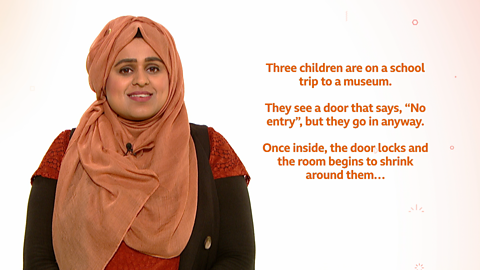
In a recount, we are retelling something.
So, that can be in a story, a diary entry, a letter, and even the recount of an event like a school trip.
Sometimes the same form of writing can be used for different purposes.
Let’s take letter writing for example.
Have you think about why you might write a letter.
There are so many reasons to write a letter.
Here are some.
To persuade, to recount an event, to explain something, to report on something, to instruct, to entertain.
Yes, letters can be part of the narrative.
To complain.
When we read a piece of writing the purpose for writing should be obvious to the reader.
Let’s have a look at this grid and see if we can sort the titles of writing into different purposes.
Pause the video to draw the grid, and have a go at putting these titles into the correct column.
How to make a fruit kebab?
Should children wear school uniforms?
All about Antarctica.
The adventures of Detective Delrusso.
Ready to see if you got it right?
Let’s take a look.
How did you do?
Well done.
The titles of writing usually help us to understand the reason for writing.
Have a go at adding some more examples into each column and see how many you can come up with.
For more help, challenges and games on this subject visit bbc.co.uk/bitesize
Description
Persuasive writing aims to get people to agree with your point of view. It comes in different forms, such as letters, articles, adverts and reviews. Watch this video and let Mr Smith explain more.
Now playing video 10 of 10
- 4 of 10
- 6 of 10

- 7 of 10