Worship in the synagogue
Services at both Jews who live by the Torah and rabbinic law (halakhah) and who only accept changes that can be supported by the Torah. and Jews who have adapted their laws and practices as modern life has changed.Building for Jewish public prayer, study and assembly. include the use of a prayer book called the The literal meaning is order, ie the order of the synagogue service. The term is used for the daily prayer book used by Jews.. Services are often led by a An ordained Jewish religious leader who is trained in interpreting and applying the sacred scriptures to contemporary issues and circumstances., although in some synagogues anyone can lead the service. There may also be prayers, which might be sung. If they are able to, Jews stand to say these prayers as a sign of respect for the presence of God.
Dressing for worship in the synagogue
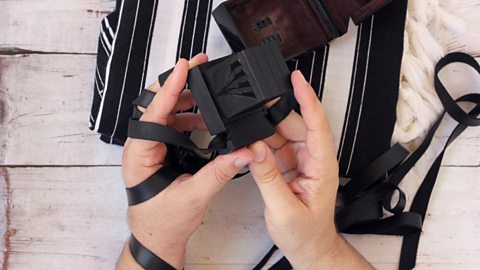
In Orthodox synagogues, men wear a Jewish prayer shawl. Four-cornered garment with fringes. and Small leather boxes containing passages from the Torah. Jewish men strap these to their forehead and arm for morning prayers on weekdays. to worship. The tallit reminds Jews that they are obeying God’s word whenever they wear it. The tefillin is intended to help worshippers concentrate on God because they are wearing the words of the scripture on their body. The act of binding leather around the arms and head is also meant to encourage a greater focus on God’s word. Some Reform women also wear tefillin when worshipping in the synagogue.
Worship in Orthodox synagogues
Orthodox synagogues hold three daily services in The ancient language of the Jewish people. The language of the Torah, the Temple and the modern state of Israel.. These are known as Shacharit (morning), Minchah (afternoon) and Arvit (evening). Some Reform Jewish synagogues also hold these services, but most do not. The person leading the congregation, usually the rabbi, faces the The Hebrew word for the cabinet in a synagogue where the scrolls of the Torah are kept..
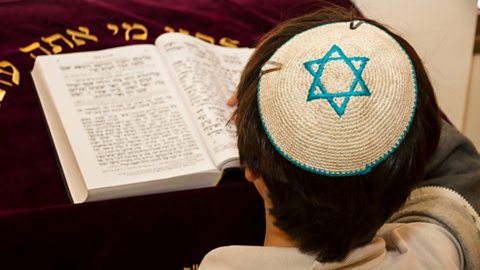
Inside the synagogue, in order to show respect to God, men cover their heads with a skull cap called a Head covering worn by Jews as a sign of their Jewish identity. and women cover their hair with a scarf or a hat. In Orthodox synagogues, men and women sit separately, while in Reform synagogues, people of different genders sit together. Some Orthodox Jews sway while they are praying, which helps them to concentrate on the words being said.
Worship in Reform synagogues
Unlike Orthodox synagogues, Reform synagogues usually don’t hold services every day, instead having a weekly service on The seventh day of the week; a day of spiritual renewal and rest commencing at sunset on Friday and terminating at nightfall on Saturday. as well as services for religious festivals and special occasions. Services in Reform synagogues differ from those in Orthodox synagogues because the words of the service are said in both Hebrew and the national language of the country of the synagogue - in the UK, this is English. Men and women sit and worship together, and musical instruments are played.
