Tactics and composition
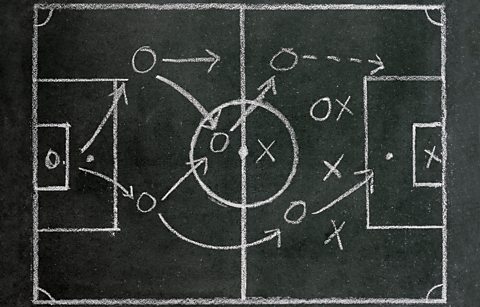
In this area, performance is developed by gradually giving more responsibility to the performer for their performance. To begin with a teacher or a coach would explain roles and then gradually a Captain or leader might take these duties on.
Eventually the whole team/group may be involved in discussing and agreeing roles for each group member to carry out. It can be easier to be the soloist, star player or goal scorer, as often this role is very obvious and success can be easily seen. However the steady defender or goalkeeper who carries out their role when required is equally important.
A team or group must make every person feel equally important so that the team/group can succeed. This means that individual egos must be set aside for a group/team identity to develop. Communication is a key element of this identity forming.
| Approach | Specific | Progression and challenge |
| Positive communication strategies | The approach must make sure that the activity being developed is the focus | Give responsibility to every team member to put in place positive communication strategies while performing. For example every performer would be told to call when they were going to play the ball in volleyball to make clear who was taking responsibility for each pass |
| Approach | Positive communication strategies |
|---|---|
| Specific | The approach must make sure that the activity being developed is the focus |
| Progression and challenge | Give responsibility to every team member to put in place positive communication strategies while performing. For example every performer would be told to call when they were going to play the ball in volleyball to make clear who was taking responsibility for each pass |
These strategies mean that every player understands and accepts their duties in terms of communicating within the performance.
The individual performers would agree beforehand that instructions and guidance would be given at specific times in the performance, and that it was their duty to react, move or respond to the advice given.
At times within a performance there might be lots of verbal communication - everyone regularly making clear who they are marking or that perhaps they have two people to mark and that re-adjustments have to be made quickly.
Even calling when and where a pass has to be made would be each individual team member’s responsibility within a positive communication strategy.
More guides on this topic
- Knowledge and understanding - Mental factors
- Knowledge and understanding - Emotional factors
- Knowledge and understanding - Social factors
- Knowledge and understanding - Physical factors
- Key planning information
- Performance development - Mental factors
- Performance development - Emotional factors
- Performance development - Social factors
- Investigating performance
- Tracking and Assessing Progress
