Papers and boards
Types of papers and boards and their uses
Selecting materials
Materials can be selected based on their How materials behave in different environments when subjected to changing conditions, eg force or temperature changes.. It is important to know and understand which materials can be used for a specific purpose:
- How do they look?
- What are they commonly used for?
- How can they be manufactured?
- How do they perform in use?
- What makes them unique - are they the most Hardwearing., the lightest etc?
Paper and boards should be selected based on the purpose for which they will be used. This could include:
- packaging
- drawing and sketching
- model making
- point of sale displays
- promotional material
Different factors affect material selection such as:
- how easy it is to To break down and process so a new material is produced - one of the 6 Rs.
- how expensive it is
- what it will be used for
- if it has any special properties, eg better for printing, Resistance to bending., Able to be seen through., folding, gluing, easily strengthened etc
- how easily it can be joined or fixed together
Papers and boards have been developed for a lot of different purposes. Paper and board can be:
- textured
- To stamp a pattern onto a surface so that it stands out.
- printed on
- At least two layers of material bonded together. with other materials to make them waterproof, eg drinks cartons
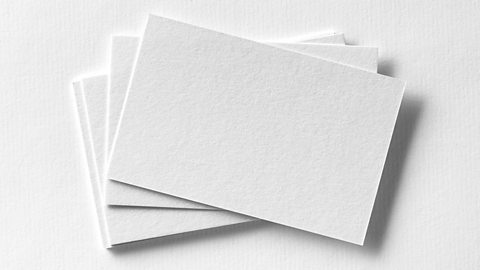
Image caption, Textured
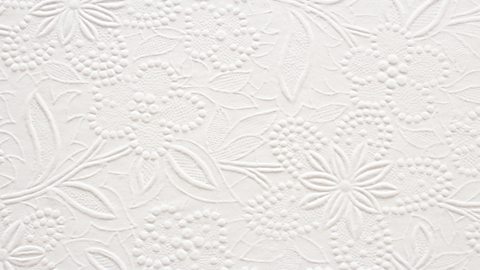
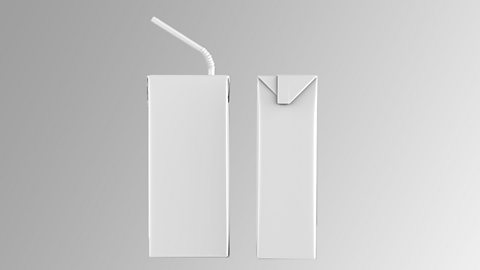

1 of 4
Printing process procedures
When manufacturing products in bulk, such as books, magazines, leaflets, packaging and other printed products, there are three processes to follow:
- pre-press
- on-press - also called ‘press’
- finishing - also called ‘post-press’
Pre-press
This process includes preparing digital files for a printing press - from the creation of a print layout and checking the artwork on the computer, to making the separate colour plates ready for the final printing.
On-press
This is the stage in the printing process where the preparing, positioning and loading of paper or board happens and the actual printing of the artwork occurs.
Finishing
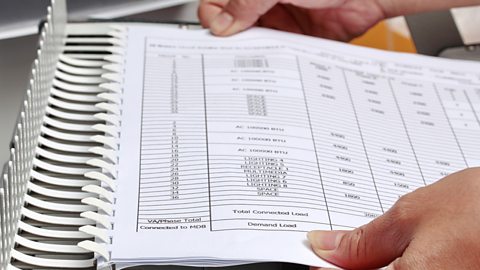
This is the final part after the product has been printed. It is given a finish such as A method cutting paper or card by pushing a blade through the material., To stamp a pattern onto a surface so that it stands out., Commercial printing process applying a metallic foil onto a solid surface using heat and dyes. , Bonding layers of material together to improve strength. and A finishing process to join pages together to form a book.. The post-press process gives the product its final look.
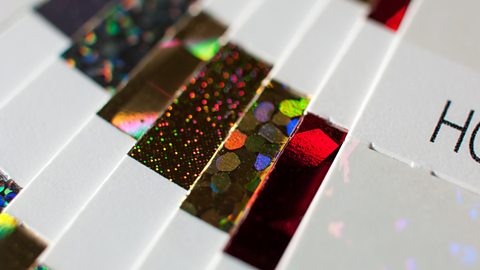
Image caption, Foil stamping
1 of 2
As the paper-making process involves cutting down trees to create Wood fibres processed and reduced down with chemicals or mechanically broken down into smaller parts to make paper., as well as using harmful chemicals such as bleach, it is important that we can recycle paper and cardboard so that new wood pulp, needed to create paper, is kept to a minimum. Paper is made from A carbohydrate. It forms the cell wall in plant cells. fibres found in wood and grasses, which makes it Inexhaustible and replaceable..
Cost is also a consideration when designing, and designers should be able to calculate costs involved. It may be that different providers charge different amounts, and the designer will weigh up the comparison of cost and service before deciding who to use.
Example
A sheet of paper could be priced at 3p per A4 sheet. A manufacturer needing to purchase 1,000 sheets would use the following formula:
Total cost = 1,000 × 0.03 = £30.00
Note unit changed required: The price of each sheet of paper is given in pence, which needs to be converted to pounds.
Question
A designer requires 300 sheets of embossed A4 paper, costing 15p per sheet. What is the total cost?
Total cost = individual price × quantity needed
= 300 × 0.15 = £45.00
