Surface finishes
As well as being applied in printing (often using offset lithography), varnish can be added to card to give it a Shiny. finish. Quite often, just part of a package - usually the logo on a box - has varnish applied so that it stands out to the customer. This is an expensive process and is often added to packaging for chocolates, perfume and aftershave in order to make it look more attractive.
Ultraviolet light is a form of radiation that can come from the Sun, or is artificially produced by ultraviolet lamps and bulbs. varnishing produces a high-gloss finish on card. A shiny liquid is applied to the card and then Solid matter is dissolved in a solvent. When the solvent evaporates away, the solid matter is left due to curing. when Unprotected when in the presence of a type of radiation, eg the photographic film was exposed to light to produce an image. to UV light. UV coatings are very eye-catching and are highly suitable for marketing material to catch the eye of a potential customer.
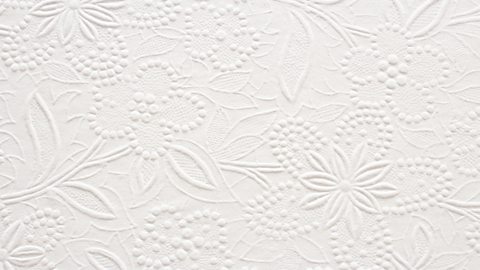
To stamp a pattern onto a surface so that it stands out. is a process that creates a raised pattern on the paper or card and is made using a stamping process. Embossing adds texture and depth to a product and is often found on greetings cards or on perfume and aftershave boxes to raise the logo and make it eye-catching.
Offset lithography
The process of lithograph printing works by transferring (offset) an inked image from a plate to a rubber blanket, also known as a blanket cylinder, to the printed surface (paper or card). This is known as Printing from a flat surface, not a raised one..
Offset lithography relies on the principle that oil and water don’t mix.
- aluminium sheets are produced so the image to be printed stands out slightly - four sheets are required for full colour printing - cyan, magenta, yellow and black (CMYK)
- the printing cylinder rotates it transfers the ink onto the blanket cylinder
- the blanket cylinder rotates to press the ink onto the paper or card whilst also pulling the paper through the press with aid of the impression cylinder
| Advantages of offset lithography | Disadvantages of offset lithography |
| Print on many types of different papers | Some colour variation can happen |
| High image quality and clean images | Paper can stretch |
| Once set up it is a very fast process | Time consuming to manufacture plates |
| Plates can print thousands of prints | Initial offset lithography press is very costly |
| Cost-effective, cheap plates | To ensure a consistent print the printer marks must be checked |
| Quick to set up |
| Advantages of offset lithography | Print on many types of different papers |
|---|---|
| Disadvantages of offset lithography | Some colour variation can happen |
| Advantages of offset lithography | High image quality and clean images |
|---|---|
| Disadvantages of offset lithography | Paper can stretch |
| Advantages of offset lithography | Once set up it is a very fast process |
|---|---|
| Disadvantages of offset lithography | Time consuming to manufacture plates |
| Advantages of offset lithography | Plates can print thousands of prints |
|---|---|
| Disadvantages of offset lithography | Initial offset lithography press is very costly |
| Advantages of offset lithography | Cost-effective, cheap plates |
|---|---|
| Disadvantages of offset lithography | To ensure a consistent print the printer marks must be checked |
| Advantages of offset lithography | Quick to set up |
|---|---|
| Disadvantages of offset lithography |
Product labelling and symbols
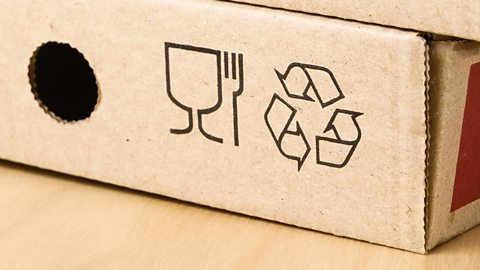
The design of the packaging, brand and A person or company that makes something from raw materials or from an assembly of component parts. of the product communicates with the In business, a consumer is a person who uses a product and may also buy it. through product labelling and symbols. Information printed on to the packaging can be very important, whether it is in a table form such as nutritional information or symbols such as recycling. There are some labels that are required by law such as expiry date, ingredients and safety instructions. Here are some examples of symbols:

Image caption, The green dot is used widely in Europe. This symbol shows that suppliers and producers have contributed financially to the collection,sorting and recovery of packaging.
1 of 2
