Punishments - developments in prisons in the early industrial period
Imprisonment was only used to punish a minority of criminals in 1750. However, by the mid-19th century it was the main form of punishment for serious offences. Influenced by the work of A person devoted to bringing about change for the better, often within politics or society. the government attempted to regulate prison conditions.
Prisons in 1750
In 1750, there were many problems with prisons:
- They were run by gaolers who ran their prisons as a business. Prisoners had to pay for everything themselves, including their bedding, food and fuel. Poor prisoners didn’t receive adequate supplies.
- Over half of the prisoners were A person, country or company that owes a sum of money. Debtors tended to be allowed special privileges such as having visitors. Those who had managed to keep hold of some of their money even lived in comfort, taking advantage of bars and cafes in the prison, or even serving some of their sentence in friends’ houses.
- Some prisoners had completed their sentence but could not afford to leave because they had to pay the gaoler’s discharge fee.
- Prisoners were forced to do pointless and repetitive work
- Conditions were cramped and unsanitary. Over 1,000 prisoners per year died of a disease they had caught in prison.
- Prisoners often acted as 'schools for crime' and places where young, first-time offenders were turned to a life of serious crime.
- Some gaolers used brutal punishments such as whipping.
From the 18th century onwards, there were campaigns to reform the system.
Prison reformers
John Howard
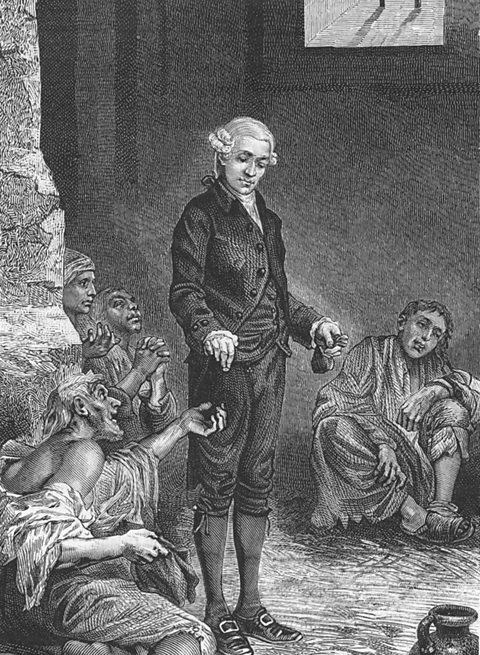
John Howard was a sheriff in Bedfordshire. He took an interest in the prisons that were his responsibility. He visited the county gaol and then others in England, and was shocked at the conditions that he witnessed. He gave evidence to the House of Commons to support what became two new laws:
- The 1774 Discharged Prisoners Act abolished the discharge fee.
- The 1774 Health of Prisoners Act established regulations for hygiene, such as regular cleaning and baths.
Howard published a book in 1777 called The State of the Prisons in England and Wales. It made several recommendations for further change, including:
- ensuring clean running water
- paying gaolers a salary
- assigning different areas of the prison to different categories of prisoners
- having separate sleeping cells, adequate rations and clean shirts for prisoners
- allowing regular visits from churchmen
- encouraging hard work as well as time spent in silent reflection
Elizabeth Fry
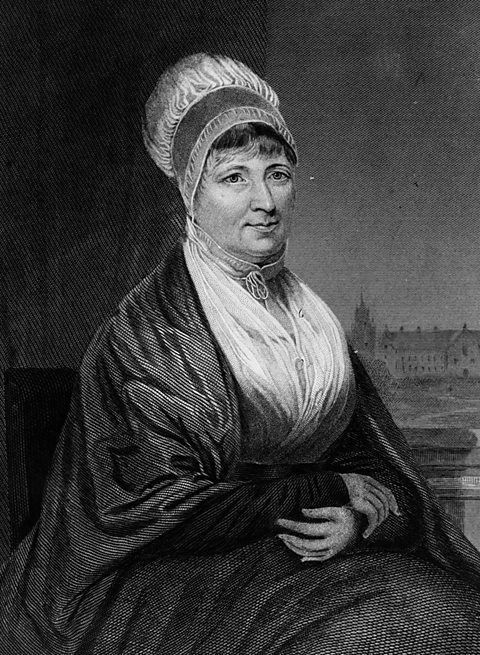
Elizabeth Fry was a Members of the Religious Society of Friends. and this influenced her work on prison reform. She believed that prisoners should be encouraged to live good lives.
In 1813, Fry visited Newgate Prison in London and was appalled at the conditions in the women’s section:
- there was significant overcrowding
- some women had no money for bedding or were ill
- there were children and babies living with their mothers in the prison
Fry and other Quakers visited the prison regularly and read to the prisoners from the Bible. Fry went on to form the Association for the Improvement of Female Prisoners. She persuaded the prison authorities to introduce changes at Newgate, including:
- dividing the women up into smaller groups by age and offence, each supervised by a female warden
- banning alcohol
- introducing new rules to impose better order
- providing clothing and furniture
- providing schools for the women and children, with a focus on religious education
- enabling regular work
Fry visited other prisons too. She spoke and wrote about her work at Newgate. As a result, the changes she brought about were later introduced elsewhere.
The 1823 Gaol Act
In 1815, the system of paying fees to gaolers ended. Gaolers were paid a salary from then on. In 1823, the government attempted to regulate local prisons and bring conditions in line with a set standard.
The 1823 Gaol Act stated that:
- Someone responsible for maintaining law and order in a county. Often abbreviated to JP. had to visit gaols and write reports on conditions
- different categories of prisoners should be located in different areas of the gaol
- women should be supervised only by female wardens
- prisons should have regular visits from the governor, a chaplain and a doctor
- prisoners should sleep in their own cell with their own bed or hammock
Unfortunately, these regulations were difficult to enforce and were often not adhered to because they cost more money. Inspectors were appointed but not until 1835.
