Crime and criminals
The nature of crime changed between c.1250 and c.1750, although there was a lot of continuity as well. This case study compares crime and criminals in medieval and early modern Britain.
Medieval Britain
Serious crime
Rates of Homicide in the Middle Ages meant killing a human being. It included murder, suicide and accidental murder. were high, making up around 18 per cent of trials for serious crime. This was partly because the definition of homicide was broad and included things like suicide and accidental murder. Over half of homicides stemmed from arguments. This may have been because the peasants worked in close proximity to each other on their strips of land, often with sharp tools nearby.
Other serious crimes included Deliberately setting fire to something, which is a crime.Having sex with someone when they have not agreed to the sexual activity. burglary, robbery and theft of goods worth more than 12 pence - around three weeks’ wages for a labourer in the 13th century. Most serious crimes were non-violent, with the vast majority being linked to theft.
Petty crime
Petty crimes were less serious crimes, such as the theft of goods worth less than 12 pence or being in debt. Sometimes the Church also outlawed things that it considered morally bad, such as gambling and playing football.
Outlaw gangs
Gangs of Someone who has been cast out of society. In the medieval period, this was usually because they had been accused of a crime and run away. lived in forest areas. They ambushed travellers and stole from people’s homes. They targeted poorer villagers whose homes were not well protected as well as churches, which had valuable gold and silver. They frequently used violence.
New crimes by c.1500
Several new crimes had emerged by c.1500:
- After the A disease that spread across Europe killing up to half of the population. of 1348-1350, workers were in demand and many labourers left their villages in search of better pay. In response, The law-making body of a country. passed a law saying that all able-bodied men had to stay and work in their home village. The law also imposed harsh penalties for Homeless, unemployed person who wandered the streets. also known as vagabonds, who remained idle and didn’t work.
- Scolds were people - quite often women - who were accused of using offensive speech in public. started to appear as a crime in many manors after 1350. It tended to be women who were accused of this crime.
- By the end of the Middle Ages, A belief or opinion which disagrees with the teachings of the Church. had become a major crime. This was because the A follower of John Wycliff. Wycliff believed that churchmen should lead simple lives and that the Bible should be translated into English. had started to challenge Roman Catholic teachings. For example, they questioned the belief that bread and wine became the body and blood of Christ during Central liturgical service observed by most Churches, recalling the last meal of Jesus.
Early modern Britain
Vagrancy
A big population increase led to a rise in prices and a fall in wages. There was also a series of harvest failures. These circumstances meant that vagrancy increased as many people left their villages to look for work. Sometimes they begged or stole. A law passed in 1572 said that all vagrants over the age of 14 should be whipped and burned through the ear.
Moral crimes
The influence of Puritans were strict Protestants who followed the Bible closely and tried to live simple, plain lives. They believed that hard work and worship combined was the way to heaven. They therefore did not approve of anything that prevented worship and work. grew from the late 16th century onwards. This led to a clampdown on what they saw as sinful or A person who worships elements of nature. practices. Things like swearing and drinking were punished in some areas. In the 1640s and 1650s, Puritans were in charge of Parliament and laws were passed in an attempt to enforce a strict Christian lifestyle. For example, sports and games were banned on Sundays and the number of alehouses was reduced.
Witchcraft
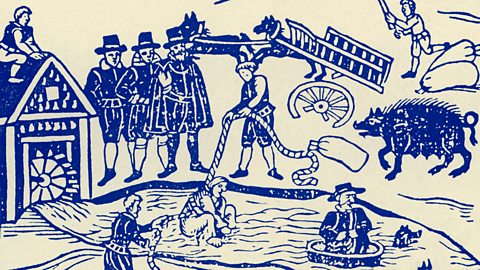
In a historical context, this was thought to be a kind of magic that could be used to cause harm to people or property. Witches were often accused of obtaining their power from the Devil. was first made a crime in 1542. After 1563, someone found guilty of using witchcraft to kill another person could be hanged. Hundreds of people, mainly women, were executed for witchcraft during this period. Some historians believe that the era’s chaotic circumstances - such as plague, the English Civil War and famine - created tension within communities. They argue that this led to people blaming neighbours for bad fortune or deaths.
New crimes by c.1750
Several new crimes had emerged by c.1750:
- After governments increased the Tax put on goods arriving in one country from another. on things like tea, brandy and silk, Moving goods illegally from one place to another. became a big problem. Many people were involved, from ordinary labourers to tradesmen, farmers and richer people. Smuggling was relatively easy given Britain’s extensive unguarded coastline. Many people saw it as a quick way to make good money.
- Opportunities to commit Using force or the threat of force to steal money or property from travellers on the roads. increased during this period, because more roads were built and travel by A large enclosed vehicle, pulled by horses, used to carry passengers along a regular route between two places. became more common. The number of wealthy people also grew. Highwaymen were usually armed with pistols and wore masks. They ambushed and attacked people travelling in stagecoaches along the roads.
Comparing crime between c.1250 and c.1750
Question
How far do you agree that the kinds of crime committed were the same in medieval Britain and early modern Britain?
- Identify two continuities in crime, meaning two crimes that were the same or similar in both periods.
- Identify two changes in crime. These could be new crimes that only emerged after c.1500 or crimes that increased after c.1500.
Two examples of continuity are:
- Organised robbery - In the medieval period, gangs of outlaws lived in forest areas. They ambushed travellers and stole from people’s homes. They targeted poorer villagers and churches for their valuable gold and silver. They frequently used violence and were feared by most people. They were similar to the gangs of highway robbers in the 18th century, who were armed with pistols and wore masks. They ambushed and attacked people travelling in stagecoaches along the roads.
- Religious crimes - In the Middle Ages, the Church sometimes outlawed things that it considered morally bad, such as gambling and playing football. Heresy also became a crime by c.1500, with 11 people executed for being Lollards. In the early modern period, religious crime continued under the influence of the Puritans, who tried to enforce a strict Christian lifestyle. For example, people were punished for playing sports on Sundays.
Two examples of change are:
- Smuggling - Smuggling only became a big problem after the 1720s, when the government placed high import duties on goods such as tea, brandy and silk. Goods were brought over from France or Holland and gangs of local people were employed as lookouts, and to hide the stock in a barn or cave.
- Vagrancy - Although a law of 1351 imposed penalties for vagrants, vagrancy got much worse in the early modern period. This was because there was a big increase in poverty following a population increase, bad harvests, falling wages and rising prices of food in the late 16th century. More people left their villages, sometimes begging or stealing. Vagrants were punished harshly. A law passed in 1572 said that all vagrants over the age of 14 should be whipped.
Extent of continuity
On the whole, there was more continuity than change. The nature of crime itself remained similar - for example, challenging the religious beliefs of those in charge and theft. It was the opportunities for committing crimes that changed in response to the actions or beliefs of the government at the time, eg high import duties or Puritan beliefs.
