Industrial Britain, c.1750-c.1900 - reasons for change
Industrial Britain saw an increase in the crime rate along with the introduction of a police force and changes to punishment. This case study summarises the main changes that took place in this period and examines the reasons for them.
Changes in crime
The crime rate
The increase in the population meant that there were more offenders and more potential victims. The crowded cities had many alleyways, overcrowded streets and lodging houses. These provided the ideal conditions for criminal activity to go undetected.
Overall, the crime rate increased between 1750 and 1850. This included a very sharp increase between 1815 and 1820. In 1815, the Napoleonic Wars - fought against France - ended. Thousands of soldiers returned home from the wars to face an economic slump, unemployment and rising prices. Many turned to theft out of desperation.
Types of crime
The most common type of crime in this period was petty theft, around 75 per cent of recorded crime. The growth of trade and industry meant that there were many more opportunities for criminals to commit crime. For example:
- There were more warehouses and factories, so theft from workplaces increased.
- The opening of more banks led to more bank robberies.
- The expansion of the middle classes meant there were more houses with more valuable goods to be stolen.
New crimes in this period included fare-dodging on the railways, failing to send your children to school, and The theft or misuse of money that is in your care, or that belongs to an organization or business that you work for. and other business-related crimes.
Question
Why did crime increase between 1750 and 1850?
- Poverty - Soldiers returned home from war in 1815 to high levels of unemployment, high prices and an economic slump. Many turned to crime as a result.
- Urbanisation and industrialisation - There were more opportunities for crime as the population increased and the urban environment presented a good cover for escape. There were more workshops and factories, which led to increased theft from the workplace. The emergence of the railways meant that fare-dodging was a new crime.
Changes in law enforcement
The introduction of the Metropolitan Police Force
In 1750, many people were against the idea of a centralised police force controlled by the government. This was because they feared the cost and didn’t believe policing was part of the government’s role. They were worried the police might limit people’s freedom and privacy.
However, by 1829, the situation was starting to change:
- The rapid growth of towns and cities, particularly London, meant that the system of constables and Men who patrolled the streets at night in order to prevent crime. was no longer sufficient.
- More Members of The law-making body of a country. were worried about public disorder. There had been a surge of protests over unemployment, food prices and the fact that working people did not yet have the vote.
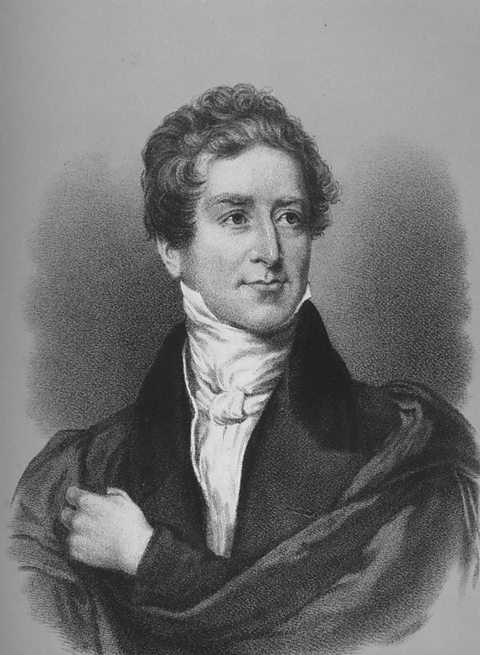
In 1822, Sir Robert Peel became the A government minister responsible for law enforcement and national security. He made establishing a police force one of his main aims. By 1829, he had won over the support of Parliament and the Metropolitan Police Force was set up in that year.
Initially, there were 3,200 men operating in a seven-mile radius in central London. They were paid for by government taxation. They were nicknamed ‘peelers’ or ‘bobbies’ after Sir Robert Peel. They wore top hats and blue uniforms to distinguish them from the army’s red coats, and were unarmed apart from a A short, thick stick carried by a police officer.
Question
Why was a police force introduced in 1829?
- Urbanisation - The rapid growth of towns and cities meant that watchmen were no longer adequate.
- Changes in crime - Crime was increasing along with protests and disorder. Politicians felt something needed to be done.
- National and local government attitudes - As Home Secretary, Robert Peel made the case for the police and helped to soften Translated as ‘leave well alone’ or ‘let the people choose’. A government policy of interfering as little as possible in social and economic policy. attitudes towards government involvement.
Changes in punishment
Changes to capital punishment
- The number of executions dropped after 1800. Between 1800 and 1809, there were 871 executions. Between 1830 and 1835, there were just 297.
- New forms of hanging were developed, such as the new drop and the long drop. Both of these made death quicker and less painful.
- Under Sir Robert Peel, the number of offences punishable by death was greatly reduced. By 1861, the death penalty had been abolished for all crimes apart from murder, To betray or plot against the government or monarchy. violent Can be used to describe robbery or criminal violence at sea or the illegal copying of recorded material. and Deliberately setting fire to something, which is a crime. in royal dockyards.
- The change was partly a response to the courts being unwilling to use the death penalty and enforce the Bloody Code - a harsh system of punishment introduced in around 1688 - because they felt the death penalty was too severe a punishment for some crimes.
- Many people believed the Bloody Code prevented justice from occuring. They thought it allowed criminals to get away with their crimes - or even encouraged criminals to commit crime - as criminals might think they would not be found guilty if the jury did not believe the use of the death penalty for 'minor crimes' was necessary.
- In addition, the The Enlightenment was a movement that began in the 18th century. It challenged traditional beliefs, and promoted rationality and reason. had spread People who have concern for, and help to improve the happiness and welfare of others. ideas, such as the belief that it was morally wrong to take away someone’s life.
Introduction of transportation
- To send a convicted criminal to a prison camp overseas, such as in America or Australia. initially to America and then to Australia, was the main alternative to hanging until 1868.
- Hanging was becoming widely viewed as too extreme. Transportation was seen as a good alternative, particularly since courts were more prepared to use it. Prisons in Britain were still viewed as too expensive.
- People thought that transportation would reduce crime because it completely removed criminals from Britain. Prisoners could be used as labour to help build the new colony of Australia.
- Humanitarians thought that it was a good opportunity to reform criminals. They would be forced to work hard but also learn new skills.
- Convicts were usually sentenced to 7 years, 14 years or a lifetime of hard labour. When they arrived in Australia, they worked for Someone who moved of their own free will to start a new life in places such as Australia or the United States. or for the authorities, helping to build the new colony. Work included digging ditches and felling trees.
- The colony was based on harsh punishment. Convicts who broke rules would be flogged with 25, 50 or even 100 lashes. However, good behaviour was rewarded by early release, which provided good motivation for many convicts.
Changes to prisons
In 1750, prisons were run by gaolers as a business. Prisoners had to pay for everything themselves and did no real useful work. Conditions were cramped and unsanitary. Some gaolers used brutal punishments.
Prison reformers such as John Howard and Elizabeth Fry worked to improve conditions. By 1823, some changes had been made, such as:
- The system of paying fees to gaolers ended
- Someone responsible for maintaining law and order in a county. Often abbreviated to JP. had to visit gaols and write reports on conditions.
- Women had to be supervised only by female wardens.
- Prisoners should sleep in their own cell with their own bed or hammock.
In the 1840s, there was a surge of national prison building after the use of transportation came under criticism for a variety of reasons. These included:
- People argued that conditions on the ships and in the colonies were inhumane.
- Someone who pays taxes. disliked the fact that they had to support the families of the convicts who were left behind.
- Some peopled viewed transportation as too soft a punishment because of the opportunity for a new and better life after the sentence.
By 1877, 90 new prisons had been built or reconstructed. In the same year, the government took control of all prisons.
From the 1850s onwards, some prisons used the silent system. Prisoners were allowed to work together but in silence. Additionally, it was generally accepted that serious criminals serving over four years in prison would have their sentence reduced after a four-year period of good behaviour.
However, by the 1860s, governments encouraged the use of pointless tasks, such as turning the crank or walking the treadmill, for prisoners. This was because they thought that if criminals hated the work, they would be less likely to reoffend.
Furthermore, the moral panic of the A series of muggings where victims were choked on the streets of London in the 1860s. led to politicians bringing in new legislation on prison conditions. Conditions were made substantially harsher:
- Flogging (abolished in 1861) was brought back in 1863.
- The 1865 Prisons Act increased hard, pointless labour.
- The act also introduced punishments such as a diet of bread and water and more When a prisoner is locked in a cell and isolated from others.
Question
Why were there changes to punishment between c.1750 and c.1900?
- Beliefs and attitudes - Capital punishment was made more humane, and was used less often, because of the influence of Enlightenment ideas. Reformist ideas also meant transportation was used as an alternative because it offered a chance for criminals to change and re-enter society. In contrast, in the 1860s, there was a return of the belief that punishment needed to be harsh in order to a deterrent. This led to the 1865 Prisons Act.
- Work of individuals - Prisons were reformed partly due to the work of John Howard Elizabeth Fry. The Bloody Code was abolished under the influence of Sir Robert Peel.
- Crime - The Garrotting Crisis - and the media’s reaction to it - led to a return to harsh prison regimes.
- Empire - Labour was needed to build up the new colony of Australia. As a result, it was chosen as a convict colony.
