Programming microcontrollers
In order for A computer chip used instead of a CPU that contains a processor, memory and inputs/outputs. to work correctly they must be The process of writing computer software.. This can be achieved using a wide range of The programs, applications and data in a computer system. Any parts of a computer system that aren't physical., The physical parts of a computer system, eg a graphics card, hard disk drive or CD drive. and different A language used by a programmer to write a piece of software. .
Programming methods
Microcontrollers can be programmed using a range of different methods. These include:
- A programming language that uses text-based commands, rather than visual elements., such as BASIC, C++ and Python
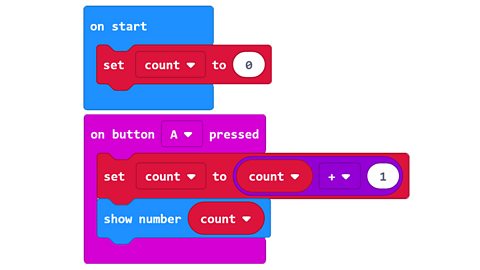
- A programming editor that works by dragging and connecting blocks of instructions.
- Also known as a flow diagram. A diagram that shows the step-by-step flow of an algorithm. software
Each have their own advantages and disadvantages.
Example of a flowchart program
The program below acts as a simple timer. When an input The pins on an integrated circuit appear in two rows and are manufactured as dual in line (DIL) packages. detects a high (on) signal, it turns an output on for twenty seconds. Software such as PICAXE Editor, GENIE and Yenka can be used for writing flowchart programs.
Downloading a program
Once written and tested, the program must be downloaded onto the microcontroller. Many systems support Hardware and software that allows a microcontroller to be programmed without being removed from the circuit.. This means the microcontroller does not have to be removed from the circuit to be programmed. For some systems, the chip may have to be taken from the circuit and placed in a special A device that allows a program to be downloaded from a computer onto a microcontroller.. A A cable used to transfer data to a microcontroller. or USB cable is commonly used to download the program.
Question
Describe what is meant by ‘in-circuit’ programming.
The microcontroller is programmed without removing it from the circuit.
