Microcontrollers as process devices
A computer chip used instead of a CPU that contains a processor, memory and inputs/outputs. provide The processes carried out by a system to reach an end goal. and give intelligence to products and systems. From mobile phones to washing machines, many everyday products are controlled by these devices.
Purpose of process devices
A device, usually an integrated circuit, that controls the process functions of a system. take the signal from the The place where a force enters a system. stage of a system and act on it by changing it in some way - for example, introducing a time delay, counting the number of times something happens or making decisions. An electronic component that can be programmed to perform different functions., such as microcontrollers, are often used for this purpose.
Microcontrollers
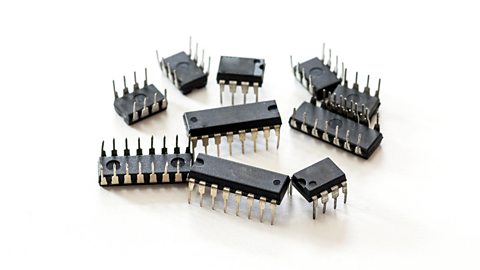
Microcontrollers come in different sizes with varying numbers of The pins on an integrated circuit appear in two rows and are manufactured as dual in line (DIL) packages. for the connection of input and A device used to output data or information from a computer, eg a monitor, printer or speakers. - for example, 8 pin, 14 pin and 18 pin. A A common type of programmable microcontroller. is an example of a microcontroller that is widely used.
Advantages and disadvantages of using microcontrollers
Advantages
- The size of a circuit can be significantly reduced. This is because programming replaces physical components.
- They can be reprogrammed many times. This allows changes to be made without replacing actual components.
- They have pins for connecting several input and output devices, adding to flexibility.
Disadvantages
- They often cost more than traditional integrated circuits. They are therefore not always the best option for simple systems.
- Programming software and hardware is required. This can be expensive to buy.
- The language of the system must be learned and this adds to training costs.
