Equatorial ecosystem
Description
Equatorial rainforests contain an enormous variety of plants and animals – approximately 90 per cent of all of the world's species. Trees and plants. is dense and occurs in four main layers:
- The forest floor/A layer of the forest just above the forest floor. It contains woody shrubs.. This area is dark as trees block out most of the sunlight. The The ground in a rainforest. is covered in a thick blanket of dead and When plants wither and die. roots and leaves, known as A layer of dead and decaying leaves found on the forest floor throughout the year.. A little vegetation can grow between the trees if it is able to trap sunlight. This area is prone to An overflow of water that submerges land. during torrential rainfall.
- The under canopy is the layer above the forest floor. This area is shady and cooler. As there is very limited sunlight, seedlings lie dormant until larger plants and trees die. The gap that is left in the The layer of continuous tree tops in the rainforest. is quickly filled as new plants grow into it. A plant (vine) which grows up from the roots of trees in the rainforest., or vines, take root in the ground and climb up trees to reach the sunlight.
- The canopy is the continuous layer of tree tops that is more An area that is protected from the wind.. The trees are normally 20 to 40 metres tall. This leafy location with fruit all year round is the habitat for most wildlife including insects, tree snakes, birds and some mammals, eg howler monkey, jaguar and sloth.
- The emergent layer consists of the tallest trees in the rainforest and they can grow up to 60 metres. They are higher because they are able to trap more sunlight to help them make more food to grow. Emergent trees are supported by buttress roots which prevent them from blowing over in high winds.
This diagram shows the four layers of rainforest vegetation and the amount of sunlight that each one receives:
Vegetation in the rainforest has adapted to the climatic conditions to enable it to survive in this environment.
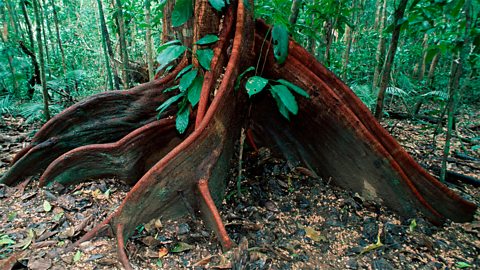
Image caption, Buttress roots
1 of 3
Each one has adapted to rainforest conditions in a different way.
A type of tree that grows in the rainforest. have large, fan-shaped leaves. This feature is good for trapping sunlight and water. The leaves have segments, so excess water can drain away preventing its weight from breaking them.
Many tropical rainforest trees have developed huge A tree root that grows above the forest floor to provide nutrients and support.. These extend from the forest floor to two metres or more up the trunk and help to anchor the tree to the ground.
Buttress roots are essential as rainforests have a shallow layer of When soil is rich in nutrients. soil, so trees only need shallow roots to reach the Chemical elements that are essential for plant nutrition.. However, shallow roots can't support huge rainforest trees, so they have grown buttress roots to support them.
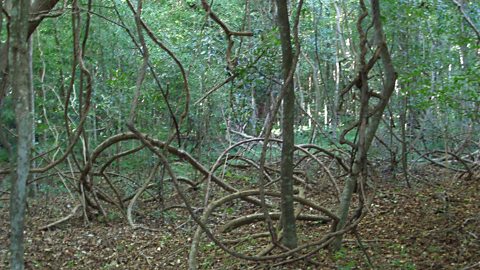
Lianas are vines that grow up from the forest floor and use trees to climb up to the canopy, where they spread from tree to tree to get as much sunlight as possible.
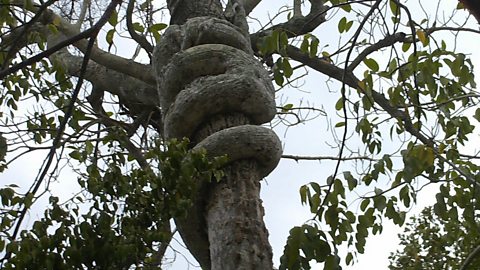
A type of tree that grows in the rainforest. start at the top of a tree and work their way down. The seed is dropped in a nook at the top of a tree and starts to grow, using the debris collected there as nourishment. Gradually the fig sends aerial roots down the trunk of the host tree, until they reach the ground and take root.
As it grows, the fig tree will slowly surround the host, criss-cross its roots around the trunk and start to strangle it. The fig's branches will grow taller to catch the sunlight and hostile roots deprive the host tree of nutrients. Eventually the original tree will die and decompose leaving the hollow but robust trunk of the strangler fig.
