Tundra climate
Location of the tundra climate
An ecosystem or biome mainly found around in the Arctic or on the top of mountains. Tundra areas are very cold so they have frozen ground with no trees. environments are found in the The top half (north) of the world, found anywhere above the equator. surrounding the An imaginary line of latitude that circles the globe at latitude 66 degrees north of the Equator..
Places which experience an A natural region where there are no trees growing due to the cold temperatures and short growing season. climate include parts of:
- A continent located above South America., eg northern Canada and Alaska
- A continent containing many different countries., eg Iceland and northern Scandinavia
- A continent containing many different countries., eg northern Russia and Siberia
It is useful to note that a second type of tundra, called A natural region where there are no trees growing due to the high altitude., exists on high-altitude mountain tops throughout the world.
Description of the tundra climate
Tundra environments are very cold with very little Moisture that falls from the air to the ground. Includes rain, snow, hail, sleet, drizzle, fog and mist., which falls mainly as snow. How warm or cold something is. remain below 0°C most of the year.
Average Every year. temperatures are approximately -28°C and temperatures can plummet to as low as -70°C. There is a broad The difference between the highest and lowest temperatures. as temperatures can rise to 12°C during the summer months.
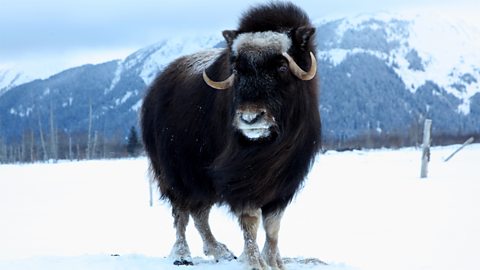
Tundra landscapes are sometimes referred to as A natural region that experiences less than 250mm of precipitation and has cold temperatures throughout the year. because the annual precipitation is less than 250mm. The winds can be very strong and icy.
Summers have several weeks of continuous daylight - the Sun shines virtually 24 hours a day, which is why the Arctic is also called the Land of the Midnight Sun. Winters are long and dark, and nights can last for weeks on end when the Sun barely rises.
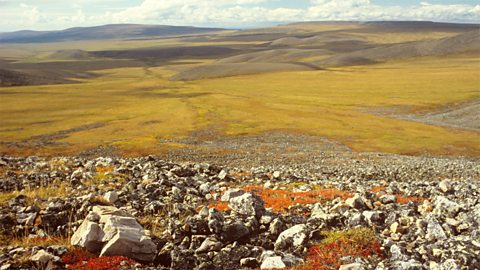
The harsh climate means that the tundra The shape or look of the land. is An area of ground where plant growth is poor and sparse, with little biodiversity. with little Trees and plants., even during summer months as shown below: