Changes in the role of women
Learn more about the lives of women in the USA in this podcast.
Listen to the full series on BBC Sounds.
The lives of women in America changed considerably between 1950 and 2000. This was partly as a result of their experiences in World War Two but more because of increasing education and the rise of Someone who supports the belief that women should have the same rights and opportunities as men.
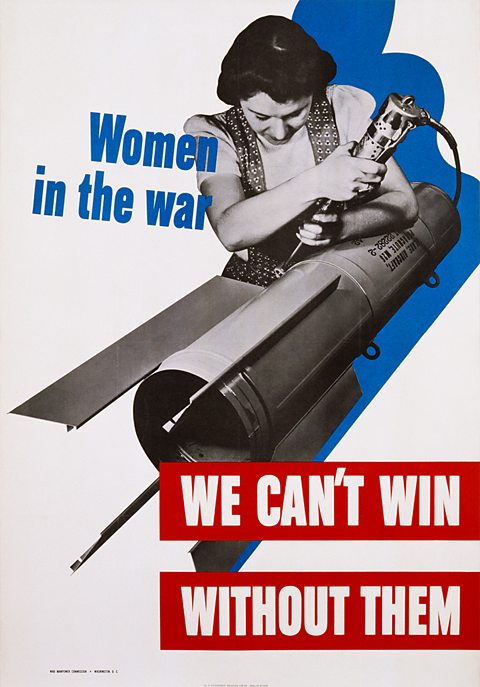
Before World War Two, the traditional role for women in the USA was to be housewives and mothers - raising children, doing housework and cooking meals. Some women had been able to work, but their opportunities had been limited to jobs considered to be acceptable for women, such as nursing, teaching or secretarial work.
Impact of World War Two
World War Two created a lot of new job opportunities for women. This was partly because men were being called up to serve in the armed forces and partly because the increased demand for weapons meant that more workers were needed for the factories. Many of these roles were engineering jobs in shipyards, aircraft factories or Ammunition, weapons and other military equipment. factories. Women would not have been hired to do these jobs previously.
In 1940 there were around 12 million working women in the USA, but there were 18.5 million by 1945. There were also around 300,000 women serving in supporting roles in the armed forces, for example as secretaries or nurses.
Developments after World War Two
Many of these changes did not last, as at the end of the war women were expected to give up these jobs to go back to being mothers and housewives. Women who remained in employment often had to go back to the more limited occupations that had been available to them before the war.
Women who worked after the war were often paid around half of what men were paid for doing the same job and were expected to give up their jobs when they got married. However, employers were still keen to employ women, as they cost less to employ than men. As a result, almost half of all workers in the USA in 1960 were women.
Changing opportunities for women in the 1980s and 1990s
In the 1980s and 1990s, several events showed that opportunities for women were changing:
- In 1981, Sandra Day O’Connor became the first female judge on the Supreme Court. In 1993, Ruth Bader Ginsburg joined her.
- Also in 1981, Dr Sally Ride became the first female American astronaut to go to space.
- In 1984, Geraldine Ferraro became the first female candidate for the vice presidency.
- By 1995, roughly 70 per cent of working-age women were in employment compared to arounf 38 per cent in 1955.
However, in 1998, women still earned 25 per cent less than men on average. Women were more likely to be working in part-time jobs and many of the jobs they did were seen as traditional female roles, such as secretaries and receptionists. Furthermore, less than a third of managers were women.
