Holiday guides
Browsing holiday guides and blogs on the internet is a great way of learning about places before you travel there.
How well can you understand a text about tourist attractions in German-speaking countries?
Choose one of the texts below and translate it into English. Then check your answers.
Remember that you will have to try to work out some words. Do they look like any other words you know? If they are compound nouns, do you recognise any of the individual words that make them up?
Text 1
Question
Österreich und die Schweiz sind kleine Länder. Sie haben keine Küste, aber es gibt viele schöne Berge, wo man wandern oder Wintersport machen kann. Die Landschaft ist fantastsich. Es ist sehr einfach mit dem Flugzeug dorthin zu fahren. Man kann auch eine Stadttour machen und die tollen Städte, Seen und Schlösser besuchen.
Austria and Switzerland are small countries. They have no coast, but there are lots of beautiful mountains where you can go walking or do winter sport. The scenery is fantastic. It is very easy to get there by plane. You can also do a city tour and visit the lovely towns, lakes and castles.
Text 2
Question
Deutschland ist ein großes Land mit vielen Sport- und Freizeitmöglichkeiten. Auf der Ostsee oder in den schönen Seen kann man segeln oder baden. Wenn man die frische Luft genießen will, kann man überall Rad fahren oder wandern. In Bayern kann man auch im Winter Ski fahren. Wenn man vom Norden nach Süden fahren will, fährt man am besten mit der Bahn oder mit dem Auto, weil es sehr weit ist. Deutschland bietet Kulturfans viel an, besonders in den Großstädten - Musik, Kunst, Theater. Wenn man sich für Geschichte interessiert, sollte man Dresden, Berlin und Trier nicht verpassen. Ein Drittel der Deutschen verbringt den Urlaub in Deutschland.
Germany is a big country with lots of facilities for sport and leisure. You can sail or swim in the Baltic Sea or in the beautiful lakes. If you want to enjoy the fresh air, you can go cycling or hiking (walking) everywhere (all over). In Bavaria you can also go skiing in winter. If you want to travel from north to south, it is best to go by rail (train) or by car, because it is very far (a long way). Germany offers a lot for culture lovers, especially in the cities - music, art, theatre. If you are interested in history, you should not miss Dresden, Berlin and Trier. A third of Germans spend their holidays in Germany.
Linking two compound nouns
Sport- und Freizeitmöglichkeiten – this means opportunities for sport and opportunities for leisure.
In English we would be unlikely to repeat the word 'opportunities'. We would say 'opportunities for sport and leisure'.
The Germans shorten the phrase to 'sport and leisure opportunities'. Their use of compound nouns means that they would have to use two very long words. They avoid this by using a hyphen after the first word to show that it belongs with the following noun as well.
So Kultur- und Geschichtefans means 'fans of culture and history' – culture and history fans.
Did you know?
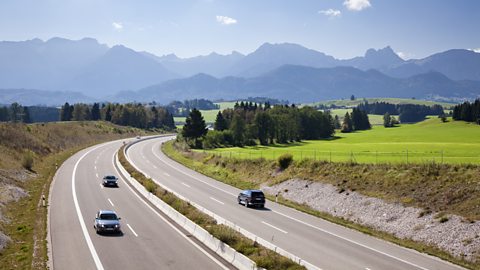
Germany has a hugely varied landscape, which is probably why a lot of Germans spend their holidays in their own country, rather than abroad.
To avoid peak times and reduce congestion on the roads, they have a system called bewegliche Ferien – movable school holidays. This means that all Länder rotate their summer holidays so that they are at slightly different times each year.