Sign up to the BBC Bitesize newsletter! External Link
For home education news and stories plus updates on the latest Bitesize content, register for our newsletter today.

There are many ways to incorporate teaching geography into wider life, especially when you’re out and about with your child. You’ll be learning all about the features of our planet and about Earth’s countries, climate, vegetation and the ways in which humans use the world’s resources.
Tap into this guide for tips on how to teach geography and for geography activities you can enjoy together with your child.
How to teach geography
“Geography is all around us… from your garden, through to your village, town or city, all the way up to global issues.” – Geography teacher Victoria
The world is your oyster when it comes to teaching geography. It ties in with many other learning opportunities, including numeracy, measuring distances, using graphs, foreign languages and literacy.
You can learn about the UK seasons together throughout the year, watch age-appropriate news to discuss the weather and climate and human geography.
Make the most of 2D and 3D technology for zooming into places on Earth, from Africa to Antarctica, and play board games that cover the UK or all seven continents, plus other skills such as map reading and analysing data.
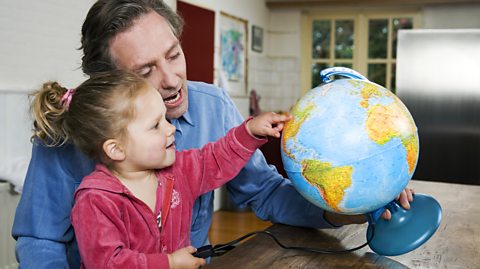
One of the best ways to teach it is through being curious. Geography teacher Victoria King says: “Get [your child] to look up and around and ask questions: ‘Why is this street congested? Why is this park here and hasn’t been built on?’
“Geography is about the world around us, so knowing what’s happening in our world is vital… You can learn about it at all different scales – from your garden, through to your village, town or city, all the way up to global issues.”
Five geography activities for younger children
“If you can see it, it makes a huge difference. So, can you find a nearby river or stream? Can you get to a beach or some woodland?” – Geography teacher Victoria
Use some of these activity ideas to teach geography, and build on your child’s natural curiosity and interests:
Do some ‘urban’ fieldwork in the village or town you live in. Geography teacher Victoria suggests: “Do a land use survey, walk along with a clipboard and categorise buildings into different types (e.g. house, shop, community space, etc) and then compare different areas. Do some emotion mapping: walk around and rate how you feel in different places. Do an environmental quality survey or traffic survey: count cars, compare the environment in different areas. You could even do some fieldwork in your own [park or] back garden: look for all the living and non-living features.” She adds, for physical geography, “if you can see it, it makes a huge difference”. So, visit rivers, streams, beaches, woodland, whatever you can get to easily.
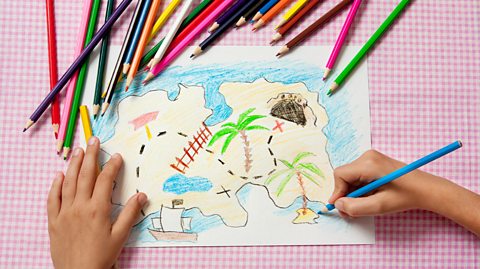
Design maps. Get as creative as you can with paper, pens, collage, pipe cleaners, you name it, and create a map of your local park or streets, or “use grid references to create a treasure map”.
Visit transport museums, and go to aquariums to learn about oceans and seas. Many museums have fun, free activities for home educators.
Embrace some model-making. Victoria says: “Use modelling clay to make model volcanoes or coastal landforms. Create your own tropical storm model from templates available online.”
Play games and quizzes. Victoria says: “We play the place game: alternate saying places that begin with the last letter of the place the previous person said… Another option is to take a ‘find the geography’ approach to some of the things they already enjoy, e.g. Where is the geography in a video game… with biomes, for example? Or a film – what can we learn about different places from Encanto, Coco or Moana?”
Five activities in geography for older children
Embrace independent learning: ask your child to research a project they’re interested in and then learn how to interpret and present their findings.
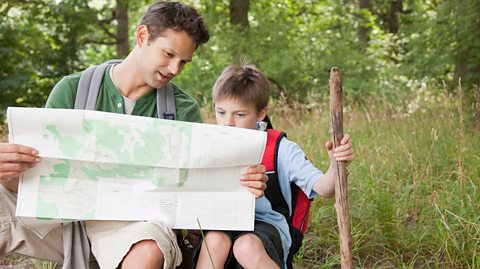
Go on fieldwork trips together, whether to somewhere urban, coastal, near home or further afield. Once you’re there do a ‘field sketch’ of what you see, or create a food web if relevant.
Play games. Victoria suggests using jelly babies to mimic real people as a way of visualising changes in birth rate, death rate, etc, when learning about population. ”Or sport – you could use football to think about migration. Get them to find out where all the players on their favourite team came from and then discuss why and how some people can migrate and some can’t.”
Do some role play. “Pick some people in different bits of the world and think about their role or impact on, for example, climate change, e.g. a resident of the Maldives, a scientist in Antarctica, the owner of a factory in China, and you!”
Use tech. Victoria recommends podcasts, books, science magazines, mapping websites, videos, games and documentaries as accessible ways for your child to learn about and explore elements of geography. 11-14-year-olds can play Planet Planners, for example.
Learn geography with The Regenerators!
Explore The Regenerators and inspire your children to live a greener life while encouraging others to look after the planet.
The green classroom for ages 5-to-11 has in-depth lessons with videos, interactive activities, graphics and more to explain topics such as climate change, plastic pollution, the environment and many more. Be sure to play The Climate Detectives game.
The green classroom for ages 11-to-16 has explainer videos by teenagers covering topics like global warming and habitat loss; profiles of green careers like climate change lawyer and garden designer; plus an improv activity which you could try with a group of children.
There are also lots of mindful, sustainable activities for families in our make a difference offering.
Where can I read more about teaching geography?
There are loads more geography resources on BBC Bitesize and beyond.
- Explore the Geography section of the BBC Bitesize website for inspiration. Your child can play fun online geography games, tailored to their age and stage. You can also use these primary geography teaching resources.
- Victoria recommends “a good old-fashioned globe and atlas” – you can sometimes pick those up in a charity shop, or print out maps online.
- Tap into Geography Awareness Week in November and Earth Day in April each year, for activity ideas and some events.
- The Blue Peter website also has fun related activities for younger children, including things such as make a terrarium.
- Use the Careers section of the BBC Bitesize website to explore Jobs that use Geography.
Where can I find more support for home education and parenting?
The BBC Bitesize home education collection is designed to support you and your child’s learning at home with free resources for early years and foundation stage (EYFS), primary and secondary-age students.
Bitesize Parenting is the go-to place for the whole parenting community to find stories, expert advice and fun activities.
If your child has special educational needs and / or disabilities, be sure to check out the Parenting SEND collection. Bitesize also has a collection of Sensory Stories, an immersive video series that transports you on unique sensory adventures, for children with additional or complex needs.
For more information about home education, these BBC News articles cover the rise in families deciding to educate their children at home and, from 2021, the impact of Covid on home education.
