What is transport?
Transportation is the movement of people and things from one place to another. Nowadays, there are many different ways to get around.
Let's take a look at some different modes of transport and how they developed.
Watch: Find out about different types of transport in the UK
Discover more about transport in two UK cities, Glasgow and London.
Glasgow is a big, busy city – cars, buses, trains, planes; people go about their business using all kinds of ‘transport’.
Hi, I’m Jude. I’ve taken the train from Edinburgh to Glasgow to learn all about transport. Once upon a time, humans could only go as fast as a horse could take them.
But thanks to incredible developments in technology, transport has totally changed. Towns and cities have to be built and redeveloped in clever ways to cope with them all, let’s investigate…
A big chunk of Glasgow is designed in a rare way for the UK. Spreading westwards from George Square, which is where I’m stood, the city is built on a grid system.
What that means is, the roads are all straight lines that meet at regular points. Looking at a map, you can see the roads form neat squares, called grids.
Much of the UK was built before there were a lot of transport options, when people travelled on foot and by horse. So most towns and cities have bendy road systems.
But the west part of Glasgow was developed around 200 years ago, which isn’t that long when you remember that the UK has had cities for thousands of years! Planners thought it would be easier for people to find their way around on a grid system with straighter roads.
Glasgow’s population was growing quickly in the 1800s, so more roads were needed for everyone to get to where they were going.
Trains were soon invented and not long after that, cars. But, at George Square, they’re planning to reduce the amount of cars and pedestrianise the area.
That means they want it to only be accessible to pedestrians, which is what you call people on foot. The only other vehicles allowed will be public transport - no one can bring their own vehicle.
It’s one of many green initiatives to help reduce pollution, which is mainly caused by petrol-powered vehicles.
Glasgow and other cities like London have initiatives where people pay higher fees if they have a petrol-powered car.
In contrast to Glasgow, London hasn’t been designed on a grid system because it’s much older. It’s also much bigger. But most of its transport options are public or powered by electricity, which is to help reduce petrol-powered vehicles that cause pollution.
Glasgow has a subway, but London’s underground train system has hundreds more stations. It transports millions of people every day.
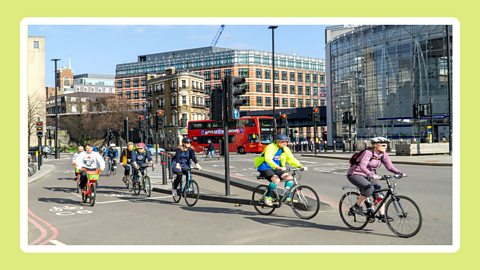
London has a lot of cycle lanes to encourage people to ride bikes instead of using vehicles. People can also rent scooters that run on electricity and recharge other vehicles, like electric cars, at electric charging stations.
It is one of a few places in the UK to have a tram system; trams also run on electricity.
Where do you live, and what kinds of transport do you use to get around? Which reminds me, I’m late for the train back to Edinburgh!
Transport over time
Modes of transport across the UK have developed rapidly over the last 200 years.
The reason why they changed was due to the Industrial Revolution.
During this time, big factories were manufacturing large quantities of goods, and companies wanted to sell and share their products to as many people across the country as possible.
Transport has also developed so people can travel across the country, for work and for leisure.
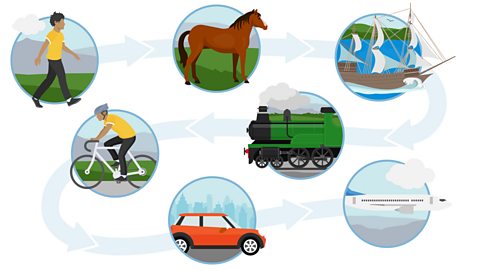
Here is a brief summary of how transport has changed over the years:
Types of transport
There are many methods of transport people can use to get around the country.
Each method has its pros and cons. Take a look at the slideshow below and see how each one is different.
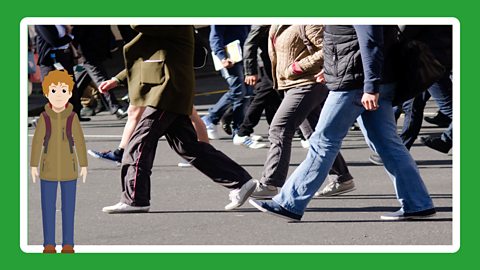
Image caption, On foot
Walking is good for people’s health and the environment, however if people walk for a long time, they might get tired!
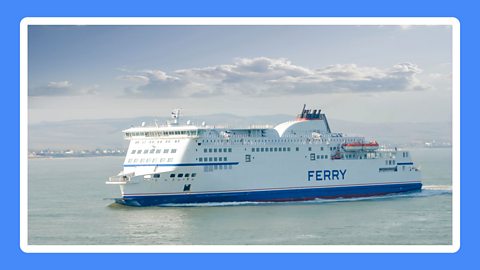
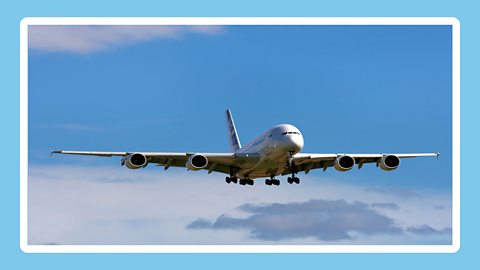
1 of 6
The road network
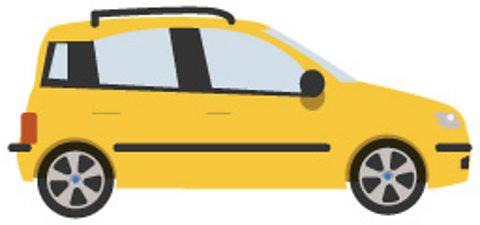
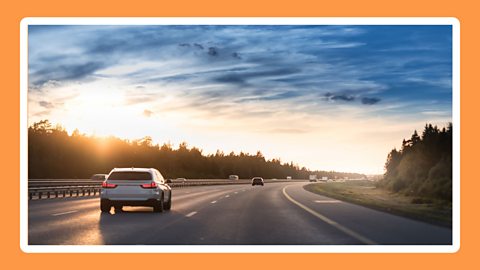
The road network helps link all parts of the UK together.
Plans to build the network were first set up in 1914, and the first motorway, the M6, opened in Preston, Lancashire in 1958.
The road networks are constantly being repaired and re-developed, even today, so that businesses can transport materials to different places. They are also improving as more people travel to places using cars.
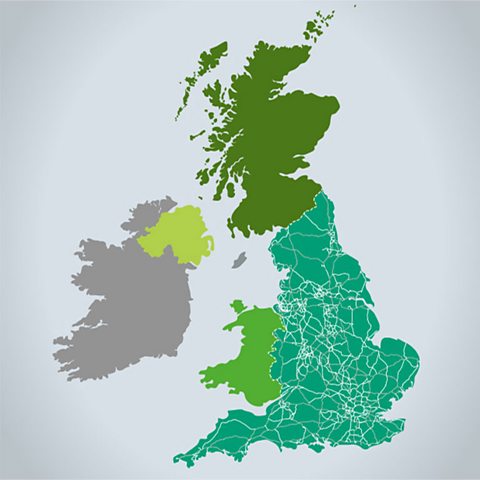
Take a look at how the road network has been built across England:
Activities
Quiz: Transport
Order it: Old and new transport

Race Across the Continents game - new update! game
Help this team of adventurers race their way to victory. Explore the globe in this exciting game update to discover new audio voiced by Ade Adepitan and fun animations. Challenge yourself with brand-new achievements and become a high-flyer!

More on Geography of the UK
Find out more by working through a topic
- count12 of 32
- count13 of 32
- count14 of 32
- count15 of 32