What is farming?
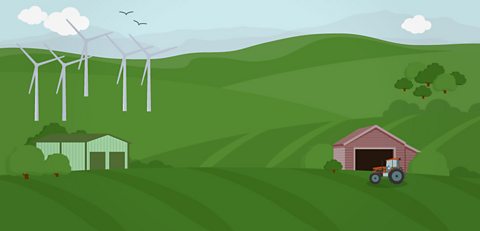
Farming is:
the growing and harvesting of crops.
the raising of livestock such as cows, sheep, pigs, hens or turkeys.
It is also known as agriculture.
Crops and livestock can be used for food and products.
Watch: Find out about food and farming in the UK
Learn about agriculture in the UK.
Agriculture means farming, and it’s one of our most important industries, because farming involves rearing animals and growing crops for our food.
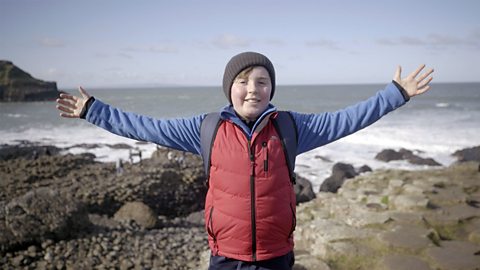
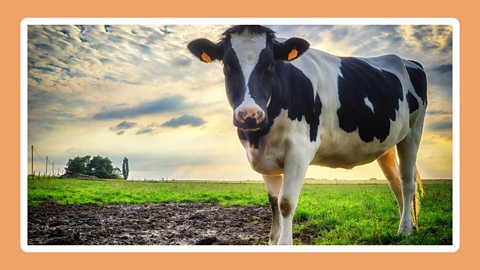
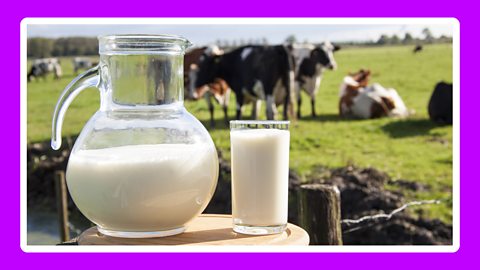
Hi, I’m Tianna, and I’m at a farm in North Yorkshire, and here they have crops and animals. Livestock farming refers to keeping animals. Behind me is a herd of cows. During the summer, they live and feed in fields, but during the cold winter, they stay here inspecial pens in a barn. Cows can produce milk, which I like to put on my cereal. It’s also used to make cheese and is an ingredient in many other food products.
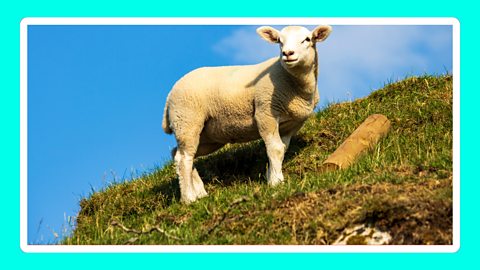
Dairy cows are kept to make milk. But some cows, like these, are reared for meat. There are sheep here too, which are reared from lambs to be eaten, like the cows. Some sheep are reared for their wool too, which is used to make clothes.
Some people choose not to eat meat, and they’re called vegetarians. And some people don’t eat anything that comesfrom animals - they are called vegans.
They don’t have milk from cows or eggs from chickens, and they try to avoid using other animal products.
Some chickens are reared to be eaten; these ones are reared to lay eggs. In the UK, we eat over 35 million eggs a day. Yes, in just one day!
Growing crops is called arable farming. Some land is better for livestock farming and some is better for arable farming.It depends on the soil quality, the climate and the landscape. The crops grown here include barley and wheat, which are used to make foods like cereal, bread, pasta and even cookies. The farmer grows a variety of vegetables too.
They grow at different times in the year. Once they’ve grown, they get harvested, sold to supermarkets and shops, and packagedready for people to buy.
Another type of animal that gets reared to be eaten is not one you usually think of when you think of farming, but it’s eaten alot. Fish…
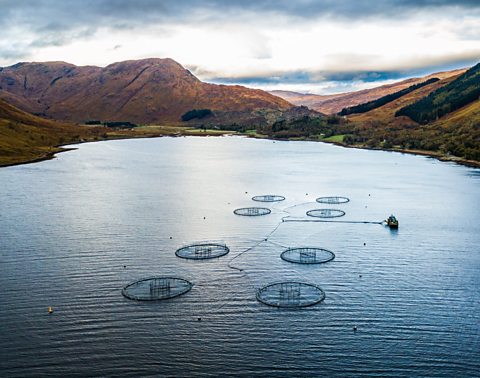
There are fish farms across the UK, but this isn't agriculture, it's called aquaculture, because the fish live and grow in thewater. The farmer creates special pools for them and they’re provided with high quality water to thrive in. Some water, whether it’s fresh or salty, can contain pollution, so it has to be carefully sourced and checked.
There are different pools for each stage of the fish’s life. When they’re big enough, they’re put in the larger poolsand regularly fed, until they’re ready to be caught, sold to market and eaten by customers.
What food do you eat, and are there any farms near to you?
How land is used for farming
People farm in rural areas of the UK. How the land is used for farming depends on:
• The climate - some areas are cool and wet, other areas are warm and dry.
• The altitude or height above sea level of an area - areas of higher altitude are cooler.
• The type of soil and what can grow there.
• The geography of the area - natural features such as mountains, hills, rivers and lakes.
• The latitude, which is the distance north or south of the Equator. More northerly areas are cooler and southerly areas are warmer as they are closer to the Equator.
Farming regions in the UK
Here are some rural areas in the UK, which are known for farming.
Arable farming is concentrated in the drier east, and dairy and hill farming is concentrated in the wetter west.
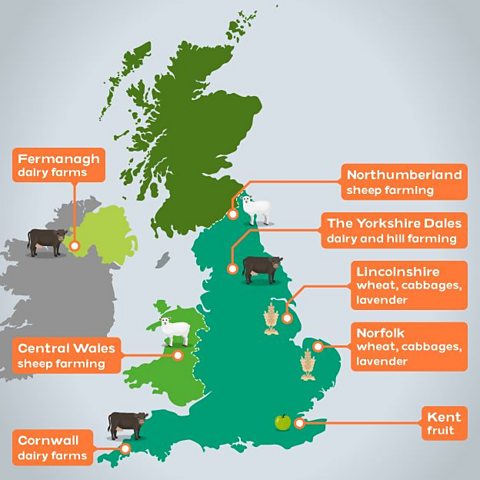
Types of farming in the UK
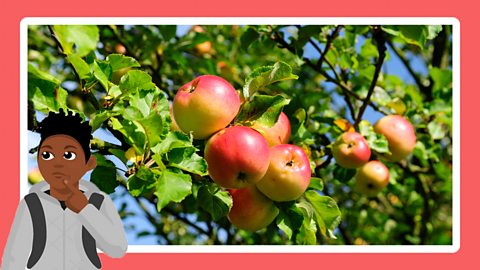
Image caption, Arable farming
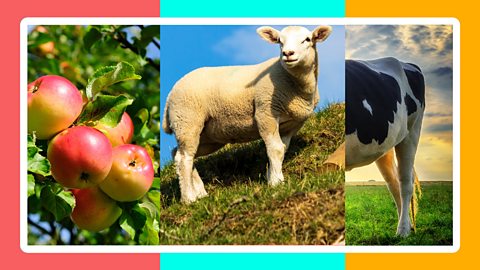
Arable farming is the growing of crops such as vegetables, fruit and cereals. This is the most popular type of farming in the East of England as the flat areas of land with rich soil and temperate weather are good for arable farming.
1 of 5
Aquaculture
As well as agriculture, there is also aquaculture, where fish, seafood and Relating to water. plants are farmed.Fish farming can be done in fresh, Slightly salty water and salt water. Fish farms can be found in the sea, in lakes or in rivers where mussels, crabs and fish, such as trout and salmon, are reared there. Salmon farming in Scotland is a vital industry to many of the rural areas.
Activities
True or false: Food and farming
Tap and find: Food and farming

Race Across the Continents game - new update! game
Help this team of adventurers race their way to victory. Explore the globe in this exciting game update to discover new audio voiced by Ade Adepitan and fun animations. Challenge yourself with brand-new achievements and become a high-flyer!

More on Geography of the UK
Find out more by working through a topic
- count14 of 32
- count15 of 32
- count16 of 32
- count17 of 32