Join EVA ('Earth's Virtual Assistant') to investigate the factors that govern changing land use, including increasing urbanisation.
The video
KS2 Geography: Settlements. Changing land use.
EVA: Get set for an exciting journey.
I’ll be your guide, ‘Earth’s Virtual Assistant’. But you can call me E.V.A.
Your mission is to discover how humans influence land use and why this is always changing. Land use is what an area of land is used for. It can be…
[ZOOM OUT OF MISSION HQ TO FOOTAGE ILLUSTRATING LAND USE]
Residential - places where people live, including houses or flats.
Commercial - these are places where people sell items and include shops and supermarkets.
Agricultural - this is land that is used for farming.
Industrial - which includes factories and warehouses.
Recreational - which is land used for leisure: for example, sports fields, playgrounds and public parks.
And Transport - like railways, roads and airports, which use the land to connect places together.
In the UK about six tenths of the land is used for agriculture. Less than one tenth is residential - the built-up areas where people live.
But land use - the things humans use land for - is always changing. It’s time to dig deeper!
[SPINNING GLOBE ZOOMS INTO THE UK]
In the UK the amount of land used for urban areas - such as towns and cities - is increasing. The land used for agriculture in the countryside is decreasing. But this change of use is happening quite slowly.
New uses for agricultural land include transport services, housing and recreational uses, such as golf courses.
A key change in urban land use is how settlements grow over time. A village may slowly grow to become a town; a town may grow to become a city - and there are many things that influence that growth.
Better job opportunities, wanting to live closer to your place of work, and easy access to services like healthcare, attract people from smaller settlements to larger ones.
The growth of urban areas can lead to pollution, and pollution plays a part in climate change.
[ON-SCREEN GRAPHICS - CLIMATE CHANGE]
Climate change is the long-term rise in Earth’s average temperatures, which is making the weather more extreme and unpredictable.
For this reason it’s important that any change in land use is sustainable.
[ON-SCREEN GRAPHICS - SUSTAINABILITY]
Sustainability means doing something that will cause little or no damage to the environment and can be carried on for a long period of time.
For example, the land used for industrial purposes is declining in the UK. A disused industrial area might be redeveloped for leisure purposes or housing, to avoid urban areas spreading further.
Or land might be developed for renewable energy sources - such as wind farms to generate electricity.
[ON-SCREEN GRAPHICS - RENEWABLE ENERGY]
Renewable energy is a natural source of energy that can be used again and again. It’s much less harmful to the environment than burning fossil fuels, like oil and gas.
Other changes in land use that can help slow the effects of climate change include planting more woodlands and ‘rewilding’.
[ON-SCREEN GRAPHICS - REWILDING]
Rewilding means to return land and oceans to a more natural - or wilder - state. This can mean doing nothing and letting nature take over. Or it could be as part of an organised scheme, such as planting wild flowers or trees.
There may be some negative impacts from any change of land use. Wind farms can harm birds and other wildlife, and they can impact some people who live close to them, who feel they ruin the landscape.
[DEBRIEF - CHANGES IN LAND USE]
1: Changes in land use are happening all the time. 2: Most changes happen slowly. 3: Any new developments need careful consideration to ensure they are sustainable, so that the positives outweigh the negatives.
[ZOOM OUT TO MISSION HQ]
Congratulations! We’ve come to the end of our journey exploring how humans influence land use and why this is always changing. Mission complete!
Changing land use
Download/print a transcript of this episode (pdf).
Pupils join EVA ('Earth's Virtual Assistant') to discover that land use - the things that land is used for - is constantly changing in the UK and the factors - such as increasing urbanisation - that determine these changes.
Pupils will discover that:
- there are different types of land use: residential, commercial, agricultural, industrial, recreational and transport
- in the UK urban use of land is slowly increasing and agricultural use of land is slowly decreasing
- any change of land use must be carefully considered to ensure that it is sustainable
- any change of land use may have negative impacts - for example, the danger posed to birds by wind farms
- some changes of land use can help to counteract climate change - for example, using land to plant trees or 'rewilding'.
Teacher Notes
Download/print the full Teacher Notes with worksheets for this episode (pdf).
Teacher Notes prepared in partnership with the Geographical Association.
Key geographical vocabulary
Land use - how land is used by humans.
Residential - land used for housing for people.
Commercial- land used for business (eg shops).
Industrial - land used for factories.
Agricultural - land used for farming.
Leisure and recreation - land used for entertainment.
Transportation - land used for travel (eg roads, rail, bus).
Sustainability - using land and resources in a way that will not harm the future.
Renewable energy - energy that will not run out (eg solar, wind).
Rewilding - returning land or water to a more natural state.
Suggested activities
- Write down the definitions of different types of land use and an example of each.
- Use Google Earth for a virtual tour of a settlement (eg London, Glasgow, Manchester, Belfast) and use the History timeline option to see how the place has changed over time. Pause at different points in time to discuss with the class.
- Use an OS map of your local area (or Bing Maps) and a historical map (eg Google Earth) and highlight which places locally have changed and how.
- Take a walk around the school area (or look outside) or at home, and look for examples of different types of land use. Draw or list what you find and label the categories of land use.
- Interview someone older than you who has lived in your location for a long time. What do they remember about how the place has changed? How do they feel about it?
- Create a sustainable city! Work in teams to draw a new town. It must include shops, houses, transport, parks and an energy source. Share their designs and discuss how it looks after nature as well as people.
Points for discussion
- What are some of the different types of land use?
- Which land use do you think is potentially most damaging to the environment? Why?
- Why do more people now live in urban areas?
- What makes people move to different places?
- How can agricultural land be used once farming stops there?
- How can a village become a city?
- What kinds of services might attract people from smaller to bigger settlements?
- How does land use change cause pollution?
- How can land use change contribute to global warming and climate change?
- What is sustainability? Why is it important?
- How can land use be managed to reduce problems?
- What is renewable energy? Why is it useful?
- Why are we moving away from fossil fuels?
- What is rewilding? Why is it being encouraged?
Curriculum notes
This video is suitable for teaching KS2 in England and Northern Ireland, 2nd Level in Scotland and Progression Step 3 in Wales.
Resources
Teacher Notes
Download/print the Teacher Notes for this episode (pdf).
Transcript
Download/print a transcript of this episode (pdf).
Slideshow. image
Open a slideshow of images from this unit.
Other videos in this series
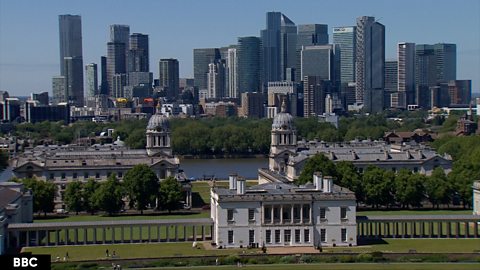
Settlements: Villages and Towns. video
Join the mission to investigate two different types of settlement: villages and towns.
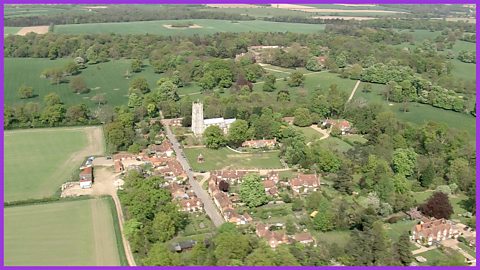
Settlements: Cities and Holiday resorts. video
Join the mission to investigate two different types of settlement: cities and holiday resorts.
See also... Biomes. collection
Join EVA on another mission: to discover the climate, plants and animals that characterise six of Earth's major biomes including rainforests, deserts and savannahs.