What is an explorer?
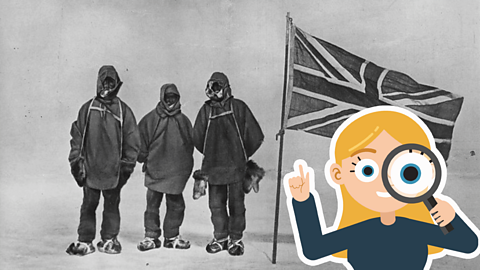
Explorers are people who travel to new and unknown places to discover and learn about the world.
Their journeys can often be dangerous, because they travel to places that most people haven't visited before.
Explorers have helped to map the world, find new lands, explore space and make important discoveries.
Throughout history, explorers have gone on exciting journeys across seas, mountains, jungles and even to space!
History

There have been many famous explorers who have written about their journeys and discoveries.
You can learn more with the information, videos and activities below.
Famous explorers
There have been many important explorers throughout history.
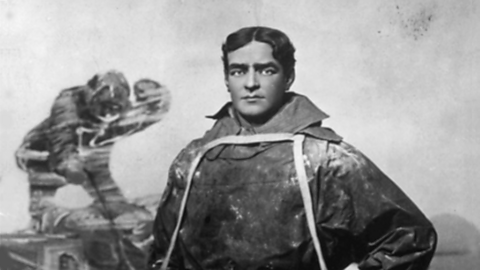
Ernest Shackleton
Ernest Shackleton was a British explorer who led famous expeditions to Antarctica in the early 1900s.
In 1914, his ship called 'Endurance', became trapped in ice. Shackleton and his crew had to survive in the harsh Antarctic conditions for many months.
Despite the conditions, Shackleton’s leadership helped everyone to return safely.
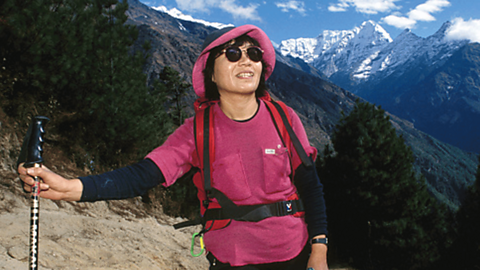
Junko Tabei
Junko Tabei was a Japanese mountaineer who became the first woman to reach the top of Mount Everest in 1975.
She also climbed all seven of the world’s highest peaks, known as the Seven Summits, making her a pioneering figure in mountaineering.
Her motivational slogan was:
"Do not give up. Keep on your quest."
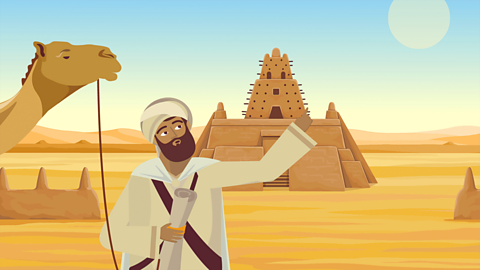
Ibn Battuta
Ibn Battuta was a Moroccan explorer in the 1300s.
In 1325, he set off on his first Hajj, which means pilgrimage, to Mecca. It took him over a year to get there.
He travelled for over 30 years, exploring many countries such as modern day Iraq, Iran, Turkey, Saudi Arabia and East Africa.
When he arrived home, he wrote about his journeys in a book, known as the Rihla.
Activity - Explorers find the missing word
Put your skills to the test with this fun activity sheet.
Find the missing words to complete the explorers' stories.
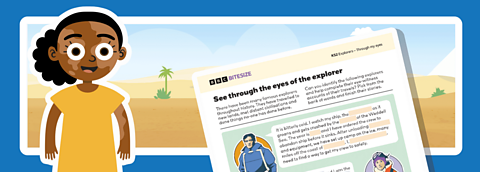
Discover more on KS2 History
You can learn more about important explorers in these articles.
Viking traders and explorers. revision-guide
KS2 History
Who was Neil Armstrong? revision-guide
KS2 History
KS2 Explorers. revision-guide
BBC Teach
Geography

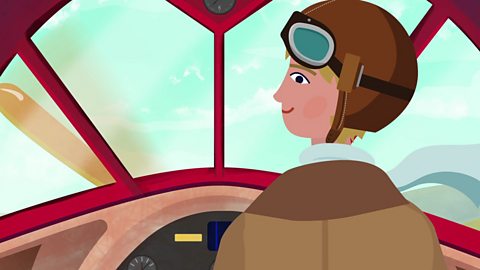
Explorers have travelled around the world throughout history.
They have used many different forms of transport, from ships to space rockets.
Learn more about the places they travelled to and what they found below.
What did explorers learn about different places?
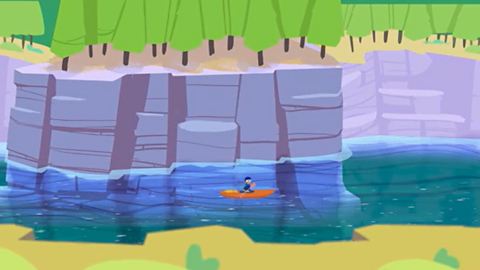
Explorers travelled to learn more about the world.
Some wanted to find new trade routes, while others looked for resources like spices, gold or new land to settle on.
Along the way, they discovered the world is full of unique landscapes and climates.
They also met people from other cultures and learned how they adapted to their environments.
By studying these places, explorers helped to map the Earth and showed how people and nature are connected across the world.
Watch: Introduction to maps
Explorers used maps and tools like compasses to help them navigate.
They studied coastlines, mountains, and rivers to find the best routes.
Watch this video to learn more about maps and how a compass works.
I’m hiking in Shropshire. I’m planning my route using this map. I’m working out how far it is to this castle and which way it is. I’m here by the campsite.
First I need to find out which direction the castle is in. For that I’ll need a compass.
A compass shows four main directions, or points: north, east, south and west.
The thing wobbling around in the middle there is the needle!
The needle always points north and the top of the map is north. I can see the castle is east of where I am! So the castle must be… That way!
Now, I need to know how far it is.
A map is a two-dimensional drawing of an area. The scale on a map shows how many times bigger the real world is than the map.
So, four centimetres on this map, is one kilometre in real life.
So I can see that the castle is two kilometres from where I am.
I like old paper maps, but we can also use maps on our phones or tablets. Which is just as well!
Activity - Make your own explorer map
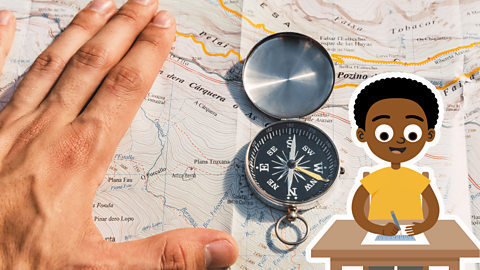
Imagine you are an explorer discovering a new island!
Draw a map of the island, showing physical features like rivers, mountains, and forests.
Add a compass symbol to show directions (north, south, east and west).
Include human-made features like villages or bridges.
Write a short description of the island’s geography, including its climate and terrain.
Discover more on KS2 Geography
Have a look at the articles below to learn much more about the different types of landscapes and climates of the world.
Explore weather and climate. revision-guide
KS2 Geography
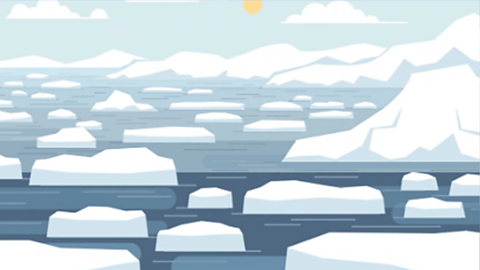
Where is Antarctica? revision-guide
KS2 Geography
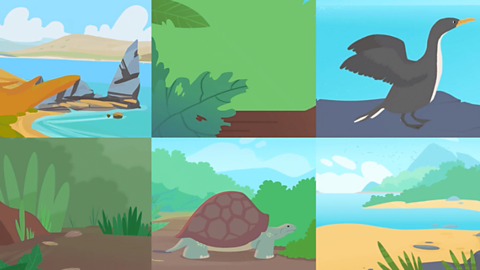
Explore the Galápagos Islands. revision-guide
KS2 Geography
Science

Explorers have discovered new species of animals and plants in the places they visited.
Their discoveries are still often researched and written about today.
Here is some more information and fun activities to help you learn more.
Charles Darwin
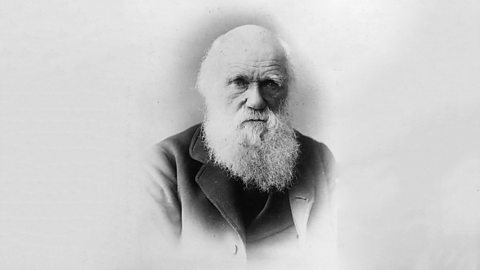
Charles Darwin was a scientist who explained how living things change over time and become adapted to their environment.
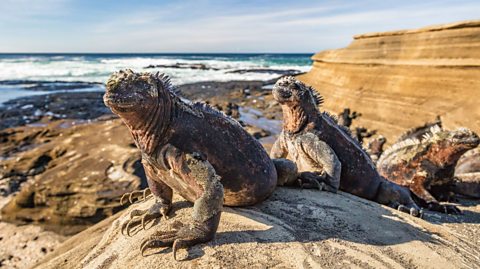
Darwin studied animals on the Galápagos Islands, helping him to develop his theory of how evolution happens.
He published this in a famous book called ‘On the Origin of Species’ in 1859.
What did explorers discover about animals and plants?
By observing how living things adapt to their environments, explorers have expanded our understanding of things such as:
- habitats
- food chains
- how species survive
Their findings still help scientists to protect nature today.
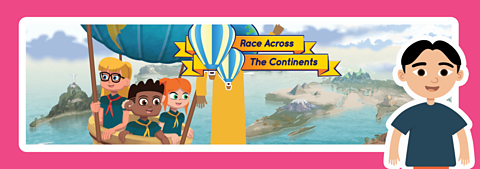
Activity - Race across the Continents game
Become an explorer and travel the world in this fun game and put your knowledge to the test.
Discover more on KS2 Science
Click on the links below to learn more about different habitats and climates.
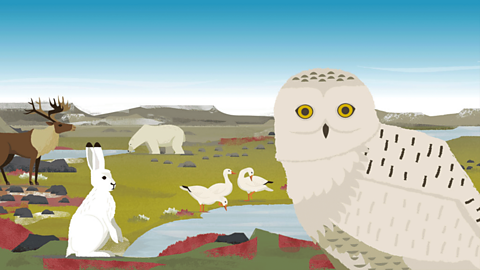
Food chain challenge: Tundra. game
KS2 Science game
Changing environments. revision-guide
KS2 Science
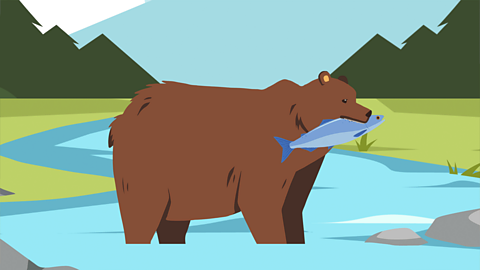
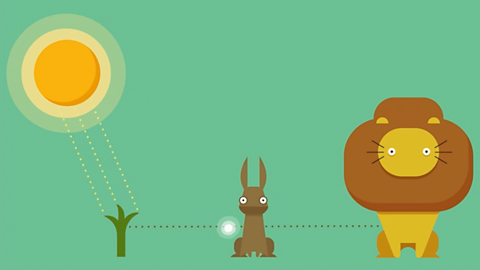
What is a food chain? revision-guide
KS2 Science
Quiz - Explorers
Where next?
Play BBC Bitesize educational games! game
Fun, interactive games for children aged 4-11, with maths, English, science, history and many more subjects.