Adaptation
Over time, all living things such as plants and animals have changed or adjusted in different ways to suit their environment to help them survive.
These special features are called adaptations.
Watch: Animal adaptations
Searching for animal adaptations around the world.
EMMET: Greetings, Emmet here! Living things are adapted to their habitat. This means that they have special features, or adaptations, that help them to survive.
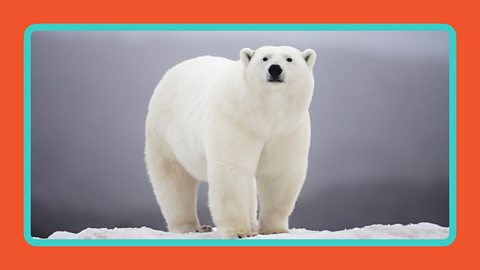
Now, I’ve got my furry jacket but polar bears have adapted the ultimate survive suits. Thick layers of fat and fur to keep them warm, and a white coat camouflaging them against the snow to help them hunt.
I’m being hunted, aren’t I? Run! It’s fine, it’s all under control!
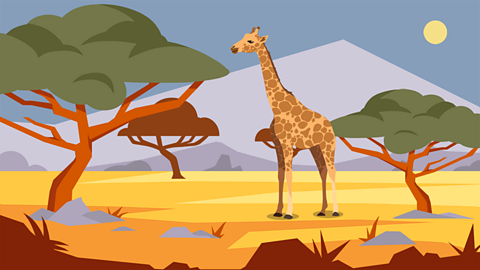
Barely a flesh wound. Ha ha! Now, my friend the polar bear would get pretty toasty out here in his fur coat, but this giraffe has no problem. She can go for weeks without drinking water. She has camouflaged skin, a long neck for reaching the top of trees and an amazingly flexible tongue for grabbing leaves.
Whoa! And beards. Ha ha! Cheeky girl.
Fascinating facts
In order to survive cold harsh winters some animals, such as hedgehogs, have adapted to hibernate, which allows them to stay in shelter in a deep sleep and use very low amounts of energy.
Many predators such as snakes and spiders have adapted to produce venom, in order to subdue prey and to defend themselves from other animals.
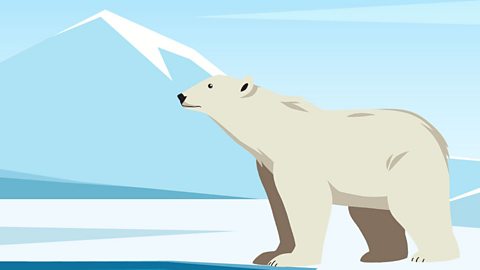
Polar bears have adapted to their habitat with their thick white fur that traps heat and provides camouflage.
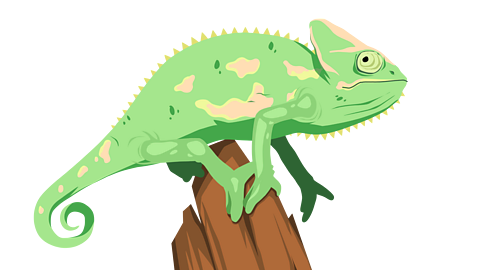
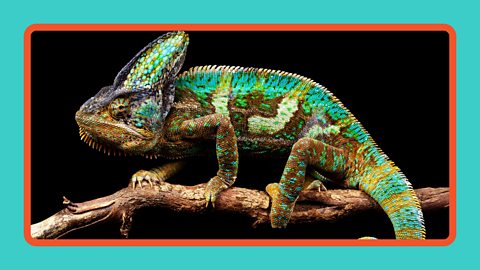
Some animals, like octopuses and chameleons, have adapted to be able to change their skin colour to hide in their environment.
Behavioural adaptations can include mating ritual. Animals like the peacock have brightly coloured feathers and perform a mating dance to attract a mate in order to reproduce.
Slideshow: Plant and animal adaptation
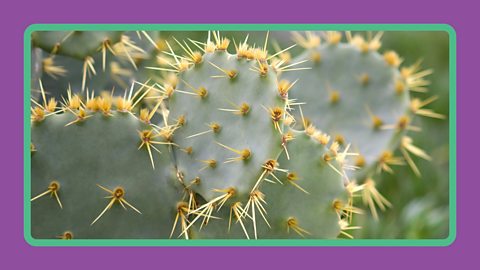
Image caption, Adaptations are when living things such as plants and animals have changed or adjusted in different ways to suit their environment and to help them survive, like this cactus which has spines to defend it from predators.
1 of 4
Did you know?
A giraffe's neck is only comprised of seven vertebrae, just like humans. Their long necks allow them to reach food in tall trees.
Giraffes adapted long necks to reach the higher branches so that they had a better chance of survival on the plains of Africa where food can be scarce.
Thinking of examples of adaptations
How do you think this cactus plant has adapted to live in the desert?
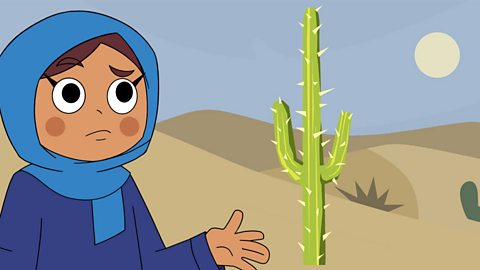
The spines of a cactus are much better than flat leaves at preventing water being lost from the plant, due to evaporation.
The spines are also good protection from animals that might want to eat them.
The cactus has also adapted to survive in hot, dry climates by having an extensive root network to allow for a greater opportunity of collecting water.
It stores the water in its stem which has a waxy coating to stop the water evaporating.
How have animals adapted?
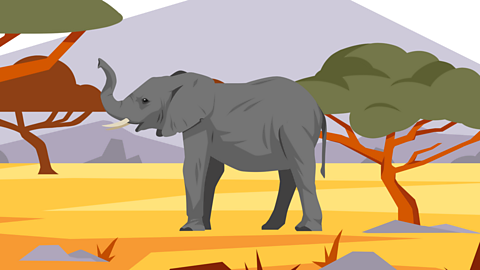
Animals have adapted to different climates in many different ways.
Animal adaptations in hot, dry climates
An African elephant, for example, lives in a hot habitat and has very large ears that it flaps to keep cool.
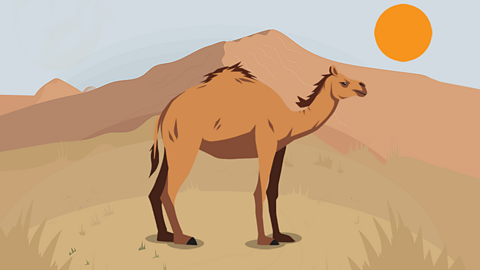
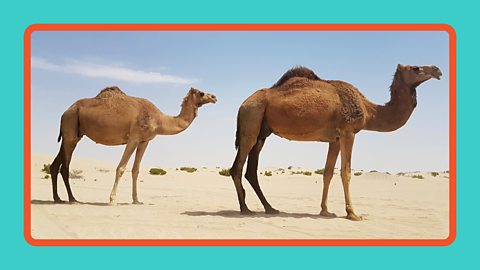
A camel has adapted to survive in the desert. It has wide flat hoofs which stop it sinking into the sand, a thick leathery mouth which allows them to chew tough desert plants, and nostrils that it can close as a barrier against sand. It is also has humps where it stores fat which can be converted into water.
Animal adaptations in cold climates
A polar bear lives in a cold habitat and has thick fur to keep warm.
Like many other animals that live in cold polar regions, such as Arctic hares, ptarmigans and Arctic foxes, polar bears have white coats that help to camouflage them in the ice and snow.
Important words
Adaptations – The way that animals change and evolve over time to live in different conditions.
Camouflage – Many animals have skin or fur that is the same color as the things around them, which allows them to hide from predators.
Climate – The weather conditions of a particular area.
Habitat – The environment where an animal or plant lives.
Activities
Activity 1 – Identify adaptations
Activity 2 – Adaptations quiz
Activity 3 – Create a creature
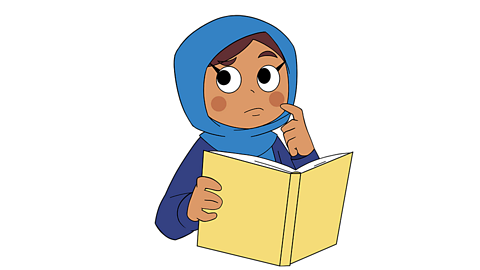
Adaptations allow living things to survive in their habitats.
Imagine you have landed on new planet. The planet is very hot and there seems to be little plants or animals around.
Until you see it.
Draw an image of the new unfamiliar plant or animal you have just seen.
How has it adapted to live and survive on this hot planet?
Why do you think it has these adaptations?
Write a paragraph to explain.
New game! Horrible Science: Stinky Space. game
Join Pipette on her epic mission and learn some revolting facts about space along the way.
More on Evolution and inheritance
Find out more by working through a topic
- count3 of 4
- count4 of 4
- count1 of 4