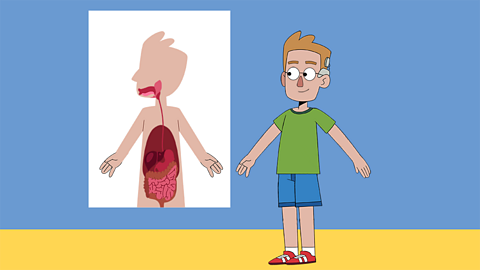
Food provides energy
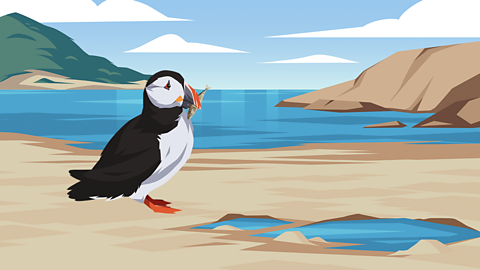
Every animal and plant needs food to live, and they are all part of a food chain.
Food chains show how animals obtain their food.
A food chain also shows the flow of energy, which starts off at the Sun and then moves along the chain to the final animal.
The arrow in the food chain shows this flow from one living thing to another and therefore always points from producer (plant) to consumer, and from primary consumer to secondary consumer.
Food chains can link together to form food webs.
Watch: Understanding food chains
Learn about food chains.
NARRATOR: This is grass…
Grass is pretty easy going, aren't you grass? She likes sunbathing a lot.
She's pretty clever, because she makes her own food, just from sunshine. That's called being a producer.
So she doesn't need to eat anything. But of course, sometimes she gets eaten…
This is hare. Hare is not a producer.
He can't make his own food, so he eats the grass. We call him a consumer.
He's pretty crazy about grass, eats it all day long. Not a bad life really.
But hares don't just eat, sometimes they get eaten…
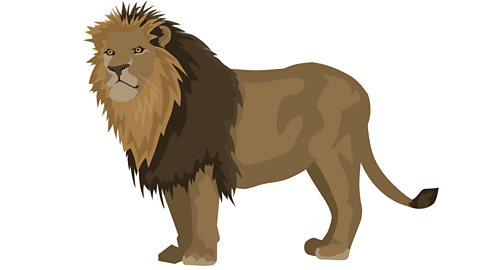
Meet lion. Big tough guy. Lot of teeth.
He's a predator. That means he hunts other animals.
But actually in a way, he's making a living from sunshine too. The energy grass gets from the Sun, is then eaten by hare, and eventually eaten by lion.
Everything on earth is actually living on sunshine energy. Even tough guys like lion.
That's odd. I must have hit the zoom button by mistake… Unless it's coming closer!
Oh dear…
Fascinating facts
Fascinating facts about food chains!
The word scavenger is used to describe animals which eat dead animals or plants, like vultures.
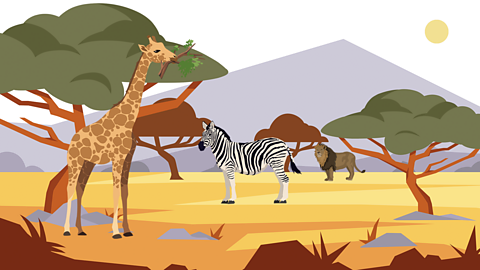
Animals that hunt and eat others are called predators. Those that are hunted and eaten are called prey.
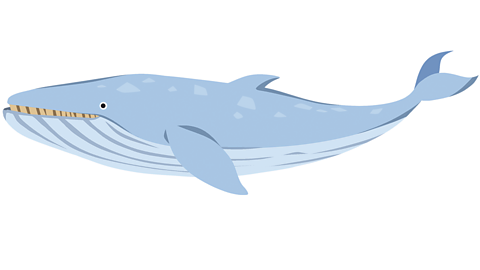
The largest animal on the Earth is the blue whale, which can grow up to 30m long. Blue whales mainly eat krill.
Most of the food animals eat relies on plants. Human eat fruit and vegetables, and herbivores and omnivores eat plants like grass, berries and leaves.
Badgers, foxes and hedgehogs are all omnivores, they eat both other animals, insects and plants.
Some animals can be both predators and prey in a food chain, spiders for example, eat flies and other insects but are also eaten by other animals like birds.
The transfer of energy
All living things need energy from food to grow, repair themselves and reproduce. Plants get their energy through a process called photosynthesis. Animals need to eat plants or other animals to get their energy.
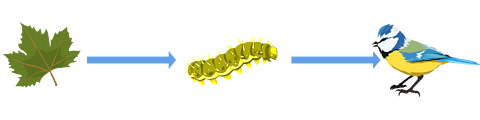
The flow of energy from one living thing to another is shown in the arrows in a food chain.
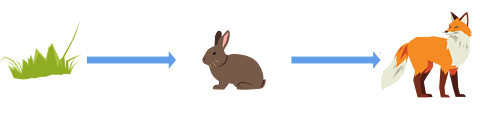
In the food chain below, the arrows represent the flow of energy.
Parts of a food chain
Plants are at the beginning of most food chains. They are called producers because they make their own food.
Any animal which eats a producer is called a primary consumer. The rabbits in the food chains below are primary consumers. All primary consumers are herbivores because they only eat plants.
Secondary consumers eat primary consumers. All secondary consumers are predators because they kill and eat other animals. The fox is the secondary consumer and also a predator. The rabbits are their prey. The animal at the top of the food chain is called the toppredator.
Changes in food chains affect all the living things in them, so if the rabbits became sick and started to die, the foxes would have less to eat and may die as well, but more grass could grow, as less rabbits are eating it. All living things in a food chain depend on each other.
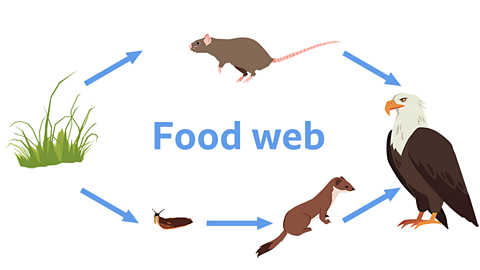
Food webs
Compare these two food chains. What do they have in common?
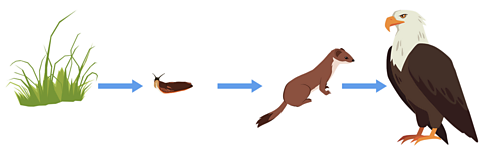
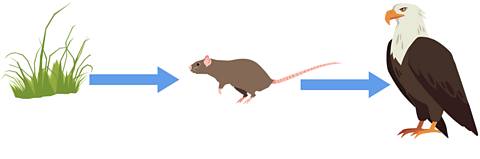
Two of these food chains have the same producer and toppredator. They can be joined together into a food web.
Slideshow: Food chains
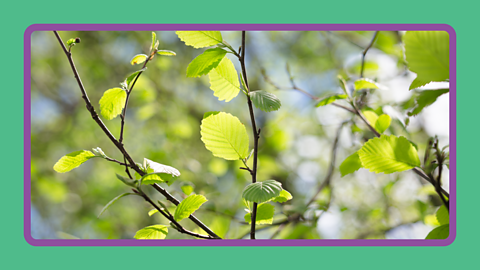
Image caption, Producer
At the start of the food chain, a tree (producer) grows leaves which are a food source for lots of animals and insects.
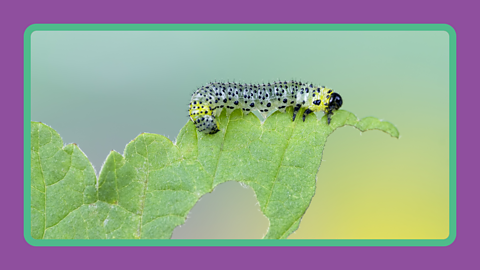
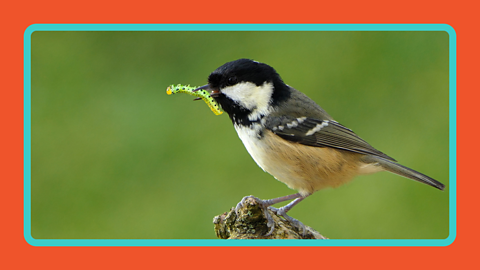
1 of 3
Did you know?
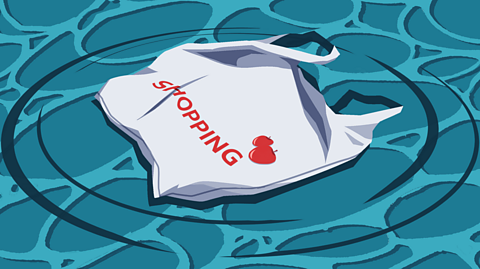
Plastics and microplastics threaten food chains and food webs in lots of habitats.
Animals that eat them can become sick and die, and this affects their predators which can either eat them too or have reduction in food source.
Upto 60% of fish have been found to have eaten plastic.
Important words
Carnivore – An animal that eats meat.
Food chain – The flow of energy from one living thing to another, from a producer to a consumer.
Food web – When two food chains have the same producer and top predator, they can be joined together into a food web.
Herbivore – An animal that eats plants.
Omnivore – An animal that eats both meat and plants.
Predator – An animal that hunts and eats other animals.
Prey – An animal that is hunted and eaten by other animals.
Primary consumer – Any animal which eats a producer is called a primary consumer, they are all herbivores.
Producer – Plants are the beginning of any food chain, and are called ‘producers’ because they can produce their own food.
Secondary consumer – Secondary consumers eat primary consumers, they are all predators.
Activities
Activity 1 – Order the food chain
Activity 2 – Food chains quiz
Activity 3 – Create your own food chain
Activity 4 – Play!
New game! Horrible Science: Stinky Space. game
Join Pipette on her epic mission and learn some revolting facts about space along the way.
More on Animals including humans
Find out more by working through a topic
- count5 of 11
- count6 of 11
- count7 of 11
- count8 of 11