Exciting films for primary pupils that are pinned around a central theme – Explorers.
This animated series offers an introduction to the lives of five explorers, as well as providing a number of cross-curricular learning opportunities.
Each short film is presented by two children: Fatima and Ollie, who are able to visit explorers from the past using their Holo-Lab. They meet five different explorers from different times, frontiers and continents, from Ibn Battuta in Africa, to Neil Armstrong in space.
Using these stories your class can explore:
- Science
- Creative writing
- Art and design
- Maths
- Geography
- Music
- History
These short films are suitable for teaching KS2 pupils in England and Northern Ireland, Progression Step 3 in Wales and 2nd Level pupils in Scotland.
Primary school teacher Harriet Craig explains how these films can be used to teach across the primary curriculum.
Harriet: These films provide a brilliant introduction to the lives of five explorers, as well as introducing a number of cross-curricular learning opportunities.
They are particularly useful for introducing elements of the curriculum for seven to eleven-year-olds in geography and science but can also be used as a stimulus for writing in several different fiction and non-fiction genre.
They also generate ideas for introducing maths into your topic as well.
Films are presented by two children: Fatima and Ollie, who are able to visit explorers from the past in their Holo-Lab.
They meet five very different explorers from different times, frontiers and continents. From Ibn Battuta in Africa, to Neil Armstrong in space.
Each explorer tells Fatima and Ollie about their amazing adventures and each film introduces us to different aspects of science, geography or history, relevant to their travels.
Fatima and Ollie are learning along with us, asking the kind of questions we might want to ask.
If you choose to focus on a topic based around the theme of explorers, then you might have time to learn about all five explorers, comparing the way they travelled and how methods of exploration have changed over the centuries.
Or you could choose just two or three, and do some more in-depth learning about the parts of the world the explorers visited, comparing climates and geographical features or linking your learning in science to the habitats, life cycles or food chains of the animals in those parts of the world.
Explorer Ibn Battuta lived in 14th Century Morocco and travelled widely through Africa, Asia and Europe.
He started his travels with a Hajj to Mecca, so this would link really well to RE, learning about pilgrimage or Islam more generally.
Because Ibn Battuta travelled so widely, there was lots of scope for studying maps, globes and atlases, and discussing route making, perhaps using maths lessons to calculate distances or work out if he travelled the most efficient routes between the places he visited, and using scaling on maps to work out how far he travelled.
The film discusses how camels are adapted to living in the desert, which could be a good starting point for further study into adaptation in science.
Ibn Battuta wrote an account of his journey and this could be a great starting point for writing work on recounts of journeys and descriptions of places.
The film about Christopher Columbus gives loads of scope for geographical skills, such as reading maps, using globes and understanding the points of the compass, and could link in well to the UK curricular requirement to teach place knowledge of North and South America, as well as Europe.
You could also compare the climate, flora and fauna of the new world to what Columbus would have known in Europe.
The film discusses how Columbus felt on his travels, which could lead to some really interesting writing of ships’ logs.
Robert Falcon Scott’s famous expedition to the Antarctic is a great starting point for geographical work on the Antarctic, as well as the science topics of habitats or classification of animals.
It also introduces the insulting clothes they needed to wear, which fits in with work on properties of materials.
The film shows Scott writing a letter home to his wife – a great starting point for some work on letter writing.
The Amelia Earhart film introduces us to the science of forces such as gravity, air resistance and thrust.
It also explains the meanings of the terms ‘latitude’ and ‘longitude’, and would be a great stimulus for work in geography.
For example, locational knowledge of North America and Europe, and field work skills such as understanding maps and atlases.
The Neil Armstrong film could link really well to science work on Earth and space.
You could use some of the numbers quoted in the film to inspire work in maths around units of measurement, distance and speed.
Neil Armstrong’s life could be used in learning about biographies and autobiographies.
At our school, we linked our learning about Neil Armstrong to DT by designing and building moon buggies using CAMS, and then made films set on the moon using stop-motion animation.
All five films also offer opportunities to discuss the values of courage, persistence and resilience, as well as hopefully inspiring a bit of awe and wonder about the amazing world the explorers discovered.
We really hope you and your students find these resources useful and enjoy watching the films.
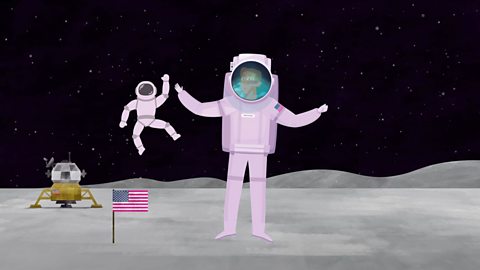
Neil Armstrong. video
Neil Armstrong's historic voyage to the Moon is explored in this short animated film for primary pupils.
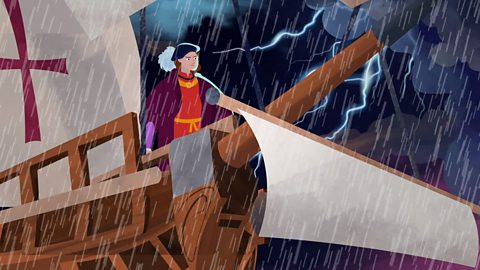
Christopher Columbus. video
This short animated film for primary pupils takes a look at Christopher Columbus' epic adventures to the Americas and the changes in travel and exploration over time.
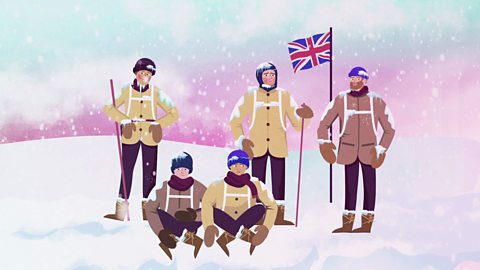
Robert Falcon Scott. video
Robert Falcon Scott's ill-fated journey to the South Pole is brought to life in this short animated film for primary pupils.
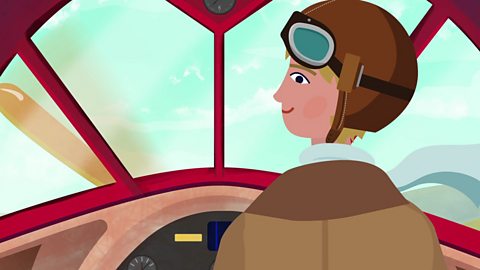
Amelia Earhart. video
The life of Amelia Earhart, a courageous pilot who broke records in the air, is introduced to primary pupils in this short animated film.
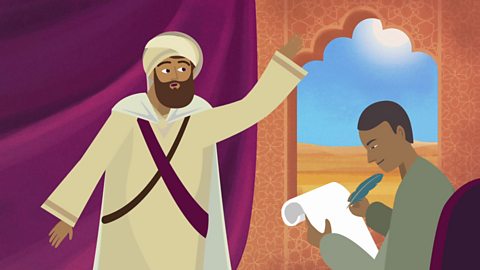
Ibn Battuta. video
Through Ibn Battuta's epic 29-year journey, primary pupils can explore core learning topics such as creative writing, pilgrimage, Hajj and early Islamic civilisation.
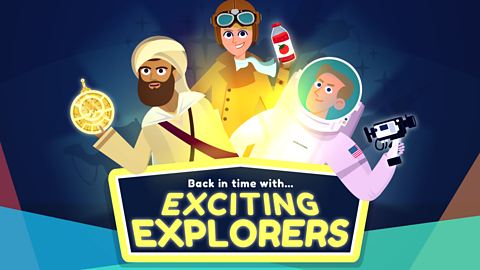
BBC Bitesize - Back in time with... Exciting Explorers. game
Make a journey back in time with the record-breaking people who explored the world (and beyond!) with this BBC Bitesize game.
Where next?
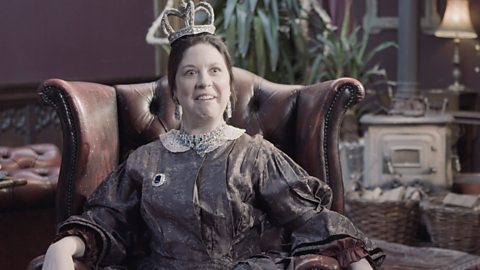
The Victorians. collection
A cross-curricular series of short films exploring some famous figures from Victorian Britain and their achievements.
Bitesize: Black History Month collection
Use these Bitesize resources to set homework, independent study tasks or to consolidate learning for your pupils.

Newsround
The latest news stories from Newsround to share in the classroom.