A long life under the sea?
When you think of the underwater creatures that have called our waters home for generations – jellyfish are bound to spring to mind. Fascinating marine creatures known for their vibrant colours, domed shape and long tentacles, jellyfish have been studied through time.
The ancient species have survived for millions of years, but are they in fact immortal? And despite their name, are they technically fish?
Here, BBC Bitesize takes a deeper dive and shares a number of facts about jellyfish that you may not know. We’ve also taken a closer look at the different types of jellyfish, what to do if you ever encounter one and much more!
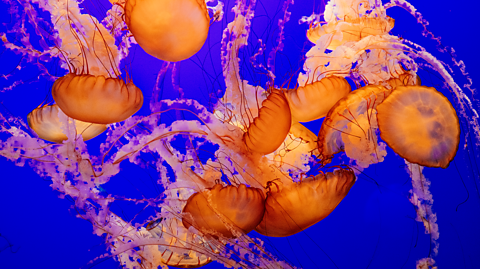
What are jellyfish and are they a type of fish?
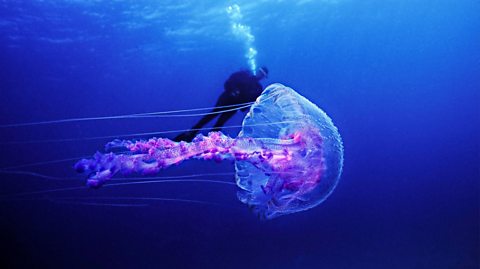
When you think of the word jellyfish, it sounds quite self, explanatory - a fish that is jelly-like. But despite their name, did you know they’re not technically classed as fish?
Fish are vertebrates - meaning they have a backbone - and despite jellyfish also living underwater and having similar traits, they do not and are in fact invertebrates. Jellyfish are not the only creatures with fish in their name who are invertebrates – starfish, cuttlefish, shellfish and crayfish are also invertebrates.
In case you were wondering, the collective noun used when referring to a group of jellyfish is a “smack of jellyfish,” as well as a bloom or a swarm depending on the size of the group.
What types of jellyfish are there?
There are many species of jellyfish that inhabit our oceans across the world, all with different physical traits, life cycles, stinging abilities and more. They belong to a group called Medusozoa and are divided into four classes: Hydrozoa, Scyphozoa, Cubozoa and Staurozoa.
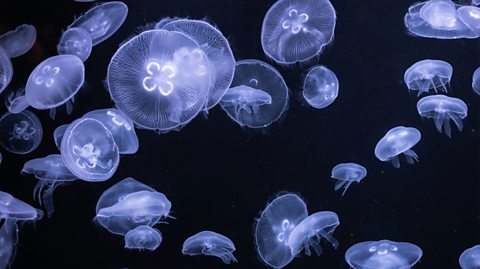
There are far too many types to name – so we wanted to turn our attention to just a few that are commonly found in UK waters. According to The Wildlife Trusts, among the most commonly found in the UK are the Moon jellyfish. Often washing up on our beaches, they stand out for the four visible circles on their translucent domed body – known as the bell – and have short tentacles hanging down from the sides of the bell.
Other frequently spotted jellyfish in the UK include the Barrel jellyfish, which are among the largest found on our seas. Their colour is paler and translucent and their tentacles are thick and frilled.
Other common species in the UK include the Compass jellyfish, the Lion’s mane jellyfish, Blue jellyfish and more. According to the Marine Conservation Society, large blooms of most species in the UK appear in spring and last through to autumn. They play a huge role in lots of marine food chains, as well as providing habitats and protection for smaller species from predators.
Do jellyfish have eyes and other fascinating facts
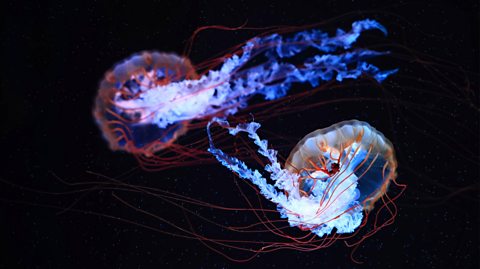
Jellyfish are unusual creatures and there are many fascinating facts about them. The species are said to be more ancient than dinosaurs, as they are believed to have survived for over 500 million years.
Belonging to a group called Cnidaria, as mentioned earlier, they are invertebrates and have no bones – and they are also made up of 95% of water. But did you also know that jellyfish have no brain, heart, bones, blood or teeth?
Instead, they have a hydrostatic skeleton, meaning they use fluid pressure from within the body, which is surrounded by muscles, to maintain their shape and move around. They also have a simple nervous system, and their nerves act as sensory organs detecting touch, temperature and more.
Some jellyfish use light‑sensitive structures, known as rhopalia, to detect what could be around them. One type of jellyfish that has eyes – 24 of them – is the Box jellyfish.
Some jellyfish also “glow” and generate their own light inside their body by a chemical reaction, known as bioluminescence. Some also have regenerative abilities, repairing damage and regrowing parts of themselves.
One of the more random facts you may not know is that some jellyfish have the ability to “clone” themselves. A polyp is the asexual stage of a jellyfish lifecycle – meaning it can reproduce without eggs or sperm – and during this, new genetically identical baby jellies arise from parts of the tissue that are budded off, known as a process called strobilation.
What do jellyfish eat?
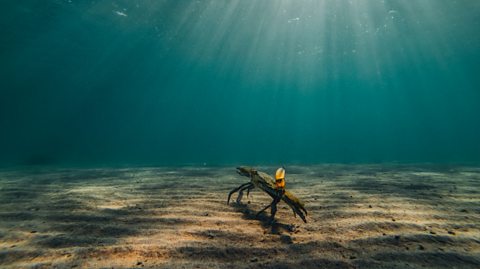
Jellyfish are carnivores and typically eat small marine life, such as small planktonic crustaceans, as well as plankton. Their tentacles sting, which helps them startle and catch their prey.
They then use their tentacles to bring the prey to their food hole (mouth) and as they have no teeth to chew, they swallow their prey whole. In the food hole, the food is broken down and once the nutrients are absorbed, they get rid of the waste via the same hole.
Are jellyfish immortal?
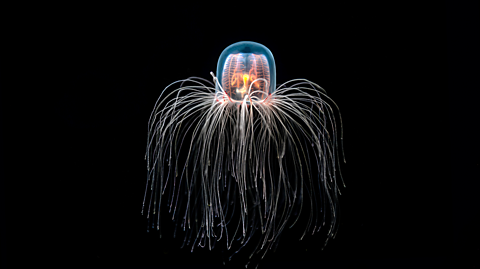
When it comes to jellyfish, they usually don’t have very long lifespans. But one anomaly is the Turritopsis dohrnii, which can reset its life cycle and regenerate itself into a different form, cheating death.
Nicknamed the “immortal jellyfish,” the Turritopsis dohrnii was first discovered in the Mediterranean Sea in the 1880s and under stress or when injured can transform back into its previous life stage as a polyp. In this process, the jellyfish shrinks back in on itself and drops to the sea floor.
It is here that it reverts to a blob-like state and from the blob a polyp is developed, which can then mature again to become a jellyfish. This ability could potentially allow the jellyfish to restart its life cycle multiple times, although this does not mean it can live forever in natural conditions - you can learn more about the life cycle of jellyfish here.
What is the lifespan of a jellyfish?
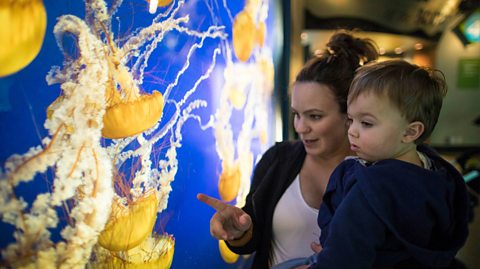
Turritopsis dohrnii is unique, as most other jellyfish do not share its ability to restart their life cycle and generally live for much shorter periods. While some adult jellyfish may survive for only a few hours or days, many species live for months or even years when their entire life cycle is considered.
The lifespans vary, but common types can live for over a year. According to the Marine Conservation Society, smaller species only live for a few hours and larger, like the Lion’s mane jellyfish for example, can live for a few years.
How to treat a jellyfish sting
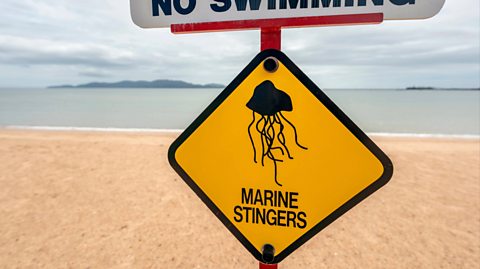
While jellyfish use their tentacles to sting and capture prey, they can also sting humans in water and on our shores. Depending on the type of jellyfish or how serious the injury, some stings can be treated by first aid, whereas others require going to hospital.
According to the NHS, symptoms of sea creature stings are intense pain and an itchy rash. If immediate help is not available, the NHS advises to rinse the affected area with seawater – not fresh water, soak it in warm water for at least 30 minutes, remove spines from the skin with tweezers or even the edge of a bank card and to take painkillers such as paracetamol or ibuprofen.
Despite popular belief, the NHS advise that you do not urinate on the sting. They also state that you shouldn’t apply anything cold to the wound, touch tentacles or spines with bare hands or cover or close the wound. For more information on what to do or how to treat a jellyfish sting, you can visit the NHS website to find out more.
This article was written in January 2025
Learn more about immortal animals and sea life
- KS3 / KS4 Biology: Jellyfish and photosynthesis
- Do immortal animals exist?
- What is the world's oldest fish and why has it lived so long?
- How do fish sleep and how do sharks get some shut eye while swimming?
- Creepy-looking creatures that lurk in our oceans
- Can pigs look up and other super strange animal facts
