How do animals sleep?
Sleep is one of the most important aspects of our bodily cycle, giving us time to rest and recharge, ready for the day ahead.
But what about the animal kingdom? With no revision to retain, no classroom to concentrate in, and dangerous predators all around - what need do they have to sleep?
Well, here at BBC Bitesize, we thought we'd break down the nighttime norms of a number of animals, to give you an insight into snoozing on the Sahara.
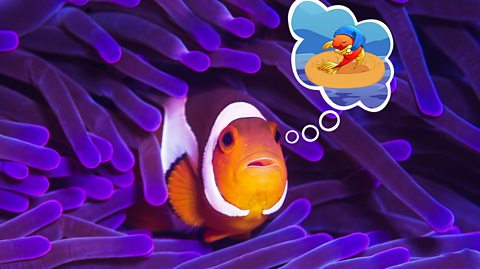
How do fish sleep?
While their rest differs from human sleep in a few significant ways, fish do enter a sleep-like state according to scientific research.
For the most part, fish don't have eyelids so don't shut their eyes when headed for a snooze. Instead, fish sleep is characterised by a slower heart rate, lower responsiveness and limited movement.
Fish brains also differ from humans', so different areas of the brain show changes in activity when fishes hit the seabed.
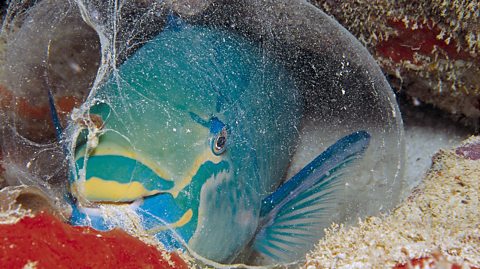
It should also be said, in interest of fairness to our marine mates, that not all fish sleep the same way. Parrotfish, for example, sleep in a cocoon of their own mucus - like a big snotty sleeping bag! This helps them ward off predators and parasites, with evidence also suggesting this contains antibiotics to keep the fish safe from pathogens.
How do sharks go to sleep?
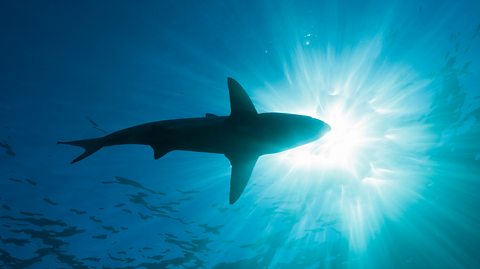
Many sharks, such as the great white, breathe using a system called 'ram ventilation'. This means they must continually keep swimming, in order to push water over their gills to then extract oxygen. As such, it's difficult to imagine that any creature in a state of perpetual movement can sleep, but that's not entirely the case…
Some sharks can shift their breathing system from ram ventilation to buccal pumping, which is when water is pumped over the gills while stationary, allowing sharks to continue breathing. This switch allows sharks a moment of respite, with scientists finding that sharks in this state exhibit posture and oxygen consumption indicative of a sleep state.
Even sharks that can't make the switch may have their ways of napping, however. Some research suggests that sharks sleep with half of their brain at a time, allowing the other half to keep them running on a kind of autopilot - much like dolphins!
Do all animals sleep?
If we're to go off the phrase 'if you snooze, you lose', then the animal kingdom doesn't seem to be chock full of winners.
Scientists can't definitively prove that all animals sleep, but the vast majority of creatures seem to enter something resembling a sleep-like state. It's important to note that what sleep looks like can vary from animal to animal.
Most fish sleep with their eyes open because they don't have eyelids. Ostriches have three pairs of eyelids and keep their eyes open during the deep phase of sleep, though they shut their eyes and sometimes droop their necks when they are in REM sleep, which is usually lighter. Dolphins sleep with half their brain, while the sperm whale sleeps vertically.
So we know that most animals sleep, and some in stranger situations than others, but - do they all sleep at the same time…?
What does nocturnal mean?
Nocturnal animals are animals who are awake and active at night, as opposed to during the day.
The opposite of this is diurnal animals, who are active and awake during the day.
It's possible for an animal to move between the two states. Some fish, for example, can change their patterns of sleep if separated from their group, as swimming alone during the day can be too dangerous - with fewer predators surfing the seas at night.
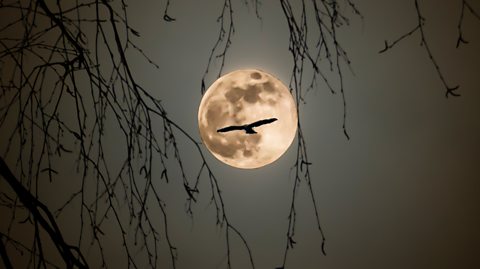
Which animals are nocturnal?
Almost 70% of the world's mammals are nocturnal! There's lots of reasons for this, fewer predators, less competition and cooler weather for mammals in desert climates.
Some famous examples of nocturnal creatures are owls, foxes, bats and hedgehogs.
In addition to nocturnal and diurnal, animals can also fall into the crepuscular category. This is reserved for animals active during twilight times, be that dusk or dawn.
