Seven fun and interesting facts about dolphins
Dolphins are thought of as one of the smartest seafarers around, with study after study helping us understand what makes them tick!
But how much do you know about dolphins? Well, we've got the answers to all your dolphinquiries(we're so sorry), from who they are, to what they eat and how they communicate!
1. Are dolphins mammals or fish?
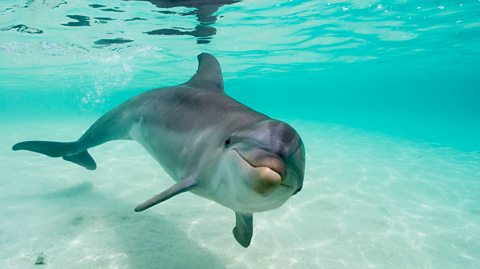
Despite spending their time swimming the seas, dolphins are actually mammals, not fish.
Dolphins are warm-blooded and, unlike fish, breathe air using their lungs - not gills!
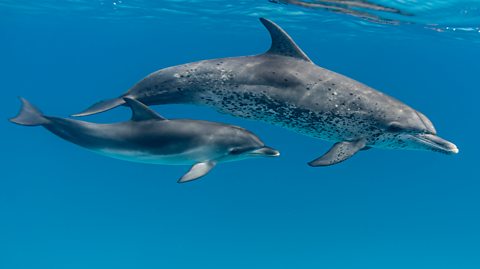
And dolphins mammalian characteristics don't end there! Dolphins give birth to their young - as opposed to laying eggs - and feed their children (known as calves) with their own milk, much like other mammals.
Dolphins also have a small amount of hair, right around their blowhole, whereas fish have a scaly exterior.
2. What do dolphins eat?
Dolphins are carnivorous creatures, and satiate their hunger with a variety of fish, squids and crustaceans.
On average, an adult dolphin will eat around 4-9% of its body weight per day, with their daily intake generally increasing when they are pregnant.
The types of fish and other creatures that a dolphin will eat usually depends on the species of dolphin, where it lives and what time of year it is.
3. How do dolphins sleep?
Much like humans, the dolphin brain is split into two - with a left and right hemisphere!
Despite this, due to the presence of predators such as sharks, dolphins aren't able to sleep in the same way humans do. We rest our entire brain when sleeping, but dolphins rest theirs one hemisphere at a time!
To sleep, a dolphin will close one eye, allowing the opposite hemisphere to rest while the other works away.
For example, a dolphin will shut its left eye to rest its right hemisphere, while leaving its right eye open and the left hemisphere active. This allows dolphins to rest up and stay alert to predators at the same time!
4. How long can a dolphin hold its breath?
Dolphins are mammals so, like humans, they breathe air using their lungs. This means, unlike other sea creatures, dolphins must regularly return to the surface for a breath of fresh air!
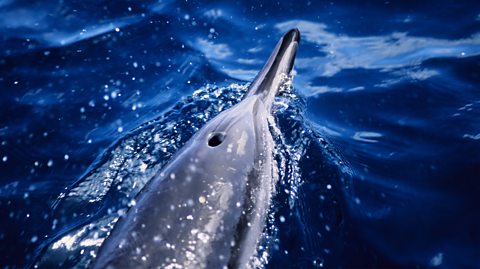
Dolphins breathe using a blowhole on the top of their heads, exhaling the air that they've just used, before inhaling a nice, fresh batch. How long a dolphin can go without breath depends on the species, but usually averages out between 8-10 minutes.
For context, the average person can only hold their breath for between 30 and 90 seconds, with film-stars like Tom Cruise and Kate Winslet clocking in holds of over six minutes after months of training!
5. How long do dolphins live?
The lifespan of a dolphin varies from species to species, with the bottlenose dolphin usually living for at least 40 years.
Female dolphins generally outlive their male counterparts, with some females living well into their 60s. Dolphins generally begin to reproduce when they're between five and 15 years old, though female bottlenoses as old as 45 have been known to give birth.
6. What is a group of dolphins called?
A group of dolphins is called a pod!
Pods generally consist of anywhere between 10 and 30 dolphins, with much larger groupings given the moniker of 'superpods'.
'Superpods' are rare, and usually don't last very long. A 'superpod' will mostly come about during mating periods, or when a single area plays host to a large number of prey.

7. Can dolphins talk?
Well, sort of…
While they wouldn't be understandable to you or I, dolphins do use a range of verbal and nonverbal gestures to communicate with their pod.
Dolphins whistle to one another as a means of communicating when travelling and hunting, as well as producing a clicking noise that helps them stay aware of their surroundings.
This clicking is a process called echolocation, in which dolphins emit a click sound which bounces off the surface of other objects in the water. The dolphins then use the echo this produces to judge what is going on in their surroundings, helping them stay aware of any predators or prey they might come across under the water.
Bottlenose dolphins each have a signature whistle, which they use to communicate with their pod and keep track of each other. Recent studies even found that mother dolphins adjust their signature whistles when speaking to their young, a bit like baby talk!
