Facts about Scotland
One of the four countries of the UK, Scotland has a long and fascinating history. Home to over five million people, nearly half live near the coast – and there are also hundreds of islands off the Scottish coast, including the Shetland Islands, Orkney Islands and the Hebrides.
From visiting centuries old castles to trying local dishes, seeing its stunning lochs, hearing the bagpipes, buying tartan and more, Scotland's rich culture and unique identity sees tourists travel from across the world to visit. But how much do you know about Scotland?
Here, BBC Bitesize takes a closer look at some fun and interesting facts about Scotland and its history. You can find out more below.
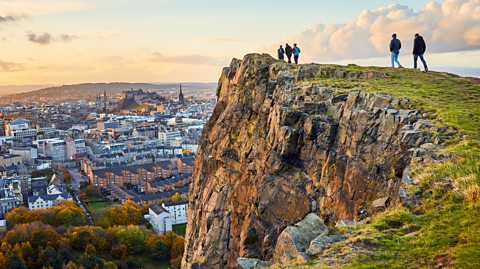
1. The national animal is a unicorn
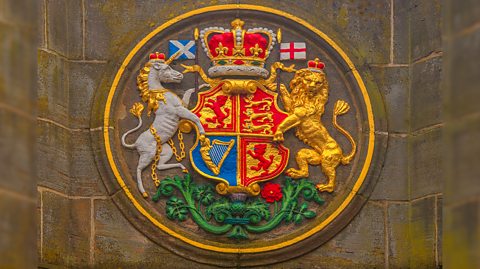
If someone was to ask you what the national animal of Scotland is, you’d probably guess a real species and not a magical creature like a unicorn. Believed to symbolise purity and power, unicorns have serves as a symbol in Scotland for centuries.
The unicorn was first used on the Scottish royal coat of arms by William I in the 12th century and in the 15th century, gold coins even appeared with the unicorn on them. They've continued to appear as a symbol in Scotland through time and the country also has a National Unicorn Day annually on 9 April.
2. Edinburgh Castle is on top of an extinct volcano
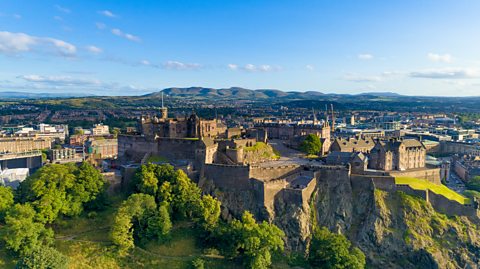
There are no active volcanoes in Scotland today, but many features in Scotland's landscape were formed by volcanoes millions of years ago. For example, Edinburgh, the Scottish capital, is built on lots of hills and Edinburgh Castle is on top of a hill that is actually an extinct volcano.
Edinburgh Castle has stood on top of Castle Rock for over 900 years. Building a castle up high made it difficult for enemies to attack so castles were often built on natural rocks and cliffs, like volcanic mountains.
3. Golf was invented there
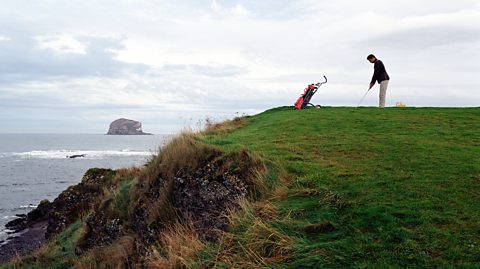
The exact origins of golf have long been unclear and argued over, with many disputing where the game began and how it looked in its early days. But, it is generally accepted that the modern game of golf was developed in Scotland in the 15th century.
According to the National Library of Scotland James II's Act of Parliament of 6 March 1457 banned people from playing golf or football and this is the earliest known written mention of the game of golf in Scotland. In the 1400s, authorities were said to be worried that people played golf when they were expected to be at church and also feared the game distracted them from military training, which at the time was compulsory for every man and boy over the age of 12.
4. The Romans invaded Scotland
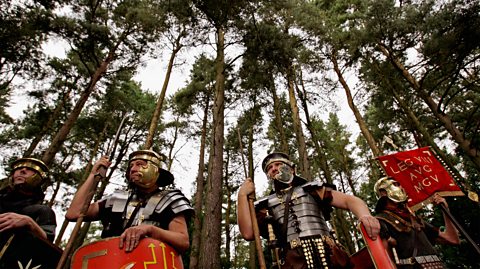
By the end of the first century AD, Rome controlled most of southern Britain, but when it comes to Scotland, it was still controlled by fierce warrior tribes, who refused to bow to the Roman Empire. In Roman times, what we now know as Scotland was called Caledonia, and the people were known as the ‘Caledonians’.
The Romans invaded Caledonia (Scotland) in 79 AD and Caledonian tribes pushed back and fought against the Romans in a famous battle called Mons Graupius in 83 AD. But you can find out more about what happened next here.
5. Scotland is home to the Loch Ness monster
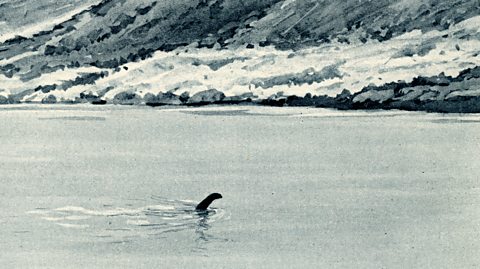
In Scottish Gaelic, the word loch refers to a lake or a sea inlet - and by far one of the most famous in Scotland must be Loch Ness. It is known worldwide for the folklore of the monster lurking beneath its water, called the Loch Ness Monster.
Affectionately known as Nessie, the earliest known sighting was from 565AD when the beast apparently appeared to Irish missionary St. Columba. Through the generations, many have recorded sightings or even taken blurry photos, whereas others believe the legend to be a myth.
6. The six-day old queen
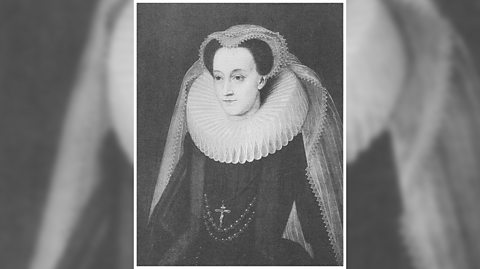
One of the most famous figures in Scottish history is Mary, Queen of Scots – also known as Mary I of Scotland or Mary Stuart. Born 8 December 1542, she inherited the throne and became Queen of Scotland at just six-days old, following the death of her father, James V.
Mary, Queen of Scots was also Elizabeth I’s cousin and famously had a dynastic claim to the line of succession to the English throne. However, Mary was a Catholic and also half-French, making her unsuitable as a monarch to the majority of English people – but that didn’t stop her posing a threat to Elizabeth’s rule.
7. Haggis is the national dish
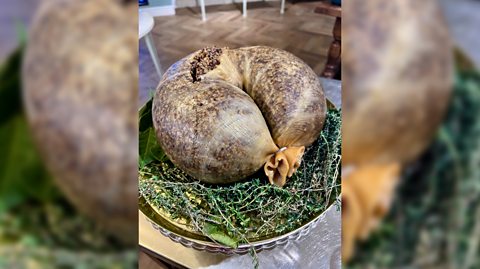
Scotland is known around the world for many different dishes – but haggis is perhaps the most famous. A huge part of the country’s heritage, the savoury dish has been eaten in Scotland for hundreds of years and consists of minced sheep’s organs, oatmeal, onions and spices.
Traditionally, it is stuffed into a sheep’s stomach and cooked, and it is customary to eat haggis on Burns Night, 25 January, on the birthday of iconic Scottish poet Robert Burns. "Address to a Haggis" is a poem by Robert Burns that celebrates the Haggis, Scotland's national dish and the Burns Night tradition began in 1801, when nine men who knew Robert Burns met for dinner of a haggis to celebrate his life and works.
8. Scotland has three recognised languages
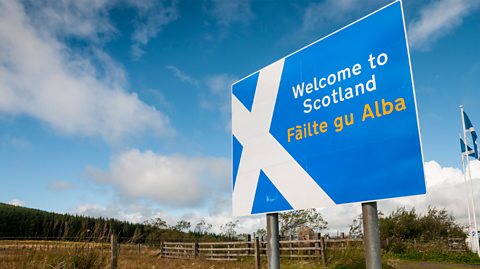
Another interesting fact about Scotland is that it is home to three official languages. The most predominant language spoken by most of the population is English – however many speak Scots and Scottish Gaelic.
Scots is a living language, with words and phrases - sometimes thought of as an old-fashioned way of speaking or even as slang - that have been passed on and used by generations of people describing life around them. The Gaelic language is also very historic and is a Celtic language native to the Gaels of Scotland.
9. Hogmanay
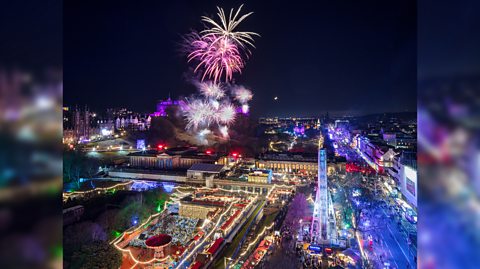
As you can see in our list so far – Scotland is famed around the world for so many different parts of their history, culture and traditions – including Hogmanay. The Scots word for the last day of the year, the annual celebration is synonymous with New Year in Scotland.
Every year, Hogmanay attracts thousands from across the globe for its vibrant street parties, events and more. One tradition that has long been part of Hogmanay is First Footing – where the first visitor to enter a household on New Year's Day, after the clock strikes midnight, is a bringer of good luck.
10. It is home to the 'oldest tree' in the UK
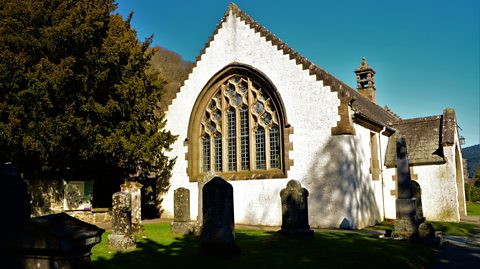
The world is full of many incredible, historic trees that have seen life change around them - but there is a lot of debate about which is the oldest in the UK specifically. Many believe the oldest single entity tree in the UK to be the Fortingall Yew in Perthshire, Scotland.
This means it is not part of a clonal colony – which is a group of genetically identical trees that through a shared root system are connected. Standing within Fortingall churchyard, the yew is estimated to be between 2,000 and 3,000 years old, but some suggest the ancient tree is much older than this.
Here at BBC Bitesize, we've also shared interesting and fun facts from other countries across the world, such as England, France, Germany, Spain and Japan. But if you want to find out more about Scotland, you can learn more below.
This article was written in November 2025
