10 fun and interesting facts about England
England is the largest country by population in the UK, with over 57 million people. It’s got a long and interesting history which includes witch trials, Viking and Roman invasions, and afternoon tea. You may feel you already know a lot about England, but did you know…?
1. London used to be called ‘Londinium’
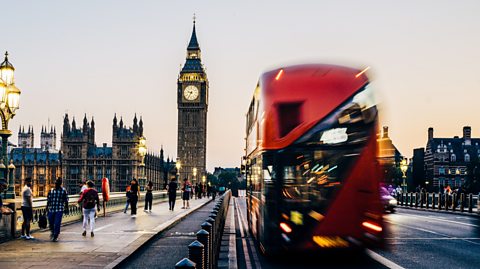
The capital city of England – London – used to be called Londinium in Roman times. Roman merchants and traders established the settlement of Londinium in about AD47. Before that, the London area was largely forested and not a huge urban area, although there is evidence of humans having been there almost half a million years ago.
2. England is at the centre of world time
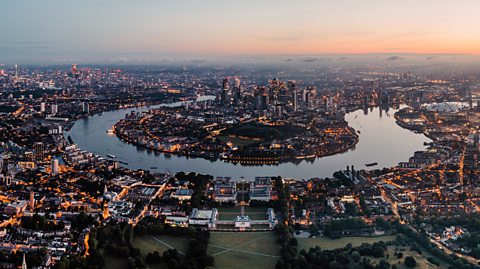
You’re probably already aware there are lots of timezones around the world. Almost 150 years ago, people from different countries decided they needed to agree on a standard marker of ‘clock’ time, so that everyone was working from the same starting point.
Because lots of people already used Greenwich in southeast London as zero degrees longitude for their sea charts, it was agreed that ‘Greenwich Mean Time’ (GMT) should become the centre of world time, on the ‘Prime Meridian’.
3. It used to be a Catholic country
For around a thousand years, England was a Roman Catholic country. In the 1530s Henry VIII – who was a practising Catholic – decided to declare himself the supreme head of the Church of England (instead of the Pope), so he could annul his marriage to first wife, Catherine of Aragon.
Henry’s changes led to the English Reformation and England officially became a Protestant country in 1559. It also meant he could marry his new girlfriend, Anne Boleyn.
4. England has a lot of funny street names
Ever walked down Grump Street or Squeeze Gut Alley? Or told a joke on Ha-Ha Road? They’re just some of the quirky names for streets and roads throughout England.
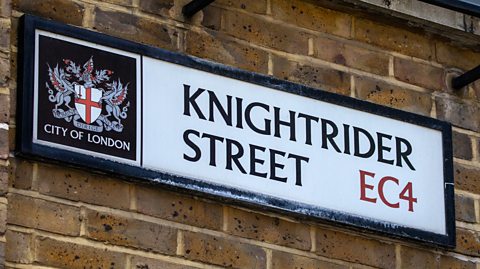
Keep your eyes open for Knightrider Street in London, Awkward Hill and Potlickers Lane in Gloucestershire and Tinker Bottom in South Yorkshire. There are also plenty of other ruder ones that can’t be printed here!
5. Traditional pies have had all sorts of fillings…
You might think of meaty pork pies or steaming apple pies when you think of England, but what about eel pie, swan pie, and calves’ feet pie? Whilst small stuffed birds may have also been used in pies, according to The London Museum the ‘four and twenty blackbirds’ from the famous rhyme might have been planted alive in a pie for Henry VIII and flew out as a spectacle when the pie was presented to the King.
6. The King owns all the swans
Well, technically King Charles III owns all the unmarked mute swans swimming in open waters in England (and Wales). There are some swans which are ‘ringed’ (i.e. tagged) if they belong to the Vinters or the Dyers livery companies, according to the official website of the British Royal Family.
Every year ‘swan upping’ is carried out on the river Thames, which is when the King’s Swan Marker takes a team out to count the number of swans and check their health. Nowadays none of them end up in a pie!
7. English bowler hats are worn by women in South America
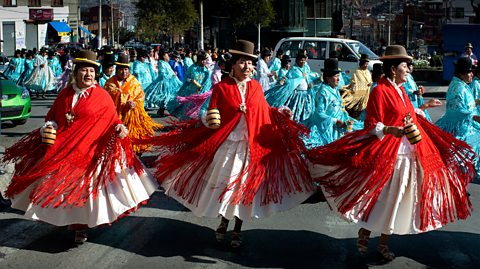
The bowler hat, invented in England, is synonymous with comic actor and filmmaker Charlie Chaplin and father George Banks in Mary Poppins. In the 20th century in England, bowler hats were worn by businessmen in suits but what’s less known is they’re also a traditional hat worn by indigenous Aymara and Quechua women in Bolivia.
There are various theories as to how this trend started, with the favourite being that in the 1920s bowler hats were shipped to South America for British railway workers, but were sold to local women when the hats didn’t fit the men properly.
8. Tudor people were scared of having baths
According to the Oxford University Research Archive, in the 16th century medical experts believed bathing in hot water was dangerous because it opened the pores to infection. Whilst not as hygienic, Tudor people weren’t necessarily stinky, because they would change their dirty clothing, rub their skin with linen and brush their hair regularly.
9. Queen Elizabeth I got the first flushing toilet
Sticking with Tudor England, Queen Elizabeth I’s godson Sir John Harrington reportedly designed the first flush toilet – giving one to his godmother, who apparently wasn’t that keen on it.
Flushing toilets became more popular in the 18th century, but even by the 19th century, in larger cities, 100 people could be sharing one toilet, meaning there might still have been a bit of a stench.
10. England has a lot of funny festivals
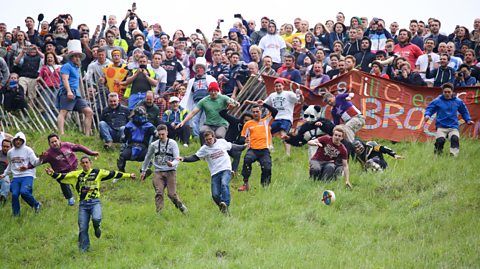
From the cheese rolling competition in Gloucestershire every year to the World Gurning Championships in Cumbria, Englanders know how to celebrate the offbeat.
During Cooper’s Hill Cheese Rolling, participants chase a wheel of Double Gloucester cheese down a very steep 180m-long (591ft) hill. The first person to reach the bottom is the winner (though they never catch the cheese as that can reportedly roll down as fast as 80mph - or 129km/h!).