10 fun and interesting facts about Germany
Germany, officially the Federal Republic of Germany, is a country in central Europe. It is a country that is rich in history, home to around 84 million people and borders nine other countries! We all know that Germany is an interesting country to visit, but did you know…?
Germany invented the gummy bear
In 1920, Hans Riegel Sr, a German confectioner created the iconic sweet company, Haribo. In 1922, Reigel elevated the confectionery game by creating the world-famous gummy bear sweet, a common treat still loved to this day. The name Haribo was invented as a combination of the first two letters of his first and last name, as well as his home town - Bonn. The success of gummy bears has encouraged further production of many other gummy candies in animal form.

Das Land der Dichter und Denker
Das land der Dichter und Denker is a common nickname that Germans give their country. The English translation of this means ‘The country of poets and thinkers’ and that’s because Germany has a history of producing famous music composers, poets and scientists. Some of the most notable include: Friedrich Schiller (a famous playwright and poet), Ludwig van Beethoven and Wolfgang Amadeus Mozart (two of the most famous music composers in history), and Albert Einstein - most famously known for developing the theory of relativity.
Pioneers of sustainability
Germany is a leader in eco-friendly practices. Did you know that Germany has one of the highest recycling rates in the world? - Approximately 66% of their rubbish is recycled. This is due to recycling regulations from the government, very well-structured waste management and awareness from the public that people must protect the environment and keep their streets clean.
Cologne has the tallest twin-spired church in the world
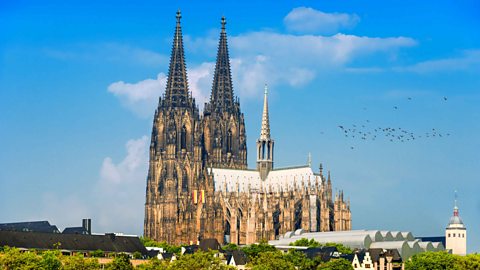
Germany has over 20,000 castles across the country but also has the largest twin-spired cathedral in the world. Located in the city of Cologne, Hohe Domkirche Sankt Petrus, also known as the Cathedral church of Saint Peter, stands tall at an incredible height of 157m or 515ft. With construction starting in 1248, it took over 600 years for the cathedral to actually be completed. Filling the Cologne skyline with its magnificence, the cathedral remains one of Germany’s most famous landmarks with 6 million visitors each year.
Oktoberfest
Oktoberfest is an annual festival (and Germany’s largest volksfest - or 'people's festival') which, despite its name, takes place every late-September in Munich. The festival dates back to 1810, when it was first held in October to celebrate the marriage of Crown Prince Ludwig of Bavaria, to Princess Therese. The festivities were so grand, they lasted 5 days. This tradition has continued to this day where people now gather wearing traditional German clothing such as dirndl and lederhosen to celebrate. The annual event attracts more than 7 million international and national visitors at its peak.
Germany has around 1,200 different types of sausage
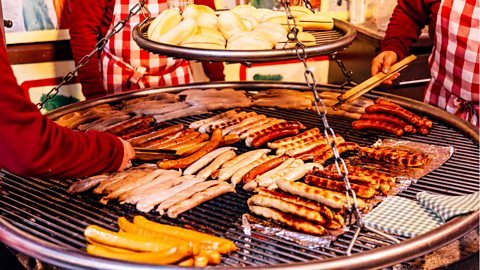
Germany is famous for many dishes and creations such as sauerkraut and pretzels but it's perhaps the variety of sausages for which it's most famous. The history of the German sausage dates from the Middle Ages when meat had to be preserved to keep it safe for consumption. This process would include combining meat, salt and spices, placing them in an encasing and then smoking it. Since then, the German people have created approximately 1,200 different types of sausages!
Each variety of sausage will have its own process of being made, different spices and even influences from different German districts. Some common German sausages that you may have heard of are: Bratwurst, Currywurst, Bockwurst, Weisswurt and similar to the hotdog, Frankfurter Würstchen.
The longest word in the German language
The world's longest word to ever be published in the German language is Donaudampfschifffahrtselektrizitätenhauptbetriebswerkbauunterbeamtengesellschaft … what a tongue twister! At 79 letters in total, the word means 'Association for subordinate officials of the head office management of the Danube steamboat electrical services'. This was a shipping company founded in 1829 for transporting passengers and cargo along the Danube (river).
Dog owners must pay a tax
In some parts of Germany such as Hamburg and Berlin, people must pay tax when they become owners of a dog. This has to be done within 3 to 6 months of obtaining the dog and failure to pay may result in a hefty fine or even a prison sentence.
Getting a dog license involves completing both a theory and a practical test. The cost also depends on the size and breed of the dog. German dog owners may also need to get an additional dog liability insurance depending on the breed. This covers the possibility that the dog may injure another dog or person, or if they damage a rental property.
The tradition of the Christmas tree
Germany is widely associated with starting the tradition of Christmas trees. Families would set up evergreen trees in their homes on 24th December, the religious feast day of Adam and Eve. Many people think the tradition of Christmas trees in Britain started with the Victorians but it was actually introduced to England during the Georgian period.
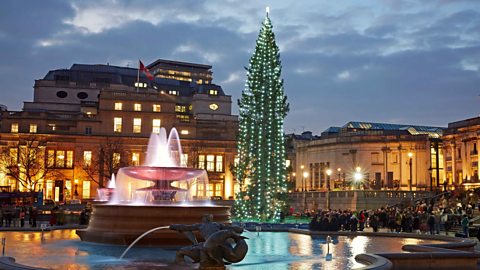
However, Queen Victoria and Prince Albert were gifted a Christmas tree (from their family in Germany) which they decorated each year. The donation of a Christmas tree to the UK is still a time-honoured tradition. Specifically, the Trafalgar Square Christmas tree is given to the people of London by the city of Oslo each year since 1947.
The first country to fully implement daylight saving hours
The creation of The practice of advancing clocks to make better use of the longer daylight available. (or DST) was created by George Vernon Hudson in 1895, an A person who is an expert in or studies insects.who suggested adjusting the clocks so that he could have more sunlight hours to study. However, this wasn’t implemented anywhere in the world until 1908, when a small Canadian town called Thunder Bay turned their clocks forward to gain an extra hour of sunlight. Eight years later in 1916, Germany became the first country to ever fully implement daylight saving time which sparked a trend across Europe.
