|
 |
 | | | | | | |||||||||||||||||||||||||||||||||||||||||||||||||||||||||||||||||||||||||||||||||||||||||||||||||||||||||||||||||||||||||||||||||||||||||||||||||||||||||||||||||||||||||||||||||||||||||||||||||
| | | You are in: Europe | |||||||||||||||||||||||||||||||||||||||||||||||||||||||||||||||||||||||||||||||||||||||||||||||||||||||||||||||||||||||||||||||||||||||||||||||||||||||||||||||||||||||||||||||||||||||||||||||||||
|
| | Thursday, 24 October, 2002, 06:46 GMT 07:46 UK Funding issue hangs over EU talks 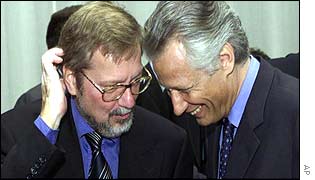 Different sides have been digging in their heels
As the EU's enlargement marathon heads into its home stretch, there has been plenty of talk of historic moments. But prepare for a change of mood. Now comes the grubby stuff... now they have to talk about money.
The process which is due to add 10 new countries to the Union by 2004 will not be cheap - and there are very different views about how and when to pay for it. Broadly speaking, there are two camps - one led by Germany which pays the most money into the EU budget, the other led by France which gets the most money back in farming and other subsidies. Both sides have been digging in their heels. Political will Germany and its allies - Britain, Sweden and the Netherlands - want a commitment that there will be reform of the EU's hugely expensive Common Agricultural Policy (CAP), which accounts for nearly half the Union's total budget of 95bn euros ($95bn). Without reform they fear the budget could spin out of control once new countries like Poland, with a huge agricultural population, join. France says reform cannot even be discussed until 2006, well after enlargement is supposed to take place.
Somehow the EU needs to find some middle ground, which will also allow it to decide how much money to offer the 10 candidate countries in the first years after they join the Union. Most of the would-be members are poor by EU standards, and they are expecting a fair deal. The Danish Foreign Minister, Per Stig Moller, argues that it is now a question of political will. "We all know what's at stake, we all know the amount of money which is on the table," Mr Moller says. "If you can't do it now you never will do it." Risk of delay The Danes - who will be chairing this summit - fear a domino effect, if there is no deal on money this week.
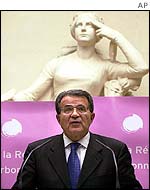
Delay in Brussels could lead to delay in negotiating the financial package with the candidate countries themselves. That in turn would make it very difficult to wrap up the enlargement talks by the end of this year as planned. The President of the European Commission, Romano Prodi, has warned that the EU should beware of "jeopardising the success of enlargement by wrangling over the details". Like others supporters of enlargement, he argues that the initial costs will be more than outweighed by the long term economic benefits of creating a larger Union. But nothing raises hackles within the EU as much as money. If now is the time to be generous, then every EU leader will be looking round the table to see who is prepared to put their hand in their pocket. | |
See also:  24 Oct 02 | Europe 22 Oct 02 | Europe 21 Oct 02 | Business 21 Oct 02 | Europe 20 Oct 02 | Europe 10 Oct 02 | Europe 08 Oct 02 | Europe Top Europe stories now: Links to more Europe stories are at the foot of the page. | |||||||||||||||||||||||||||||||||||||||||||||||||||||||||||||||||||||||||||||||||||||||||||||||||||||||||||||||||||||||||||||||||||||||||||||||||||||||||||||||||||||||||||||||||||||||||||||||||
| |
|  E-mail this story to a friend E-mail this story to a friend |
| |
| Links to more Europe stories |
| | | ||
 | ||||
 | | Back to top
| ||
| ---------------------------------------------------------------------------------- To BBC Sport>> | To BBC Weather>> | To BBC World Service>> ---------------------------------------------------------------------------------- © MMIII | News Sources | Privacy |