
|
 |
 | | | | | | ||||||||||||||||||||||||||||||||||||||||||||||||||||||||||||||||||||||||||||||||||||||||||||||||||||||||||||||||||||||||||||||||||||||||||||||||||||||||||||||||||||||||||||||||||||
| | | You are in: Business | ||||||||||||||||||||||||||||||||||||||||||||||||||||||||||||||||||||||||||||||||||||||||||||||||||||||||||||||||||||||||||||||||||||||||||||||||||||||||||||||||||||||||||||||||||||||
|
| | Monday, 21 October, 2002, 15:53 GMT 16:53 UK Budget rules are still 'stupid', Prodi says 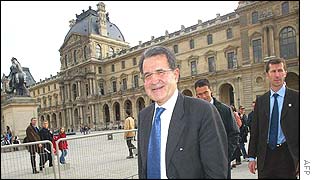 Mr Prodi has found himself at the centre of a storm The president of the European Commission, Romano Prodi, has defended - and repeated - his depiction of EU rules on budgetary discipline as "stupid".
But he repeated his assertion that the system had glaring faults. Last week, he told France's Le Monde newspaper that the Pact was "stupid" and "rigid", and appeared to call for reform, something firmly resisted by many in the EU. Mr Prodi's comments profoundly annoyed the chiefs of several countries' central banks and many members of the European Parliament. The controversy comes at a time when several countries - including Germany and France - are struggling to meet targets for containing their state budget deficits, a key criterion for adoption of the euro. Rigidity is stupidity Mr Prodi's argument is that the stupidity resides in inflexible rules, rigidly applied. "Awareness of the extraordinary things the Pact has brought about, and will continue to bring about, should not blind us to the limitations of the institutional framework in which it is applied," he said. "Still less does it mean enforcing the Pact inflexibly and dogmatically, regardless of changing circumstances. "That is what I called - and still call - stupid. "I do not think that it is the role of the Commission or of myself as President of the Commission to apply rules in that way." No timetable Mr Prodi has yet to lay out any schedule for reforming the Pact. So far, Brussels has tended to resist change. The pact was agreed by governments in 1997 - ironically, at the insistence of Germany - as a means of ensuring that investors would have faith in the European economy ahead of the launch of the euro. It aimed to prove that EU member states, although allowed much leeway in economic policy, were abiding by the same fiscal principles. The pact imposes a compulsory limit on public deficits of 3% of annual economic output, and lays out a system of warnings and punishments for offenders. This year, as a number of countries have come close to breaching the 3% ceiling, some governments have argued that they need the freedom to boost spending as the global economy slows. | |
See also:  21 Oct 02 | Business 17 Oct 02 | Business 16 Oct 02 | Business 30 Sep 02 | Business 26 Sep 02 | Business 25 Sep 02 | Business 24 Sep 02 | Business 02 Sep 02 | Business 02 Sep 02 | Business Internet links: The BBC is not responsible for the content of external internet sites Top Business stories now: Links to more Business stories are at the foot of the page. | ||||||||||||||||||||||||||||||||||||||||||||||||||||||||||||||||||||||||||||||||||||||||||||||||||||||||||||||||||||||||||||||||||||||||||||||||||||||||||||||||||||||||||||||||||||
| |
|  E-mail this story to a friend E-mail this story to a friend |
| |
| Links to more Business stories |
| | | ||
 | ||||
 | | Back to top
| ||
| ---------------------------------------------------------------------------------- To BBC Sport>> | To BBC Weather>> | To BBC World Service>> ---------------------------------------------------------------------------------- © MMIII | News Sources | Privacy |






